
In the world of "get rich quick" schemes, crypto moonshots, and complex dropshipping courses, there is a quiet, reliable, and surprisingly lucrative side hustle that very few people give enough credit to: selling on eBay.
If you have been wondering how to sell on ebay, you aren't alone. I personally have spent over a decade as an eBay seller. I’ve crawled through dusty attics, woken up at 5:00 AM for flea markets (Swap-O-Rama, anyone?), and have successfully turned junk into thousands of dollars in profit. And here is the honest truth: virtually anyone can do this.
You don’t need a business degree. You don’t need venture capital. The sole requirement? Do you have a smartphone?
If so, congratulations—you’re in. That, and the desire to succeed, is really all you need to turn a profit this week. Ready to learn exactly how to sell on eBay for beginners? Let’s go.
Step 1: The Setup (And New Seller Jail)
The first thing you’ll need to do is register for an account. You can do that here. Be sure to fill out your profile with accurate information. In the era of digital finance, eBay takes identity verification seriously. They will verify who you are, so don't use a fake name or an old address. You’ll also need to link a bank account for Managed Payments—this is how eBay sends your earnings directly to your bank, eliminating the old-school reliance on just PayPal.
The New Seller Reality Check
I need to be real with you for a second. When you first start, you are in what veteran sellers call New Seller Jail. eBay doesn't know you yet, so they don't trust you yet. You have to earn that by proving yourself honest and reliable.
For the first few months, the platform will restrict your immediate access to funds received from sales. They hold the money to ensure you actually ship the item and aren't running a scam. Your funds are generally released when:
- Tracking shows delivered: Once the carrier marks it arrived, funds usually unlock shortly after.
- Positive Feedback: If a buyer leaves a glowing review, funds often release within 24-48 hours.
- 21 Days Pass: If no tracking is uploaded (not recommended!), they hold it for about three weeks.
Don't let this discourage you. It’s a rite of passage. Push through the first 10 sales, and the handcuffs come off sooner than later. Whatever you do, don’t take it personal. It’s just business, after all.

Step 2: Best Items to Flip on eBay (Start at Home)
This is the number one mental block for new sellers. They think they need to buy inventory from China or have a warehouse. You don't. Your first inventory source is your own home.
Your first sales should ideally be the things you own that you no longer want. Look at that dusty laptop you got for Christmas two years ago from an ex-mother-in-law. Consider the PS4 gathering dust because you bought the PS5 on release day. Look at the clothes with tags still on them in the back of your closet that you literally never wear.
This serves two distinct purposes:
- Zero Risk: Since you already own it, you can't lose money on it.
- Learning the Ropes: It allows you to make your newbie mistakes (like bad packing or slow shipping) on low-stakes items before you start investing cash.
Once you’ve cleared the clutter and got your bearings, you move to the fun part: The Hunt.
Step 3: The Golden Rule of Sourcing (Using Your Phone)
My primary method for acquiring inventory is, without a doubt, hitting thrift stores, flea markets, garage and estate sales. To the untrained eye, a thrift store looks like a graveyard of old fashion and broken toasters. But to a reseller, it’s a gold mine. The value of an item isn't what the local thrift store manager thinks it is; the value is what someone across the country (or globe) is willing to pay for it to complete their collection.
That old KitchenAid mixer might look like a rust-covered hunk of junk to most—but on eBay, people buy them for parts to restore heirlooms.
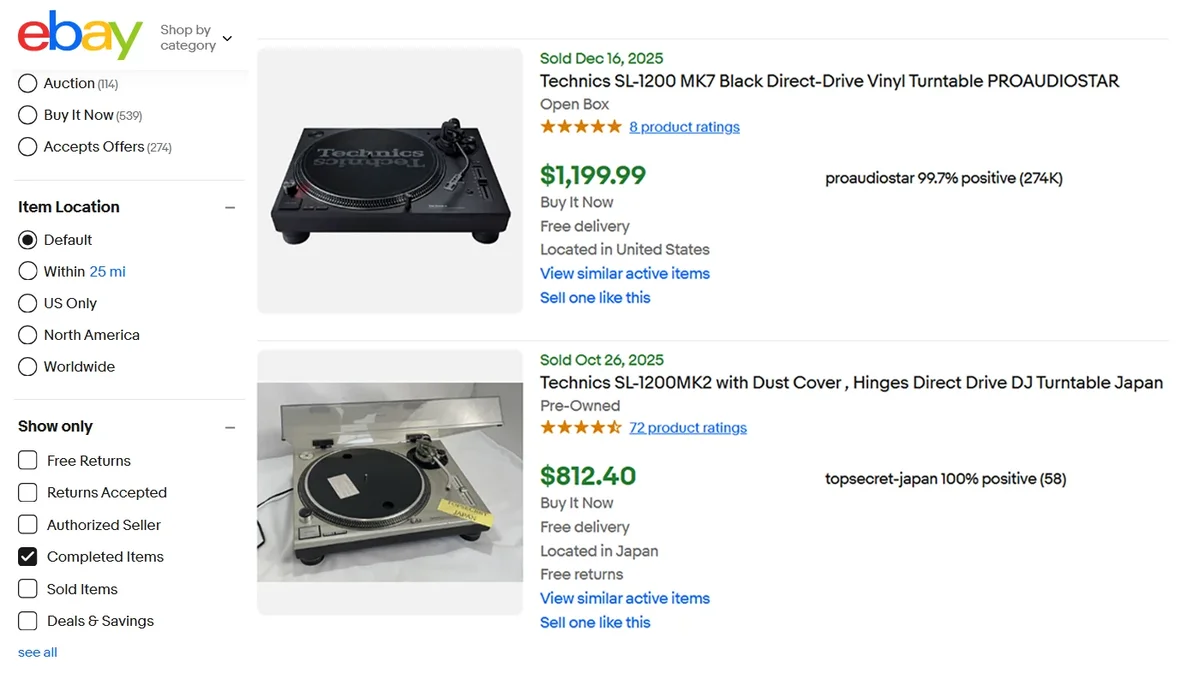
The Completed Listings Strategy
You have to develop an eye for it. But until you have the experience, you have data. Here is exactly how to use the eBay app to guarantee profit:
- Open the App: Type in the name of the item you are looking at (e.g., "Sony Walkman Cassette Player").
- Ignore the Active Prices: If you see someone listing a Walkman for $500, that doesn't mean it's worth $500. It just means a delusional person wants or thinks it’s worth $500.
- The Magic Filter: Tap "Filter" (top right on iOS, top left on Android). Scroll down and toggle on Completed Items.
Green vs. Red
Now, look at the results.
- Green Prices: These are items that actually sold. This is real money that changed hands.
- Red Prices: These are listings that ended without a sale.
If you search for an item and see a sea of Red, put it back on the shelf. It’s a dead end. If you see a sea or a small stream of Green, you likely have a winner.
Pricing Strategy: Use the Green prices to set your expectation. If the last three sold for $200, $225, and $193, you can confidently list yours for $210. If you want quick cash, list it for $190.

Step 4: Diverse Sourcing (Where to Look)
Don't just stick to Goodwill. The best deals are often found where the "corporate" pricing hasn't taken over yet.
- Flea Markets & Swap Meets: This is the Wild West. Cash is king here. If a vendor wants $20, offer $10. Negotiation is expected.
- Garage Sales: Arrive early (the "early bird" gets the worm) or arrive late (when they just want everything gone).
- Alleyways and Curbsides: I’m serious. I have picked up vintage vacuums and solid wood furniture left on the curb on "trash day" and flipped them for pure profit. One man's garbage really is another man's treasure.
- Digital Scavenging: If you don't want to leave the house, use your phone to browse Craigslist, OfferUp, and Facebook Marketplace. Look for listing errors. Someone might list a "Old Camera" for $20, not realizing it's a vintage Leica worth $400. In this case, their ignorance is your profit margin.
Step 5: How to Photograph Items (Smart vs. Pretty)
You don't need a $2,000 DSLR camera to sell on eBay. Your smartphone is more than capable. But remember: since people can't touch the item, your photos have to do the heavy lifting for them.
The Pretty Trap: Don't get obsessed with making it look like a magazine ad. This isn't Instagram. Buyers want to see exactly what they are getting. A slightly "raw" photo can sometimes feel more authentic and trustworthy than a hyper-edited one.
Smart & Detailed:
- The Backdrop: While you don't need a professional light box, looks do matter to an extent. Avoid photographing your item on a messy bed or a cluttered garage workbench. It screams "I don't take care of my stuff." A clear table, a clean section of floor, or a simple white poster board from the dollar store is really all that you need.
- Lighting: Natural light is your best friend. Set up near a window. Avoid using your camera's flash, as it creates harsh glares that hide defects. This is crucial for things with screens (like smartphones and laptops).
- Honesty is Policy: Photograph the flaws. If there is a scratch, a dent, or a stain, take a close-up of it. If you hide it, the buyer will find it, and they, in the worst case scenario, will return it — causing a strike against your account.
- The Details: Take a clear picture of the model number, the tags, and the ports/connections. Savvy buyers look for these specific details to confirm compatibility.
Step 6: The Logistics (Don't Lose Money on Shipping)
You found the item. You listed it. You sold it. Now, don't ruin your profit by messing up the shipping.
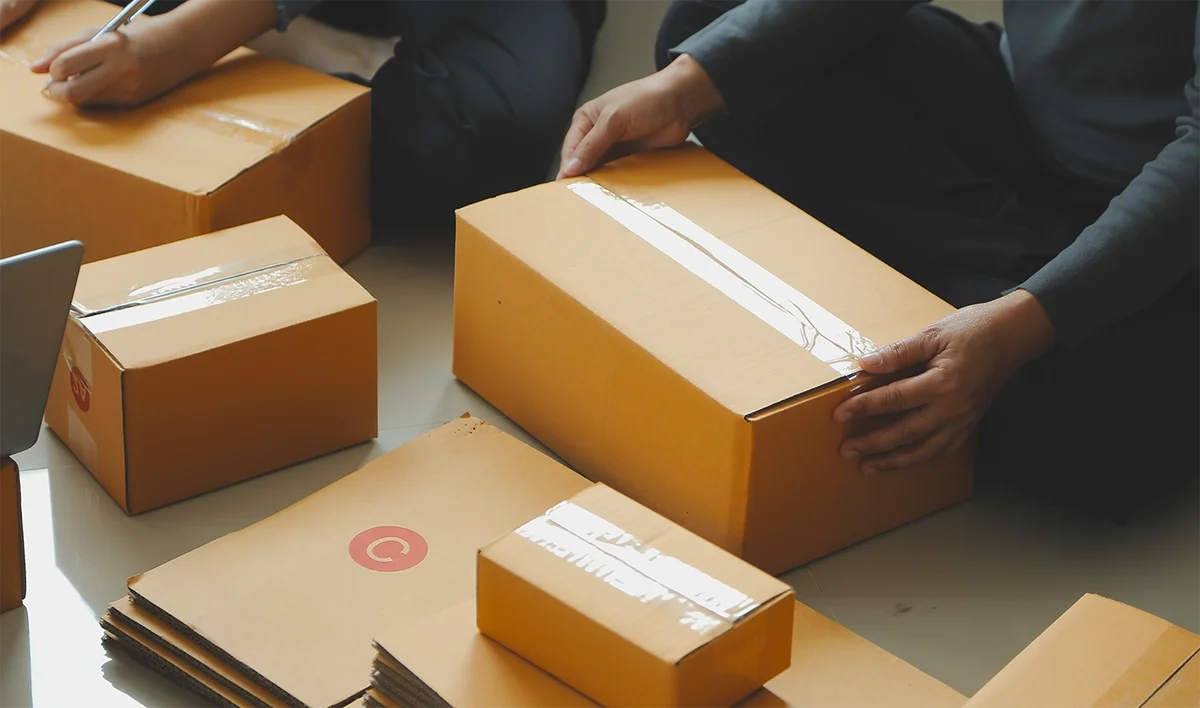
The Shipping Trap
New sellers often guess the weight. Never guess. If you guess an item weighs 2 lbs, and it actually weighs 2 lbs and 1 oz, the post office will charge you the 3 lb rate. That difference could eat $5 to $10 of your profit instantly.
- Buy a Scale: You can get a cheap digital shipping scale on Amazon for $20. It pays for itself in one week.
- Calculated Shipping: When listing, select "Calculated Shipping." You enter the weight and dimensions, and eBay charges the buyer exactly what it costs to ship to their zip code. This protects you from losing money shipping a heavy item from New York to California.
- Free Packaging: Many people don’t know this, but the Post Office has “flat-rate packaging” — with a variety of boxed packaging that you can snag for free at your local Post Office — and as long as you can fit your item (s) in the packaging, it won’t matter how much it weighs. You’ll pay a flat rate every time!
- Recycle: Don't buy cardboard boxes if you don't have to. Reuse Amazon boxes, grocery store boxes, and newspaper for void fill. Just make sure you cover old barcodes.
Step 7: Fees and Money Management
It’s easy to see a $100 sale and think, "I have $100!" You don't. You have revenue, not profit.
The Invisible Costs:
- eBay Final Value Fee: This varies by category, but expect eBay to take roughly 13% of the total sale price (including tax and shipping).
- Promoted Listings: If you pay to boost your ads, that's another percentage.
- Taxes: If you sell over a certain threshold, you will receive a 1099-K form. You have to pay income tax on your profits.
Pro Tip: Save 25% of every payout into a separate savings account. Use this to pay your end-of-month store fees (if you have a subscription) and your taxes at the end of the year. Nothing hurts more than a surprise tax bill because you spent all your flipping money on pizza.
Hall of Fame: Items to Flip for Profit (Real Examples)
To prove to you that value is hidden everywhere, here are a few of my personal Hall of Fame flips. These are real sales I made just by being curious and looking things up.
- The Breast Implants: Yes, seriously. I found a pair of (unopened, obviously) breast implants at a weird estate sale. They were priced at $3. I felt ridiculous buying them, but my phone said they were worth money. I sold them for $100. Never be shy about looking up weird stuff.
- The Brasilia Century One Espresso Machine: I spotted this beast at a flea market. It looked commercial and heavy. The guy wanted $25 because he didn't know if it worked. I took the gamble. I cleaned it up, tested it (it worked!), and resold it on eBay for $650. That was a very good day.
- Technics SL-1200 Turntable: This is legendary DJ equipment. I found one at a garage sale covered in dust. Paid $15. Sold it for $275 within 24 hours.
- 1st Edition Charizard Pokémon Card: This was years ago, before the Pokémon boom went totally nuclear, but it’s still a favorite memory. I bought a binder of cards for $1. Tucked inside was a Charizard. I flipped it for $150. Today, that card might be worth thousands, but I’m still happy with a 14,900% return on investment!
Final Thoughts
Flipping on eBay isn't just about making money; it changes the way you perceive value. You stop seeing junk and start seeing opportunity. You walk into a store and see dollar signs where others see clutter.
It takes patience. You will deal with annoying buyers. You will pack boxes late at night. But when your phone makes that Cha-Ching! cash register sound while you're sleeping or watching a movie, you realize that you've built something real.
So, put down this article, pick up your phone, and go look in your garage. Your first $100 is probably sitting right there, waiting for you to list it.
Frequently Asked Questions (FAQ)

Ready to Start Flipping?
Don't wait. Create your account, list your first item from your closet, and start your journey today.
Check Our Starter Guide