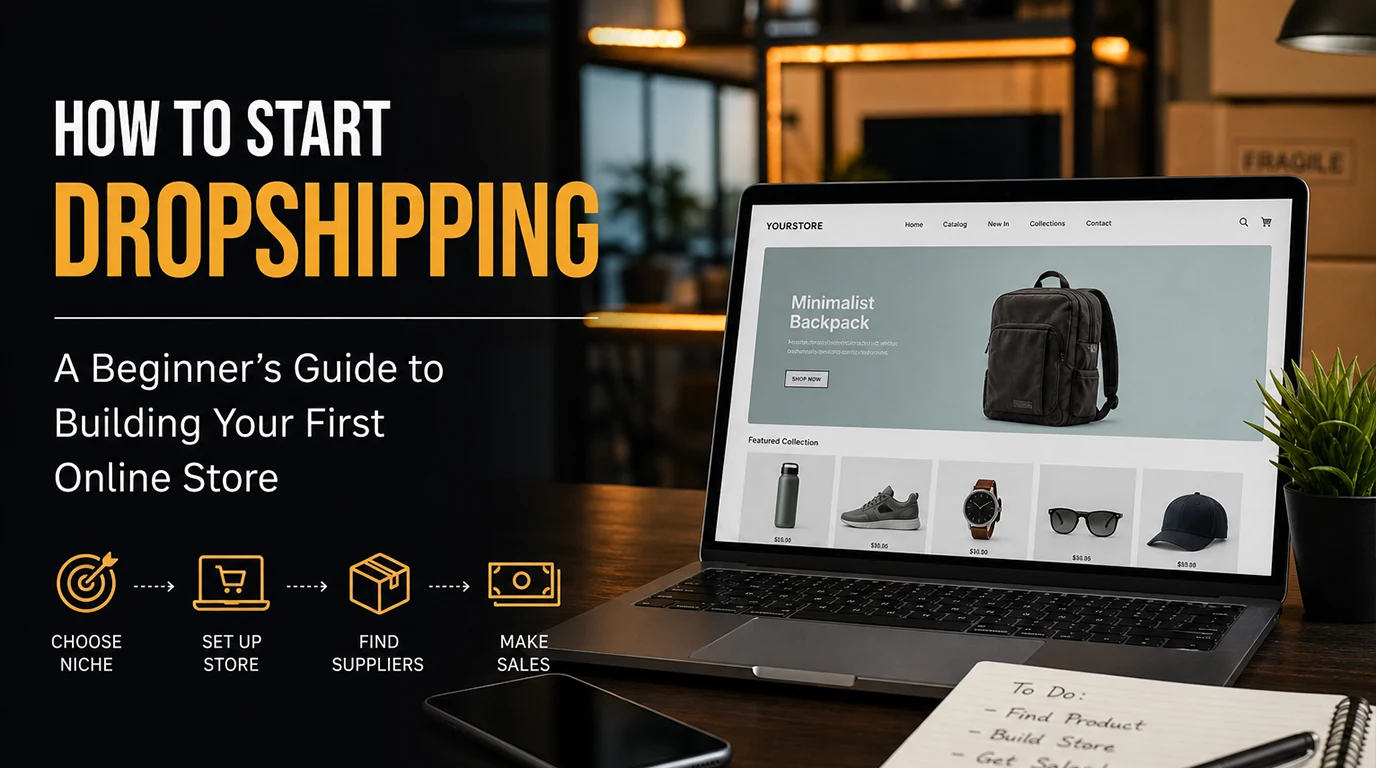
Dropshipping sounds like the perfect side hustle. No warehouse, no inventory, no midnight packing. Build a store, connect a supplier, and when someone buys, the supplier ships directly to your customer. You never touch the product.
That part is real. The YouTube version—where a teenager makes $50,000 in month one from a beach—isn't. Dropshipping is a business model, not a lottery ticket. It takes product research, supplier vetting, marketing skill, and months of iteration.
We've investigated what starting a dropshipping store actually looks like in 2026: real startup costs, honest margins, and the beginner mistakes that kill most stores before they turn a profit. This guide walks through how to start dropshipping step by step—niche selection, supplier platforms, store setup, and the math on ad spend that most gurus leave out.
What Dropshipping Actually Is (And Isn't)
Dropshipping is an order fulfillment model where you sell products you don't stock. When a customer places an order on your store, you purchase the item from a third-party supplier, who ships it directly to the customer. Your profit is the difference between your retail price and the supplier's wholesale price, minus advertising and platform costs.
What it is: A low-capital way to test product-market fit and learn e-commerce fundamentals.
What it isn't: Passive income, a get-rich-quick scheme, or a business without customer service responsibilities. You still handle refunds, complaints, chargebacks, and marketing. The supplier handles fulfillment—they don't run the business for you.
The global dropshipping market is projected to exceed $500 billion by 2027. That scale means opportunity—but it also means competition. The beginners who succeed treat it as a skill-building exercise, not a shortcut.
Step 1: Choose a Niche (Not a Product)
The most common beginner mistake is scrolling AliExpress for "winning products" without thinking about who will buy them. A product without a customer is just inventory you don't own yet.
A niche is a specific audience with a specific problem. "Phone accessories" is a category. "Protective cases for construction workers who drop their phones daily" is a niche. The second one gives you a customer to write for, market to, and build trust with.
Niche Selection Criteria
Use Google Trends to check search interest over 12+ months. Avoid fidget spinners—products that spike and vanish. Look for steady or gently climbing trends.
If you search your product idea and see Amazon, Walmart, and five established brands dominating the first page, you'll spend heavily on ads to compete. Look for niches where smaller stores still rank organically.
Aim for products you can sell at 2.5–3x your landed cost (product + shipping). If a product costs $8 from the supplier and ships for $3, your minimum viable selling price is around $28–$33.
Products under 2 pounds with compact dimensions ship cheaply and quickly. Oversized, heavy, or fragile items create logistics headaches and higher return rates.
Year-round demand beats holiday spikes. Valentine's Day novelty mugs make money for six weeks and sit dead for ten months. Kitchen organization tools sell steadily January through December.
Strong niches in 2026 include home improvement gadgets, pet accessories for specific breeds, fitness equipment for small spaces, and personal care devices with subscription potential. Avoid generic electronics accessories and unbranded fitness gear—those markets are saturated with established players and thin margins.
Step 2: Find Reliable Suppliers
Your supplier relationship determines your customer experience. A great store with a terrible supplier becomes a review disaster.
AliExpress Dropshipping
AliExpress remains the largest catalog for dropshipping beginners. Millions of products, transparent pricing, and no minimum order quantities. But quality varies dramatically.
Vetting AliExpress suppliers:
- Rating of 4.7+ stars with at least 500 completed orders on the specific product
- Established store age of 12+ months (visible on the seller's profile)
- Shipping options including AliExpress Standard Shipping or ePacket to your target market
- Recent positive feedback on shipping speed—read the last 20 reviews specifically
- Photo reviews from real buyers showing actual product quality, not just text
Always place a test order before scaling. You need to see shipping time, packaging quality, and whether the product matches its listing photos. This $15–$30 investment prevents refund disasters later.
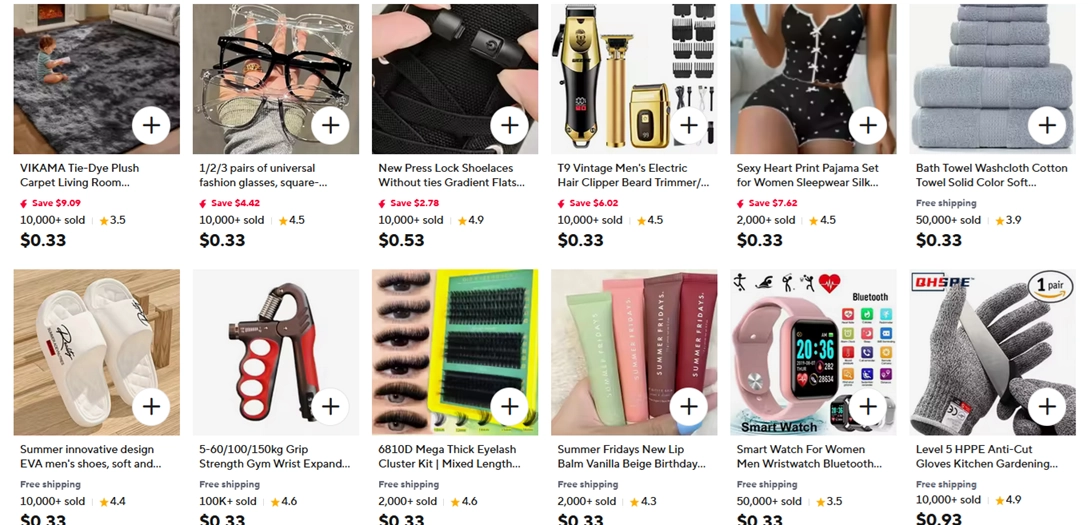 AliExpress offers millions of products for dropshipping, but quality varies dramatically between suppliers.
Alternative Supplier Platforms
Faster shipping than standard AliExpress routes, with warehouses in the US, EU, and Asia. Good for reducing delivery times to 7–14 days.
Pre-vetted US and EU suppliers. Shipping drops to 3–7 days, but catalogs are smaller and unit costs are higher, squeezing margins.
Shopify's official AliExpress partner. Automates importing and fulfillment. Free tier covers 3,000 products across 3 stores. Eliminates manual copy-paste workflows.
Printful or Printify let you sell custom designs—apparel, mugs, phone cases—without inventory. Margins are lower but differentiation is higher.
Step 3: Build Your Store
Most beginners use Shopify. It isn't the only option, but it's the most supported ecosystem for dropshipping in 2026.
Platform Setup
Shopify's basic plan starts at $29/month if paid annually. They offer a free trial period (3 days, with a $1/month for the first three months promotion). You'll also need:
- Domain name: $10–$14 per year through Shopify or a registrar like Namecheap
- Dropshipping app: DSers (free tier), AutoDS ($26/month for advanced automation), or Spocket (free plan available)
- Payment processing: Shopify Payments (built-in) or PayPal. Expect 2.9% + $0.30 per transaction
Total lean startup cost: roughly $50–$100 per month before advertising.
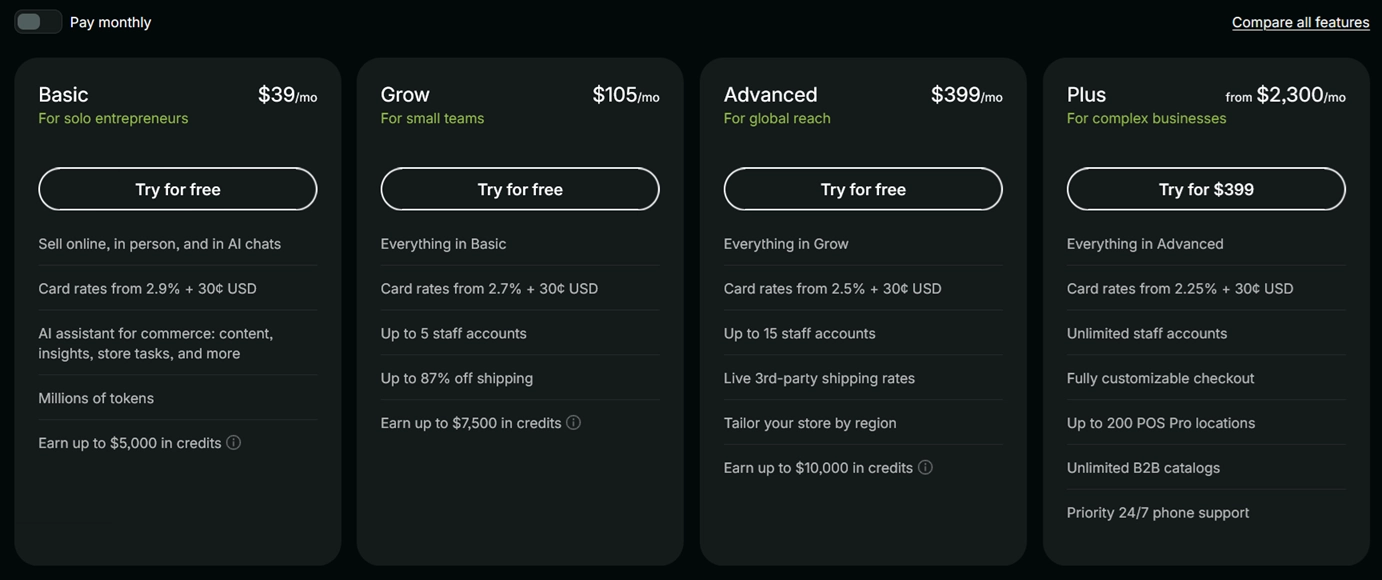 Shopify's basic plan starts at $29/month, with a $1/month promotion for the first three months.
Essential Store Pages
Your store needs more than product listings. Customers check these pages before trusting you with their credit card:
- About Us: Who you are, why you started this store, and what you care about. Generic copy kills trust.
- Shipping Policy: Realistic delivery timeframes. If AliExpress Standard Shipping takes 10–20 days, say 10–20 days. Claiming "3–5 day shipping" when your supplier takes two weeks creates predictable refund requests.
- Refund Policy: Clear terms. Most dropshippers offer 14–30 day return windows with store credit or partial refunds (since returning items to China often costs more than the product value).
- Contact Page: A real email address, not a no-reply form. Responsiveness builds credibility.
Product Listing Optimization
Never use supplier copy verbatim. Rewrite titles and descriptions for your specific customer. A generic AliExpress title like "2026 New Hot Sale Fashion Men Watch Luxury Brand Business Clock" becomes "Minimalist Dress Watch for Office Professionals—Japanese Quartz Movement, 3ATM Water Resistant."
Include realistic shipping estimates on the product page itself, not buried in policy pages. Transparency about 10–15 day delivery frames the wait as expected, not a surprise.
Step 4: Understand the Real Costs
Dropshipping's low startup cost is real, but the ongoing costs surprise beginners who think it's "free" after the store is set up.
Fixed Monthly Costs
Per-Sale Costs
- Product cost: $12
- Shipping: $4
- Sell price: $35
- Payment fees: $1.05
- Ad cost per sale: $8–$15
- Profit: $2.95–$9.95
That's before accounting for returns, chargebacks, or currency fluctuation. Your first month is almost certainly a net loss. Months two and three break even if you're iterating. Month four is where profitability typically starts—if you've tested enough products and killed the losers fast.
Step 5: Drive Traffic (The Hardest Part)
Building the store is the easy 20%. Getting customers is the hard 80%.
Paid Advertising
Most beginners start with Meta Ads (Facebook/Instagram) or TikTok Ads. Budget $10–$20 per day per product test, run for 3–5 days, and measure:
- CPC (cost per click): Under $1.50 is acceptable for most niches
- CTR (click-through rate): Above 1.5% suggests the creative and targeting resonate
- ROAS (return on ad spend): Above 1.0 in cold traffic means potential. Above 1.5 means scale candidate.
Kill underperformers ruthlessly. The most expensive mistake is emotional attachment to a product that isn't converting.
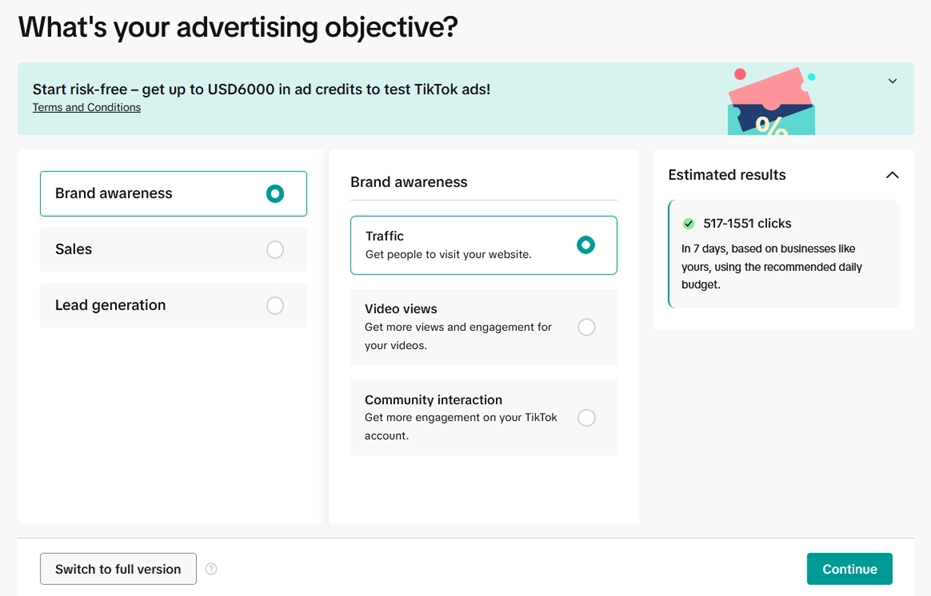 TikTok Ads and Meta Ads are the most common starting points for dropshipping beginners testing products.
Organic Traffic
SEO blog content takes 3–6 months to rank but compounds over time. Write buying guides, comparison articles, and problem-solving content in your niche. A well-ranked article targeting "best minimalist watches under $50" can drive free traffic for years.
Social content works faster but requires consistency. TikTok product demos, Pinterest boards for your niche, and Instagram Reels showing products in use all drive discovery traffic without ad spend.
Step 6: Manage Orders and Customer Expectations
When orders flow in, your job shifts to coordination and communication.
Order fulfillment: With DSers or AutoDS, most AliExpress orders process automatically. You still need to monitor stock levels—suppliers run out without warning, and selling an out-of-stock item creates refund requests and negative reviews.
Set up low-stock alerts in your dropshipping app. When a supplier's inventory drops below 10 units, pause the listing or switch to a backup supplier. Nothing destroys a new store's reputation faster than taking payment for a product that can't ship for three weeks.
Customer communication: Proactive updates beat reactive apologies. Send a confirmation email immediately. Follow up with tracking information within 24 hours. If shipping delays occur (common with international suppliers), notify customers before they ask.
Consider using a simple email automation tool like Mailchimp or Shopify Email (both have free tiers for low volume) to send post-purchase sequences. A "your order has shipped" email, a "here's your tracking number" email, and a "how did everything arrive?" follow-up reduce refund requests and increase repeat purchase rates.
Returns and refunds: Most dropshipping returns aren't economically viable—shipping a $15 item back to China costs $12–$18. Common practice is offering partial refunds or store credit for defective items, and full refunds only for products that never arrive.
Common Beginner Mistakes to Avoid
We've researched dozens of failed dropshipping stores. The patterns are consistent.
Mistakes That Kill Stores
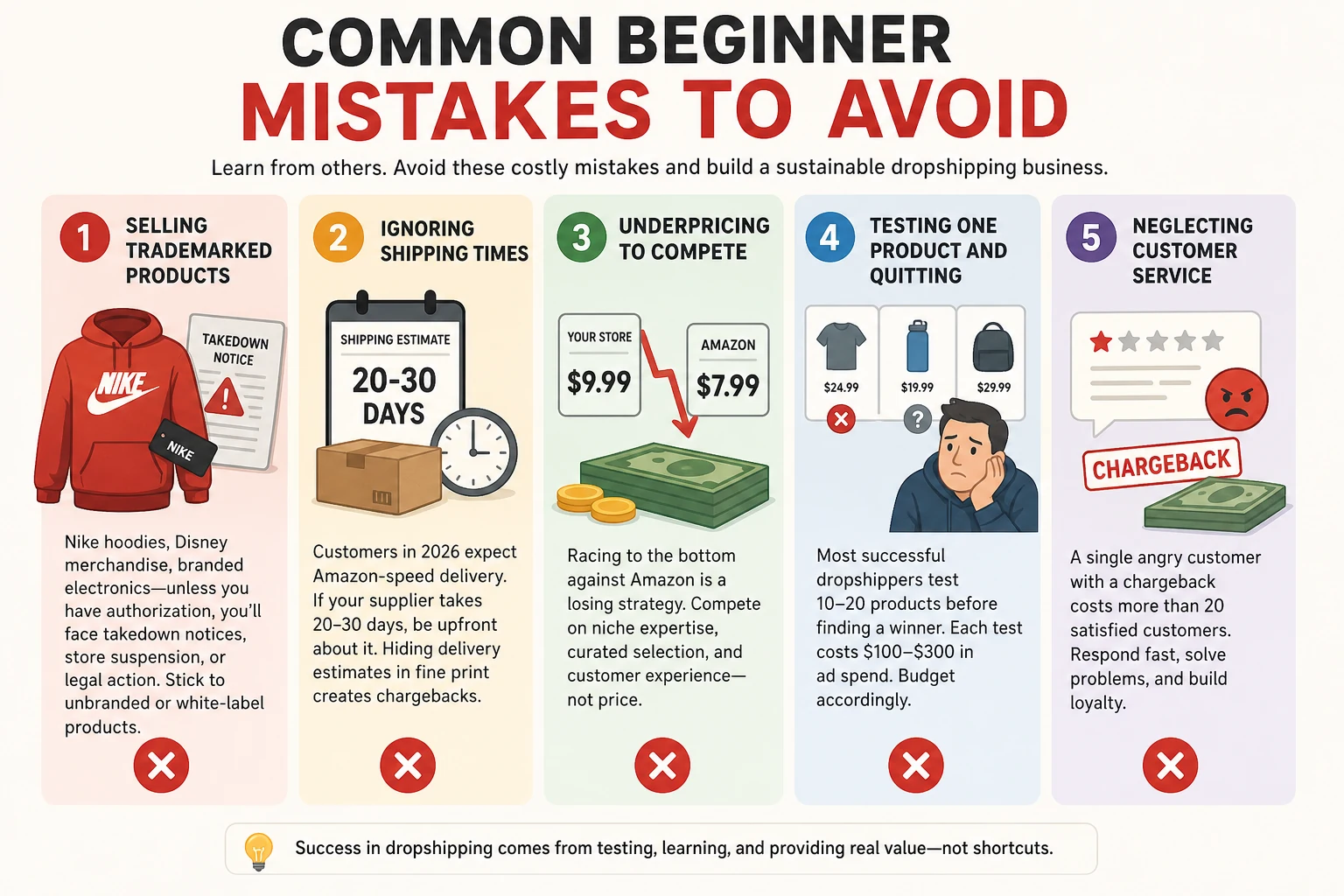 Avoiding these five common mistakes can dramatically improve your odds of building a profitable dropshipping store.
Is Dropshipping Right for You?
It Works Best If You...
- Enjoy marketing and customer psychology more than product creation
- Have $300–$1,000 for initial testing and learning
- Can tolerate 1–3 months of losses while iterating
- Want to learn e-commerce fundamentals without warehouse risk
It Works Poorly If You...
- Expect passive income with minimal effort
- Get frustrated by customer complaints and refund requests
- Need immediate, predictable cash flow
- Dislike advertising and data analysis
Bottom Line
How to start dropshipping in 2026: Choose a niche with genuine demand, find reliable suppliers, build a transparent store, test products with small ad budgets, and iterate based on data—not hope.
The model is legitimate. The market is real. The beginners who succeed are the ones who treat it as a business skill to develop, not a hack to exploit. Start small, track everything, kill failing products fast, and double down on what the numbers validate.
Dropshipping won't make you rich overnight. But it can teach you e-commerce fundamentals, generate modest side income, and potentially scale into a full business—if you're willing to do the work that the gurus left out of their ads.
Frequently Asked Questions
You can start a dropshipping store with roughly $50–$100 per month before advertising. This covers Shopify ($29/month), a domain ($1/month), and essential apps. You should also budget $300–$1,000 for initial ad testing across multiple products.
Yes, dropshipping remains profitable for beginners who treat it as a skill-building business. The global market is projected to exceed $500 billion by 2027. However, competition is fierce, and profit margins are thin. Success requires niche selection, reliable suppliers, and disciplined ad testing—not a "winning product" shortcut.
Most beginners operate at a net loss in month one, break even by month two or three, and reach profitability by month four—if they test enough products and kill underperformers quickly. Emotional attachment to failing products is the most common reason this timeline extends.
In most jurisdictions, you do not need a formal business license to start a dropshipping store as a sole proprietor. However, you may need to register a business name, obtain an EIN (in the US), and report income on your tax return. Requirements vary by country and state. We recommend consulting a local accountant once you start generating consistent revenue.
Yes. Alternatives include WooCommerce (WordPress), BigCommerce, Wix, and Squarespace. Shopify is the most popular because of its app ecosystem and ease of use, but WooCommerce is a viable free option if you already have web hosting. Each platform has different transaction fees and learning curves.
The most common failure is giving up after testing only one or two products. Most successful dropshippers test 10–20 products before finding a winner. Other top reasons include poor supplier vetting (leading to quality disasters), unrealistic ad budget expectations, and neglecting customer service, which generates chargebacks and negative reviews.

Explore More Side Hustle Guides
Ready to diversify your income? Check out our full library of tested side hustles, platform reviews, and step-by-step guides.
Browse All Articles