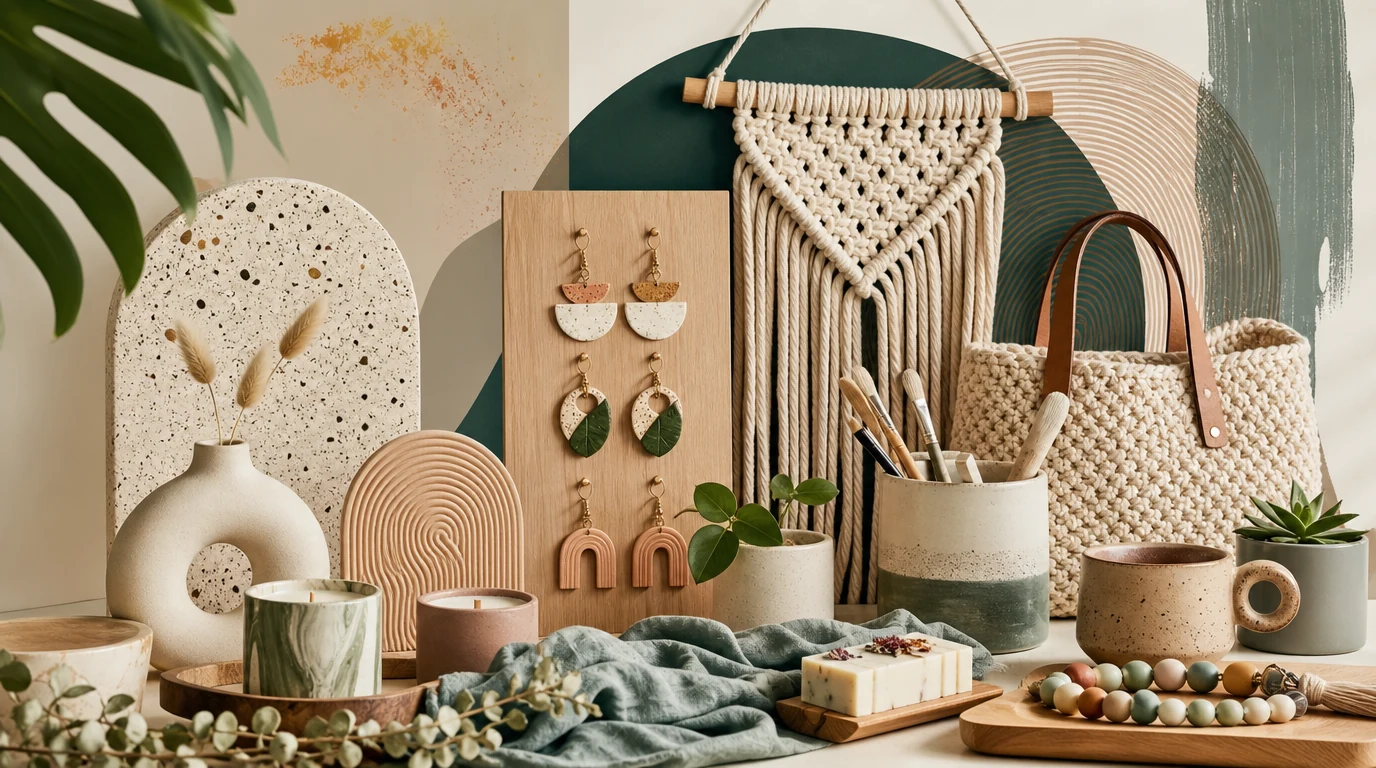
The most profitable crafts to sell aren't necessarily the most artistic — they're the ones with low startup costs and high demand. At Luck & Fortune Finance, we've researched what actually moves on Etsy, at craft fairs, and through local shops, and the pattern is clear: simple products with consistent quality beat complex one-of-a-kind pieces almost every time.
Whether you're looking for easy craft ideas to make and sell on weekends or building a full side hustle from your kitchen table, this guide covers 15 things to make and sell with real cost breakdowns, profit margins, and where to list them. No fluff, no "selling crafts is easy" platitudes — just the math and the platforms that work.
Why Selling Crafts Works as a Side Hustle
Making crafts that make money has a few built-in advantages over most side hustles. You control production volume, you can start with under $100 in supplies, and you're not at the mercy of an algorithm deciding your hourly rate. The downside? You're trading time for inventory, and not every craft idea scales well.
The stuff to make and sell that actually generates consistent income shares three traits:
Low Material Cost
A candle that costs $3 in wax and fragrance sells for $18–$25. A handmade soap that costs $2 in ingredients sells for $8–$12. The math works when materials are a small fraction of the sale price.
Repeatable Process
Once you've dialed in a recipe or pattern, you can produce in batches without reinventing each piece. Consistency is what separates a hobby from a business.
Giftable or Functional
Crafts that solve a problem or make easy gifts outsell purely decorative items. People buy what they can use or give without overthinking it.
If you're also exploring other income streams, our small business ideas guide covers options beyond physical products, our dropshipping walkthrough breaks down a hands-off alternative if you'd rather skip the making part entirely, and our eBay flipping guide shows how to resell found items for profit.
15 Profitable Crafts to Make and Sell
Candles and Wax Products
Candles remain one of the most profitable crafts you can make and sell. Soy wax runs about $3–$5 per pound, and a standard 8 oz candle sells for $18–$28. That's a 55–70% profit margin once you've covered jars, wicks, fragrance oil, and labels.
Startup cost: $100–$200 for a basic double boiler, thermometer, soy wax, fragrance oils, wicks, and jars.
What sells: Seasonal scents (pine, cinnamon, pumpkin), clean minimalist designs, and coconut wax blends for the premium market.
Realistic monthly income: $300–$800 selling 40–60 candles per month at craft fairs and online.
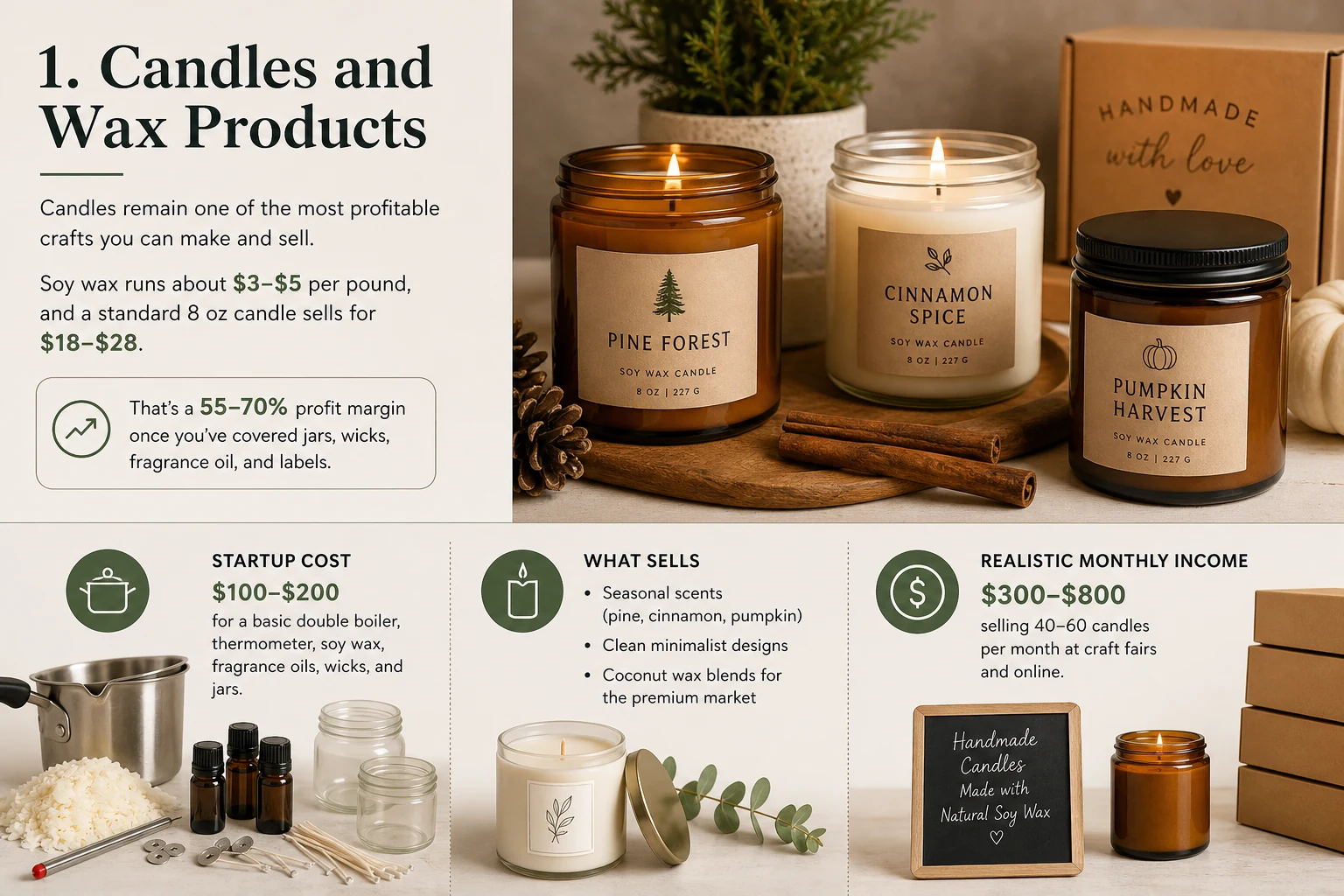 Candles remain one of the highest-margin crafts, with soy wax candles yielding 55–70% profit at $18–$28 per unit.
Handmade Soap
Cold-process soap costs about $1.50–$3 per bar to make and sells for $7–$12. Bath bombs are even simpler — roughly $1–$2 in materials, selling for $5–$8 each. Profit margins land between 50–65%.
Startup cost: $75–$150 for lye, oils, molds, fragrance, and colorants.
What sells: Goat milk soaps, charcoal detox bars, and themed gift sets (bridal, baby shower, holiday).
Jewelry and Accessories
The jewelry category covers a wide range — beaded bracelets cost $2–$4 to make and sell for $12–$20, while resin earrings run $3–$5 in materials and sell for $15–$25. Profit margins vary from 40–60% depending on materials.
Startup cost: $50–$200 depending on whether you go beaded, wire-wrapped, or resin-based.
What sells: Minimalist gold-fill pieces, personalized name necklaces, and statement earrings for specific aesthetics (boho, cottagecore, Y2K).
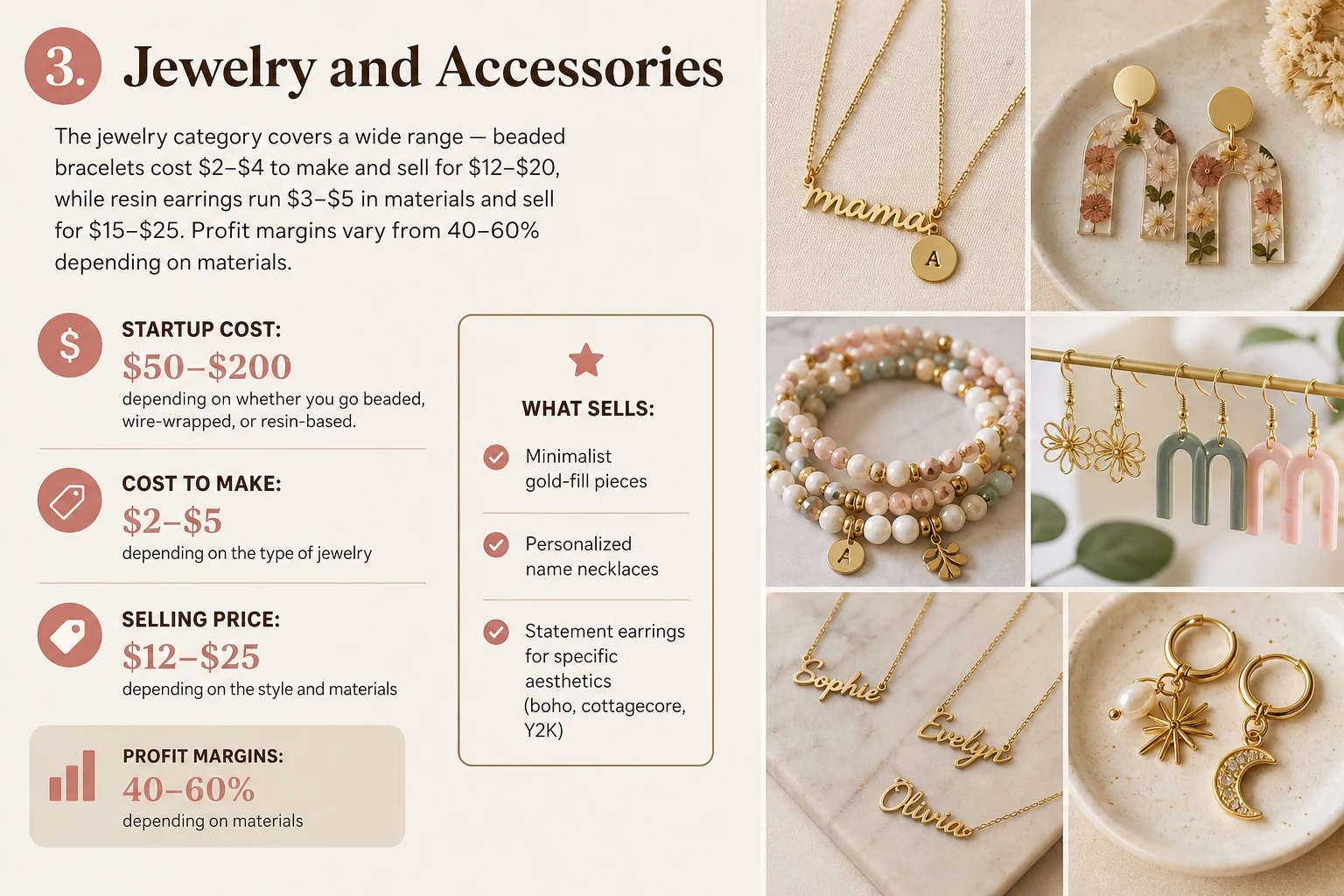 Jewelry spans a wide price range — beaded bracelets and resin earrings both deliver strong margins with minimal startup costs.
Digital Prints and Templates
This is the outlier — digital prints and Canva templates cost almost nothing to reproduce once created. Your time is the main investment. Profit margins hit 85–95% because there's no physical inventory.
Startup cost: $20–$50 for design software (Canva Pro at $13/month) and an Etsy listing fee.
What sells: Wall art prints, planner templates, social media kits, and resume templates.
Handmade Clothing and Accessories
Sewn or knitted items take more time but command higher prices. A hand-knitted beanie costs $5–$8 in yarn and sells for $25–$40. Embroidered tote bags cost $4–$7 and sell for $20–$30. Margins run 40–55%.
Startup cost: $100–$300 for a sewing machine (or knitting needles and quality yarn).
What sells: Custom embroidery, personalized baby items, and niche-aesthetic accessories.
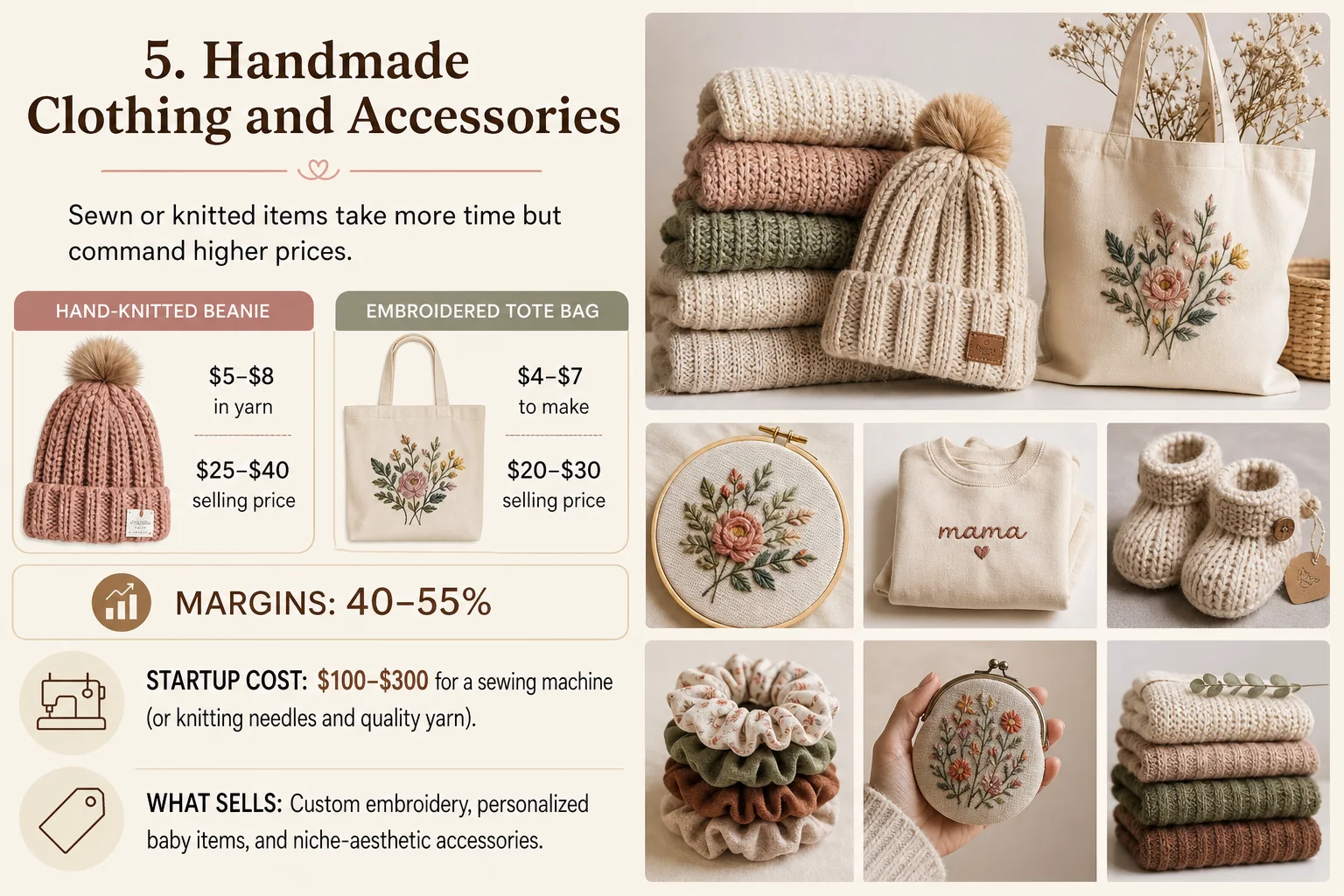 Handmade clothing and embroidered items command higher price points, with beanies selling for $25–$40 and tote bags for $20–$30.
Pet Products
Pet owners spend freely. Dog bandanas cost $2–$4 to make and sell for $12–$18. Catnip toys run under $1 in materials and sell for $6–$10. Profit margins sit around 45–60%.
Startup cost: $50–$150 for fabric, stuffing, catnip, and basic sewing supplies.
What sells: Breed-specific items, matching owner-pet accessories, and personalized collars.
Home Decor
Resin coasters, macramé wall hangings, and hand-painted signs all fall into this category. Costs range from $3–$10 per piece, with selling prices of $15–$45. Margins: 40–60%.
Startup cost: $50–$200 depending on the medium (resin, fiber art, or paint).
What sells: Geometric resin pieces, farmhouse-style signs, and boho wall hangings.
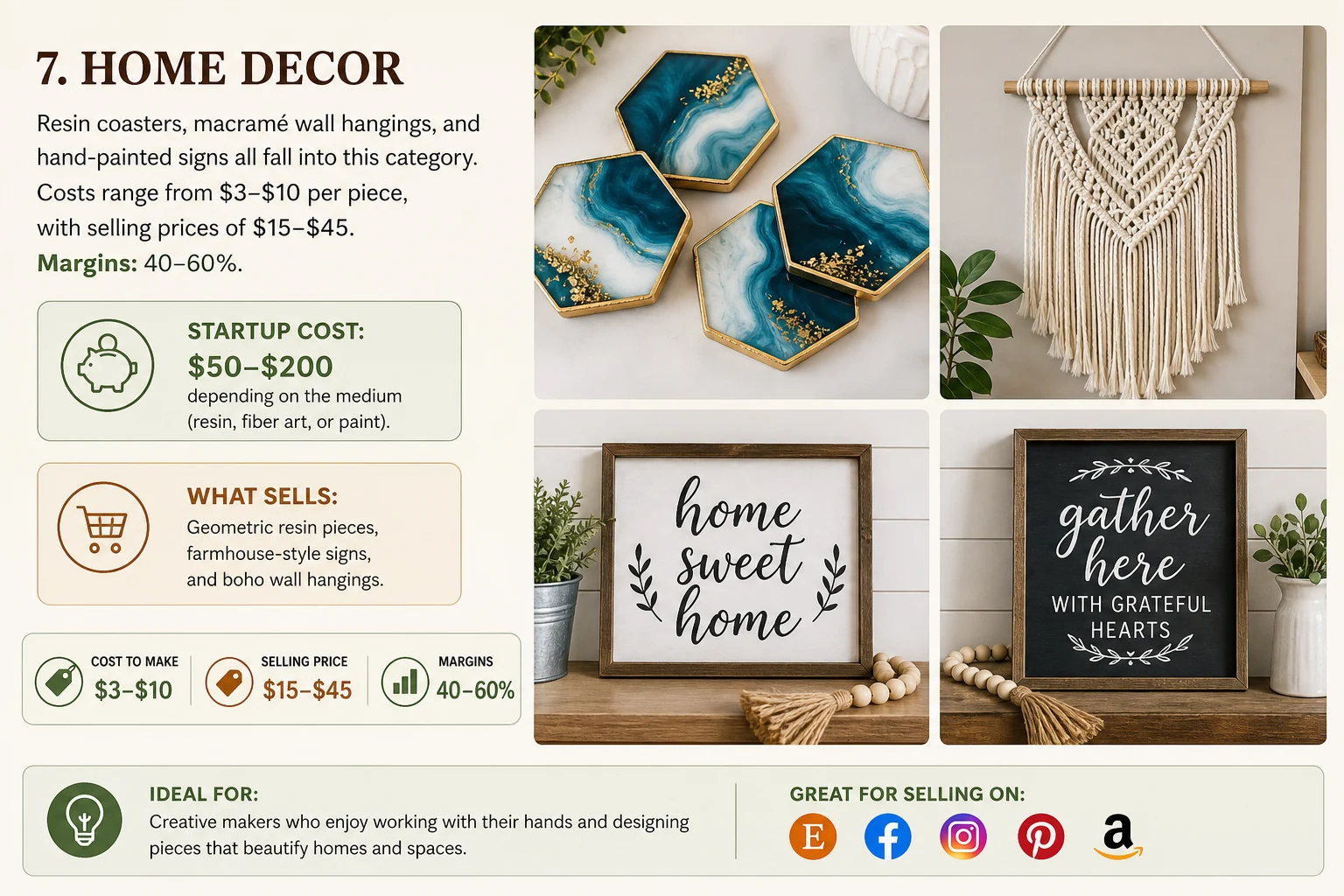 Home decor items like resin coasters and macramé wall hangings sell for $15–$45 with 40–60% margins.
Personalized Gifts
Custom cutting boards, engraved keychains, and monogrammed items consistently rank among the things to make and sell to make money because personalization justifies a premium. A laser-engraved cutting board costs $8–$15 in materials and sells for $35–$55. Margins: 50–70%.
Startup cost: $30–$200 (lower for hand-stamped items, higher if you invest in a basic laser engraver).
What sells: Wedding gifts, baby milestone items, memorial pieces, and holiday ornaments.
Seasonal and Holiday Items
Seasonal crafts that sell have a built-in urgency window. Christmas ornaments ($2–$5 cost, $12–$20 sale), Halloween decorations ($3–$8 cost, $15–$30 sale), and Valentine's Day items all move fast during their season. Margins: 50–70%.
Startup cost: $30–$100 depending on the holiday and materials.
What sells: Ornaments, wreaths, themed gift baskets, and countdown calendars.
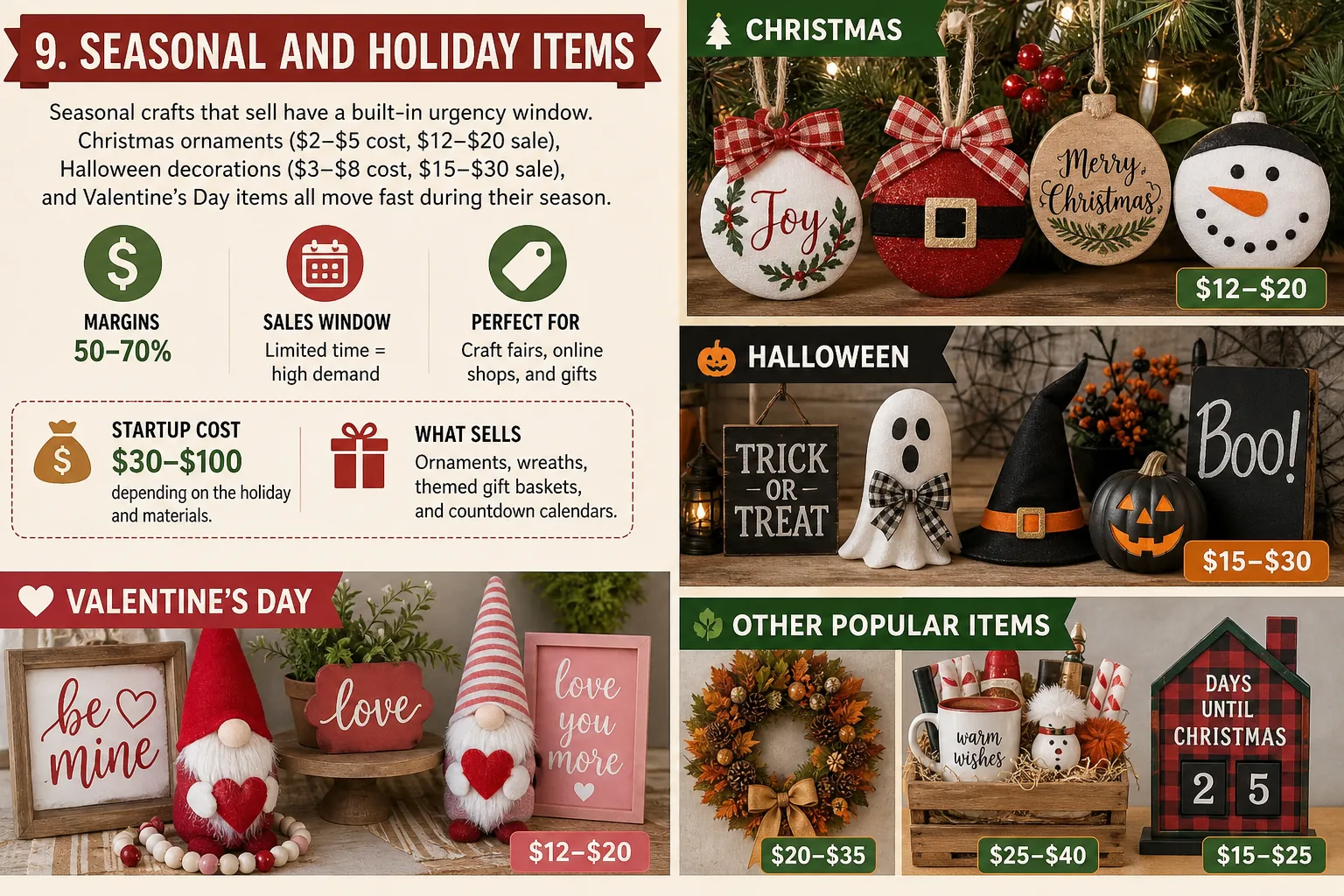 Seasonal crafts benefit from built-in urgency — Christmas ornaments and Halloween decorations sell fast during their windows.
Stickers and Decals
Stickers are one of the easiest things you can make and sell. Die-cut stickers cost $0.10–$0.30 to produce and sell for $3–$5 individually or $12–$18 per sheet. Profit margins are 70–85%.
Startup cost: $20–$50 for a sticker printer (or outsource to a print-on-demand service).
What sells: Planner stickers, laptop decals, niche humor, and fandom-inspired designs.
Resin Art and Jewelry
Beyond coasters, resin art includes trays, bookmarks, and decorative bowls. Material cost is $5–$12 per piece; selling prices range from $20–$50. Margins: 50–65%.
Startup cost: $80–$200 for epoxy resin, pigments, molds, and safety equipment.
What sells: Ocean-themed pieces, geode-inspired designs, and custom name plates.
Knitted and Crocheted Items
Scarves, blankets, and amigurumi (stuffed figures) take time but sell well. A crocheted scarf costs $4–$8 in yarn and sells for $20–$35. Amigurumi figures cost $3–$6 and sell for $15–$30. Margins: 40–55%.
Startup cost: $30–$100 for quality yarn, hooks, and patterns.
What sells: Baby blankets, character amigurumi, and chunky-knit home decor.
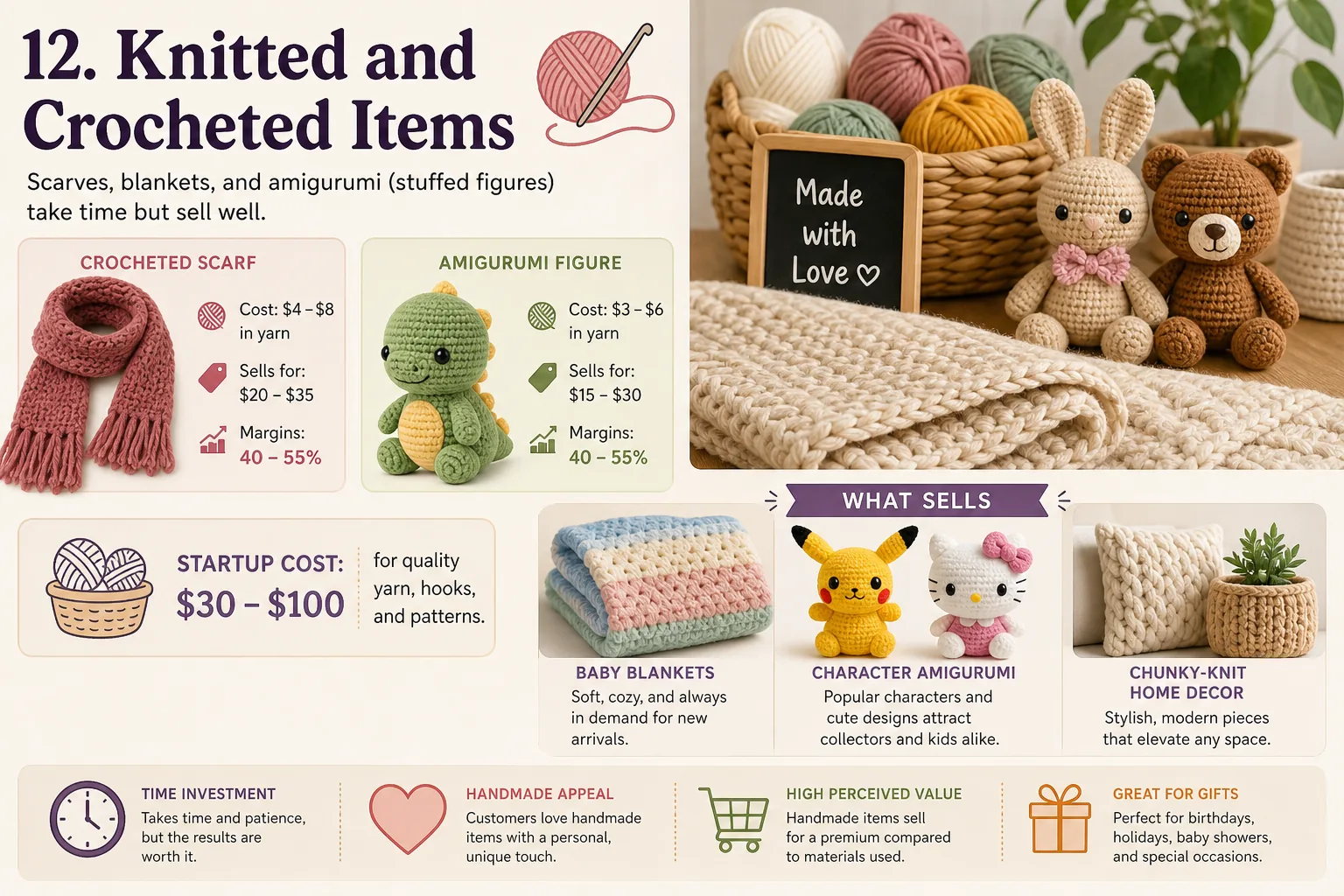 Knitted and crocheted items like baby blankets and amigurumi figures sell for $15–$35 with 40–55% margins.
Tote Bags and Pouches
Sewn or screen-printed tote bags cost $3–$7 to make and sell for $18–$28. Pouches and cosmetic bags run $2–$5 in materials and sell for $12–$20. Margins: 45–60%.
Startup cost: $30–$80 for canvas fabric, thread, and basic sewing supplies.
What sells: Custom-printed market totes, personalized cosmetic bags, and insulated lunch bags.
Original Art Prints
If you paint, draw, or create digitally, selling prints of original work is straightforward. Cost per print (via a print-on-demand service): $3–$8. Selling price: $15–$40. Margins: 50–70% depending on volume.
Startup cost: $30–$100 for quality paper, frames (optional), and listing fees.
What sells: Botanical illustrations, abstract pieces, and pet portraits.
Wooden Items
Cutting boards, serving trays, and small furniture pieces have higher material costs but also higher price points. A cutting board costs $10–$20 in hardwood and sells for $40–$65. Margins: 40–55%.
Startup cost: $100–$250 for hardwood, food-safe finish, and basic tools.
What sells: End-grain cutting boards, personalized charcuterie trays, and live-edge shelves.
Quick Comparison: Profit Margins by Craft
| Craft | Material Cost | Average Sale | Profit Margin | Difficulty |
|---|---|---|---|---|
| Digital prints/templates | $0–$2 | $8–$25 | 85–95% | Low |
| Stickers and decals | $0.10–$0.30 | $3–$18 | 70–85% | Low |
| Candles and wax | $3–$5 | $18–$28 | 55–70% | Low–Medium |
| Personalized gifts | $8–$15 | $35–$55 | 50–70% | Medium |
| Seasonal items | $2–$8 | $12–$30 | 50–70% | Low–Medium |
| Handmade soap | $1.50–$3 | $7–$12 | 50–65% | Low–Medium |
| Resin art | $5–$12 | $20–$50 | 50–65% | Medium |
| Pet products | $2–$4 | $6–$18 | 45–60% | Low |
| Tote bags and pouches | $3–$7 | $12–$28 | 45–60% | Medium |
| Home decor | $3–$10 | $15–$45 | 40–60% | Medium |
| Jewelry and accessories | $2–$5 | $12–$25 | 40–60% | Low–Medium |
| Knitted/crocheted items | $4–$8 | $15–$35 | 40–55% | Medium–High |
| Handmade clothing | $5–$8 | $25–$40 | 40–55% | High |
| Wooden items | $10–$20 | $40–$65 | 40–55% | High |
How Much Can You Actually Make?
Realistic monthly income from making crafts to sell depends on three variables: your production speed, your price point, and your sales channels.
Part-Time (5–10 hrs/week)
$200–$600/month. This assumes you're producing 20–40 items and selling through one or two channels. A good starting point to test demand before going all in.
Full-Time Hustle (20–30 hrs/week)
$1,000–$3,000/month. At this level, you're batching production, managing inventory, and likely selling across multiple platforms. This is where crafts become a real income stream.
The Ceiling
$5,000–$15,000/month. Top Etsy sellers in the craft space report this range, but it typically requires a team, wholesale accounts, or a product line with strong brand recognition.
Etsy's Seller Handbook is worth reading before you list — it covers fees, search optimization, and policies that directly affect your margins.
Where to Sell Your Crafts
Etsy
The obvious starting point. Etsy charges $0.20 per listing plus a 6.5% transaction fee and 3% + $0.25 payment processing. For a $25 candle, you're paying roughly $2.50–$3 in total fees. The upside: 96 million active buyers searching for exactly what you make.
Best for: Everything on this list. Particularly strong for candles, jewelry, stickers, and personalized gifts.
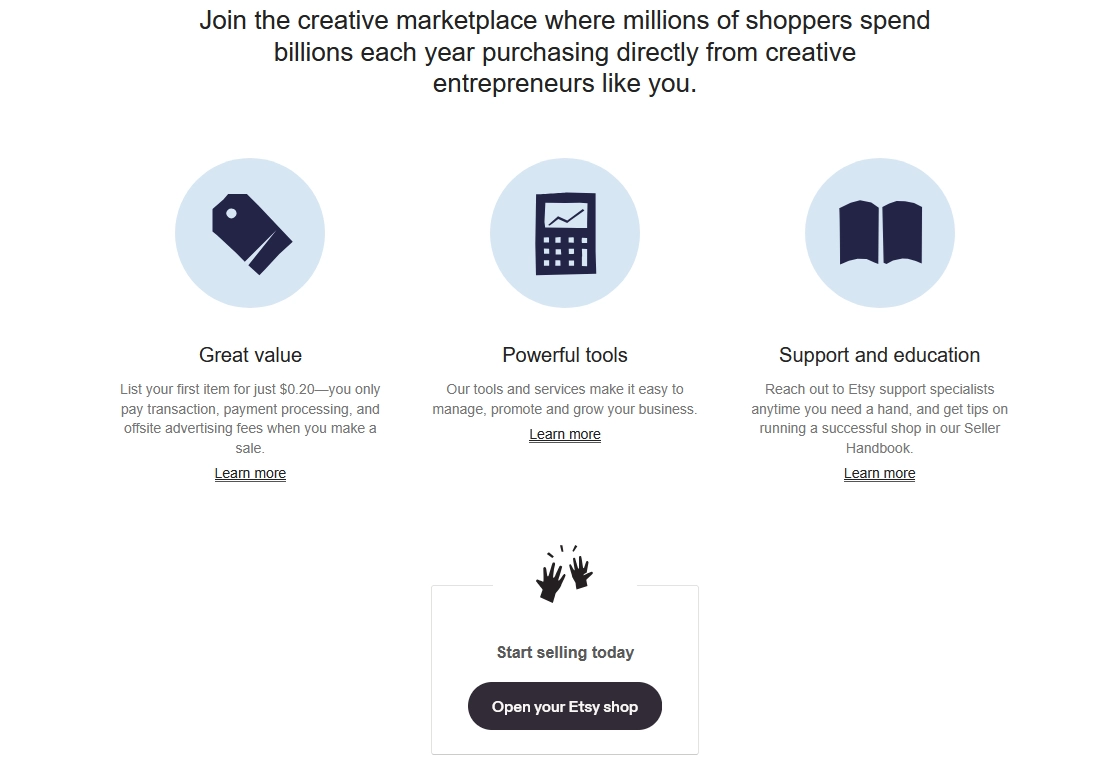 Etsy remains the dominant marketplace for handmade goods, with 96 million active buyers searching for exactly what you make.
Craft Fairs and Markets
Booth fees range from $25–$200 depending on the event, but you keep 100% of sales and get face-to-face feedback. Craft fairs work best for higher-ticket items ($20+) where customers can touch and smell the product.
Best for: Candles, soap, wooden items, and home decor.
Local Shops and Consignment
Consignment splits typically run 60/40 or 70/30 (you/them). Lower margin per sale, but the shop handles display and foot traffic. Approach shops with a professional sell sheet and a few samples.
Best for: Items with strong visual appeal — jewelry, art prints, and handmade clothing.
Instagram and TikTok Shop
Social selling is growing fast. Instagram Shop and TikTok Shop let you sell directly from posts. The challenge is building an audience first. Expect to invest 2–3 months in content before seeing consistent sales.
Best for: Stickers, jewelry, and anything visually striking that photographs well.
Startup Costs: What Each Craft Actually Requires
| Craft | Minimum Startup | Recommended Startup | Ongoing Cost per Item |
|---|---|---|---|
| Candles | $100 | $200 | $3–$5 |
| Soap/bath bombs | $75 | $150 | $1.50–$3 |
| Jewelry | $50 | $200 | $2–$5 |
| Digital prints | $20 | $50 | $0–$2 |
| Clothing/accessories | $100 | $300 | $5–$8 |
| Pet products | $50 | $150 | $2–$4 |
| Home decor | $50 | $200 | $3–$10 |
| Personalized gifts | $30 | $200 | $8–$15 |
| Seasonal items | $30 | $100 | $2–$8 |
| Stickers | $20 | $50 | $0.10–$0.30 |
| Resin art | $80 | $200 | $5–$12 |
| Knitted/crocheted | $30 | $100 | $4–$8 |
| Tote bags/pouches | $30 | $80 | $3–$7 |
| Art prints | $30 | $100 | $3–$8 |
| Wooden items | $100 | $250 | $10–$20 |
Common Mistakes to Avoid
We've watched enough new makers stumble to spot the recurring traps.
Underpricing Your Work
The most common mistake among new makers. Calculate your hourly wage after materials — if you're making $4/hour on a $15 item, you're underpricing. The Etsy Seller Handbook has a pricing calculator worth using.
Ignoring Photography
Online, your product photo is your storefront. Blurry phone shots kill sales. Spend $20 on a basic lightbox and learn natural-light photography basics.
Trying to Sell Everything
Pick 2–3 crafts that match your skills and budget. Spreading yourself across 10 product lines means none of them get good.
Skipping the Math on Shipping
Free shipping sounds great until you realize it's eating your margin. Factor shipping into your product price or set a minimum order for free shipping.
Not Tracking Expenses
Supply costs, platform fees, shipping materials, craft fair booth fees — they add up fast. Track everything from day one so tax season doesn't become a nightmare.
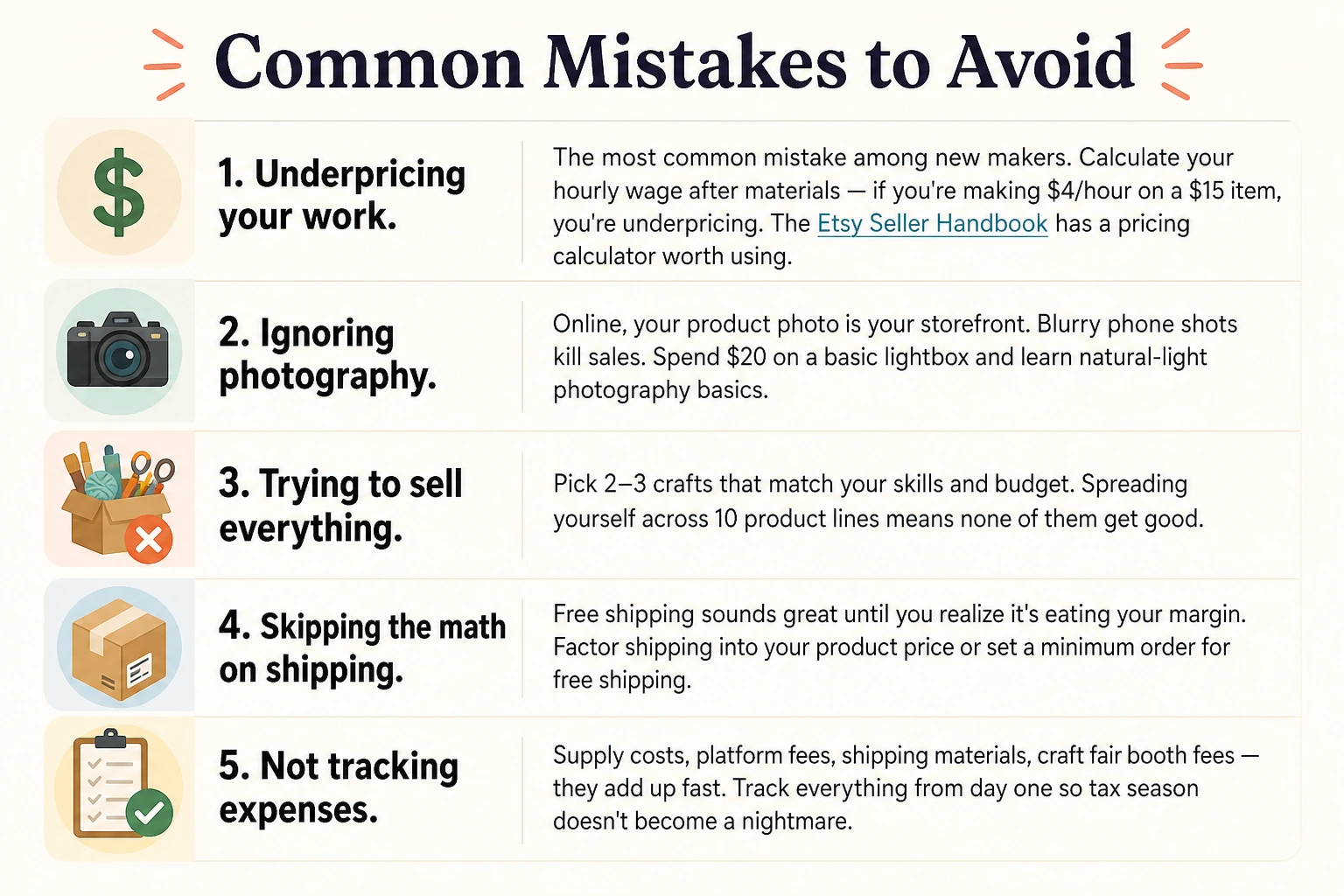 Avoiding these common mistakes early can save you months of wasted inventory and underpriced labor.
Getting Started This Week
1. Pick One Craft
Choose from this list something that fits your budget and skills. Start with something in the $50–$100 startup range if you're new. Don't overthink it — action beats analysis paralysis.
2. Buy a Small Supply Batch
Don't invest $300 in materials before you've made and sold your first 10 items. Buy enough for a small test run and validate demand first.
3. Make 5–10 Units
Focus on consistency, not perfection. Your 10th item will be better than your 1st — that's normal. Batch production teaches you efficiency.
4. Set Up an Etsy Shop
It costs $0.20 to list your first item. Use clear photos with natural light. The platform handles payment processing and gives you access to millions of buyers.
5. Post Your First Listing
Write a description that answers what it is, what it's made of, and who it's for. That's it. Don't write a novel — buyers scan, they don't read.
6. Tell People
Share on social media, bring items to work, mention it to friends. Your first 10 sales almost always come from people you know.
The hardest part isn't making the craft — it's listing the first one. Once you've got a live listing and your first sale, the rest is iteration. You'll learn which colors sell, which sizes move, and which price points your audience will actually pay. That's the real feedback loop that turns a side experiment into a real income stream.
Related Resources

Track Your Side Hustle Income
Organize your craft sales, material costs, and platform fees alongside other income streams with our free Side Hustle Toolkit.
Get the Free Toolkit