
Can you really get paid to work from home without a college degree, without prior experience, and without commuting?
The short answer: yes. But the longer answer matters more—because virtual assistant work is legitimate remote employment, not a magic income machine, and getting started requires strategy, not just hope.
We've spent years investigating online earning opportunities at Luck & Fortune Finance, from survey platforms to delivery apps. Virtual assistant jobs sit at an interesting intersection: more stable than gig work, more accessible than specialized freelancing, and genuinely remote in a way that many "work from home" claims aren't.
This guide cuts through the hype. You'll learn exactly what virtual assistants do, whether you can start without experience, what you'll actually earn, where to find legitimate jobs, and how to spot the scams that prey on hopeful remote workers.
What Do Virtual Assistants Actually Do?
The term "virtual assistant" creates a misleading image. Most people picture someone answering a CEO's emails while lounging in pajamas. The reality is broader, more demanding, and more professional.
Virtual assistants provide administrative, technical, or creative support to businesses, entrepreneurs, or busy professionals—remotely. The "virtual" part means location independence. The "assistant" part undersells the scope. Many VAs function more like remote operations managers, handling critical business functions that would otherwise require in-house staff.
Common VA Task Categories
Email and Calendar Management
Sorting inboxes, prioritizing messages, drafting responses, scheduling meetings, and managing appointments. This sounds simple until you're handling 200+ daily emails for an executive with multiple business interests.
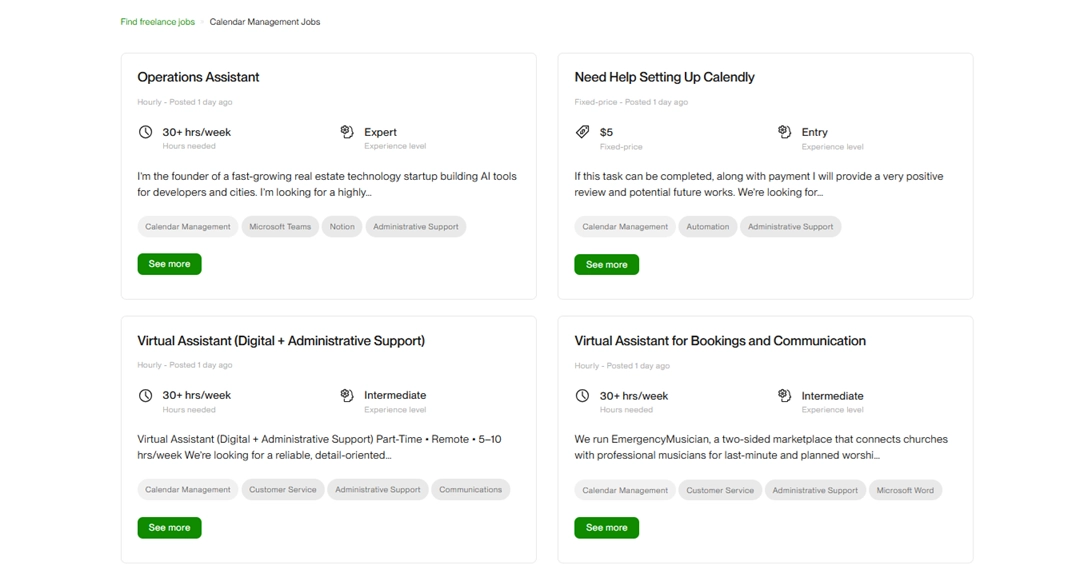 Calendar management is one of the most in-demand skills for virtual assistants working with busy executives.
Data Entry and Organization
Spreadsheet maintenance, CRM updates, file organization, and database management. Accuracy matters more than speed, but both help.
Customer Service
Responding to inquiries, processing orders, handling complaints, and maintaining client relationships through email, chat, or occasionally phone.
Social Media Management
Creating content calendars, scheduling posts, responding to comments, monitoring analytics, and basic graphic design using tools like Canva.
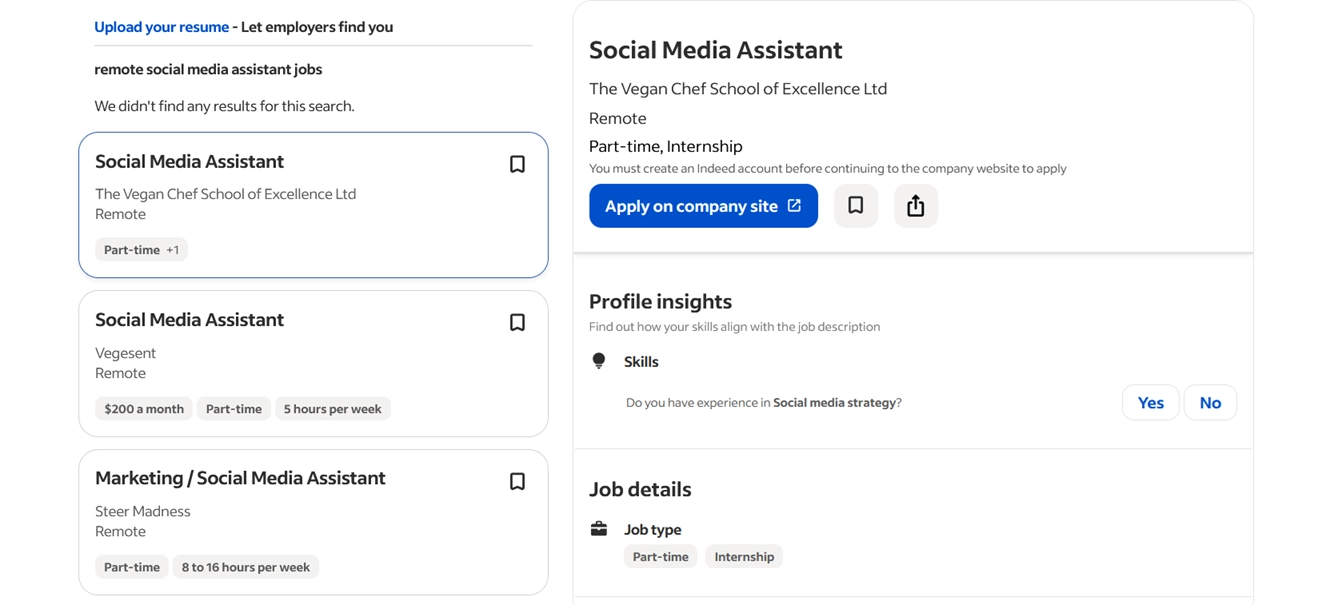 Social media management is a high-value specialization that commands premium rates of $30-50/hour.
Bookkeeping Basics
Invoicing, expense tracking, receipt categorization, and basic financial reconciliation. Note: this requires more specialized knowledge and typically commands higher rates.
Research and Documentation
Compiling market research, creating reports, drafting correspondence, taking meeting notes, and maintaining standard operating procedures.
Travel and Logistics
Booking flights, accommodations, and ground transportation; managing complex itineraries for business travel.
Project Coordination
Tracking deadlines, following up with team members, updating project management tools like Trello or Asana, and ensuring deliverables stay on schedule.
Most VAs don't do all of this. Typically, you'll specialize in 3-5 core competencies based on your skills and client needs. Entry-level VAs often start with administrative tasks and expand their offerings as they gain experience.
A Realistic Day in the Life
Your workday depends heavily on your client mix. A VA supporting three small business owners might spend mornings managing one client's inbox and social media, afternoons handling another's customer service queue, and evenings updating spreadsheets for a third. Someone supporting a single executive might have deeper but narrower responsibilities—managing that person's entire digital life.
The common thread: you're solving problems so someone else can focus on higher-value work. That requires reliability, communication, and the ability to figure things out independently.
Can You Do This Without Experience?
Here's the honest answer: yes, but with important caveats.
You don't need previous VA experience to become a virtual assistant. Many successful VAs started from completely unrelated backgrounds—retail, hospitality, teaching, parenting, administrative work in traditional offices. What you do need are transferable skills that translate to remote administrative work.
Essential Transferable Skills
Computer Literacy
You don't need to be a programmer, but you should be comfortable with Google Workspace or Microsoft Office, able to learn new software quickly, and capable of troubleshooting basic technical issues. If you currently struggle with attachments or can't navigate cloud storage, address those gaps first.
 Proficiency with cloud storage platforms like Dropbox, Google Drive, and OneDrive is essential for modern virtual assistants.
Written Communication
VA work happens primarily through text. You need to write clearly, professionally, and with appropriate tone. Clients will judge your competence partly by whether your emails need editing.
Organization and Time Management
You'll juggle multiple clients, deadlines, and priorities without a manager standing over you. If your personal life is chronically disorganized, VA work will amplify that stress.
Reliability and Professionalism
Remote work requires self-discipline. Clients hire VAs to reduce their cognitive load, not add to it by chasing down missing work or wondering if you'll appear.
The "No Experience" Reality Check
Many articles promise "virtual assistant jobs no experience required" with six-figure incomes. This is misleading. While you can start without direct VA experience, you're competing against others who may have administrative backgrounds, college degrees, or existing client relationships.
Starting without experience means:
- Accepting lower initial pay ($12-15/hour rather than $25+)
- Building portfolio through small projects or practice work
- Taking longer to land your first client
- Potentially offering a narrower service range initially
None of this is a dealbreaker. It just means managing expectations. The VAs who succeed from scratch are those who treat the early phase as skill-building rather than expecting immediate high earnings.
How Much Do Virtual Assistants Make?
Pay varies dramatically based on experience, specialization, location, and whether you're employed through a platform or working directly with clients.
Entry-Level Rates ($15-20/hour)
New VAs working through platforms or taking generalist roles typically earn $15-20 per hour according to 2025-2026 industry data from PayScale and Indeed. This is honest work at honest pay—not glamorous, but competitive with many in-person administrative roles when you factor in the absence of commuting costs and wardrobe requirements.
At 20 hours per week at entry-level rates, that's $600-1,200 monthly. At 40 hours, it's $1,200-1,600 at $15/hour, scaling up to $2,400-3,200 as you gain experience toward the $20/hour range. These figures represent part-time virtual assistant jobs and entry-level full-time positions.
Experienced Generalist Rates ($25-35/hour)
After 6-12 months of proven reliability and skill development, rates typically jump to $25-35/hour. This increase reflects your track record, expanded capabilities, and the confidence to work directly with clients rather than through platforms that take significant cuts.
Specialized VA Rates ($35-50+/hour)
Specialization creates the biggest earning jumps. VAs offering specific high-value skills command premium rates:
- Social media management: $30-50/hour (requires platform expertise and content skills)
- Bookkeeping: $40-60/hour (requires accounting knowledge and software proficiency)
- Real estate transaction coordination: $35-50/hour (requires industry knowledge)
- E-commerce operations: $30-45/hour (requires platform-specific expertise with Shopify, Amazon, etc.)
- Executive assistance to C-suite: $40-75/hour (requires exceptional reliability and discretion)
Geographic Variations
US-based VAs typically earn more than those in other countries, reflecting cost-of-living differences and client preferences for timezone alignment and cultural familiarity. However, remote work globalization means skilled VAs from anywhere can compete for international clients—especially those offering specialized expertise or language skills.
Part-Time vs. Full-Time Income Potential
Many VAs work part-time by choice—parents fitting work around childcare, students supplementing income, or side hustlers building a more stable income stream than gig work provides.
Part-time virtual assistant jobs offering 10-20 hours weekly can generate $600-2,000 monthly depending on rates. Full-time VAs with established client relationships and specialization can realistically earn $4,000-8,000 monthly, with top specialists exceeding $10,000.
The key variable isn't time—it's value. Five hours of specialized, high-trust work for a busy executive often pays better than 20 hours of basic data entry.
Where to Find Virtual Assistant Jobs
The job search strategy depends on whether you want the stability of platform employment or the higher earnings (and higher uncertainty) of independent client work.
VA-Specific Platforms
These companies hire VAs as contractors or employees, providing clients and handling administrative overhead:
Belay — Specializes in matching virtual assistants with busy executives, entrepreneurs, and small teams. Requires application process including skills assessment. Generally higher-caliber clients and better pay than general freelance platforms per Glassdoor employee reviews.
 Belay specializes in matching VAs with executives and entrepreneurs, offering higher-caliber clients than general freelance platforms.
Time Etc — UK-based platform hiring VAs for ongoing client relationships rather than one-off tasks. Emphasizes long-term placements and steady work.
Fancy Hands — Task-based model where you complete individual requests rather than ongoing client relationships. Good for building initial experience and flexibility, though pay per task can be modest.
WoodBows and 24/7 Virtual Assistant — Overseas-based VA companies hiring US VAs for client work. Mixed reviews on pay and working conditions—research Glassdoor or Indeed carefully before committing.
General Freelance Platforms
Upwork — Massive freelance marketplace with abundant VA postings. Competition is fierce and rates vary wildly. Success requires a strong profile, competitive initial pricing to build reviews, and persistence. Quality clients exist but so do bargain hunters expecting executive assistance at minimum wage.
Fiverr — Service-based platform where you create predefined service packages. Can work for VAs with clear, repeatable offerings ("I will manage your Instagram for $200/week"). Less suitable for generalist administrative work.
Direct Hiring Routes
Many VAs find better clients outside platforms entirely:
LinkedIn — Optimize your profile for virtual assistant services, engage with content from your target client demographic, and use LinkedIn's job search for remote administrative positions. Many companies now hire VAs through standard job postings rather than VA-specific platforms.
Company Career Pages — Businesses increasingly list "remote administrative assistant" or "virtual executive assistant" positions directly. These often provide more stability than freelance platforms with benefits and employment protections.
Networking and Referrals — The highest-quality VA jobs rarely appear on public job boards. They circulate through business networks, referrals from existing clients, and word-of-mouth. Building relationships in entrepreneurial communities, industry-specific groups, and local business networks creates access to these hidden opportunities.
Specialization Paths
Rather than competing as a generalist, consider specializing:
Real Estate VAs — Handle transaction coordination, listing management, and client communication for agents and brokers. Requires learning real estate-specific software and processes but creates recurring revenue from busy agents.
E-commerce VAs — Manage product listings, customer service, order processing, and inventory for online sellers. High demand from Amazon sellers, Shopify stores, and Etsy shops.
Social Media VAs — Content creation, scheduling, community management, and analytics for businesses building their online presence. Requires platform expertise and often creative skills.
Podcast/Content VAs — Edit audio, write show notes, manage guest scheduling, and handle promotion for content creators. Growing niche as the creator economy expands.
Specialization requires upfront learning but reduces competition and increases earning potential dramatically.
How to Get Started
If you're ready to pursue virtual assistant jobs for beginners, here's the practical path forward:
Equipment and Setup
Essential:
- Reliable computer (laptop or desktop, less than 5 years old ideally)
- Stable high-speed internet (25+ Mbps download, capable of handling video calls)
- Quiet workspace with professional background for video calls
- Smartphone for two-factor authentication and occasional urgent communication
Recommended:
- Second monitor (dramatically improves productivity for administrative work)
- Noise-canceling headphones for focus and professional calls
- Ergonomic setup for long hours at the computer
Skill Foundation
Before applying for jobs, ensure proficiency with:
- Google Workspace (Gmail, Google Calendar, Google Docs, Sheets, Drive) OR Microsoft 365 equivalent
- Video conferencing (Zoom, Google Meet, Microsoft Teams)
- Basic project management tools (Trello, Asana, or Monday.com)
- Cloud storage and file sharing (Google Drive, Dropbox, OneDrive)
 Google Workspace proficiency is essential for most virtual assistant positions.
Free tutorials and practice projects can build these skills quickly. Don't claim proficiency you don't have—clients will notice immediately.
Portfolio Building (Even Without Clients)
The catch-22 of entry-level virtual assistant work: clients want experienced VAs, but you need clients to gain experience. Solve this by:
Creating Sample Work:
- Draft a professional email response to a fictional inquiry
- Build a well-organized spreadsheet tracking sample data
- Create a social media content calendar for a pretend business
- Design a simple Canva graphic appropriate for business use
Offering Discounted or Free Initial Work:
- Help a friend with their small business administrative needs
- Volunteer for a nonprofit requiring administrative support
- Offer a reduced rate to your first 2-3 clients in exchange for testimonials
Documenting Transferable Experience:
- Administrative work from previous jobs (even retail management involves scheduling, inventory tracking, and customer communication)
- Organization systems you've built for personal or volunteer commitments
- Technical skills from any previous role
Application Strategy
For Platform Employment:
- Complete all profile sections thoroughly
- Take skills assessments seriously (they filter applicants)
- Write custom cover letters addressing specific client needs
- Start with slightly lower rates to build reviews, then increase
For Direct Client Work:
- Create a simple website or LinkedIn portfolio showcasing your services
- Write specific, benefit-focused service descriptions (not "I do admin work" but "I help busy entrepreneurs reclaim 10 hours weekly by managing their inboxes and calendars")
- Follow up on applications professionally
- Ask for feedback when rejected
Expect the job search to take time. Most successful VAs applied to dozens of positions before landing their first serious client. Persistence matters more than perfect credentials.
Red Flags to Avoid
The remote work space attracts scams preying on people desperate for location-independent income. Protect yourself by recognizing these warning signs:
"Pay to Work" Scams
Legitimate employers never require upfront payment for training, equipment, "certification," or job placement. If you're asked to pay anything before earning, walk away. This includes "registration fees," "background check fees" (legitimate employers cover these), or required purchases from specific vendors.
Unrealistic Pay for "No Effort"
Promises of "$50/hour with no experience required" or "$5,000 monthly working 2 hours daily" are fictional. Entry-level VA work pays modestly. High pay requires high skill or high trust built over time. If it sounds too good to be true, it's not true.
Vague Job Descriptions
Real job postings specify responsibilities, required skills, and expectations. Scams use vague language like "work from home opportunity" or "be your own boss" without explaining what you'll actually do. Legitimate VAs know exactly what tasks they're performing.
Requests for Personal Information Upfront
Never provide your Social Security number, bank account details, or copies of identification before a legitimate hiring process is complete. Scammers use this information for identity theft. Real employers collect sensitive information through secure, documented processes after you've been hired.
Check-Cashing Schemes
A common scam: you're "hired" and sent a check to purchase equipment, with instructions to send excess funds to a "vendor." The check bounces after you've sent real money. Legitimate employers don't operate this way.
Pressure Tactics
Scammers create urgency: "Only 3 spots left!" or "Must start today!" Real VA hiring involves a normal process with time for questions and consideration.
Trust your instincts. If something feels off, research thoroughly. Check company reviews on Glassdoor, Better Business Bureau, and Reddit communities. Legitimate opportunities survive scrutiny; scams rely on preventing you from looking too closely. For additional guidance, the FTC maintains resources on job scams worth reviewing.
Quick Comparison: Where to Find VA Work
| Platform/Route | Pay Range | Experience Required | Best For |
|---|---|---|---|
| Belay | $20-35/hour | Moderate (skills assessment) | Those seeking quality executive clients |
| Time Etc | $15-25/hour | Entry to moderate | Steady, long-term client relationships |
| Fancy Hands | $3-7 per task | None | Flexible, task-based entry-level work |
| Upwork | $15-75+/hour | Varies widely | Building portfolio and direct client relationships |
| LinkedIn / Career Pages | $18-40/hour | Entry to experienced | Employment benefits and stability |
| Networking/Referrals | $25-75+/hour | Experienced preferred | Highest-quality, best-paying opportunities |
The Honest Math: Is VA Work Worth It?
Let's talk numbers. A VA working 20 hours weekly at entry-level rates ($15-20/hour) earns $1,200-1,600 monthly. At 30 hours, that's $1,800-2,400. Full-time at $25-35/hour (achievable within 6-12 months) generates $4,000-5,600 monthly.
These aren't get rich quick numbers. They're honest remote work numbers—competitive with many in-person administrative roles when you factor in savings on commuting, wardrobe, and meals out.
The real value proposition isn't just the hourly rate. It's the skill building, the professional development, and the remote-work credentials that transfer to future opportunities. VA work can be a stepping stone to higher-paying remote roles, specialized consulting, or even building your own agency.
FAQ: Virtual Assistant Jobs
Related Resources

Organize Your Side Hustles
Track your VA earnings alongside other income streams with our free Side Hustle Toolkit.
Get the Free Toolkit