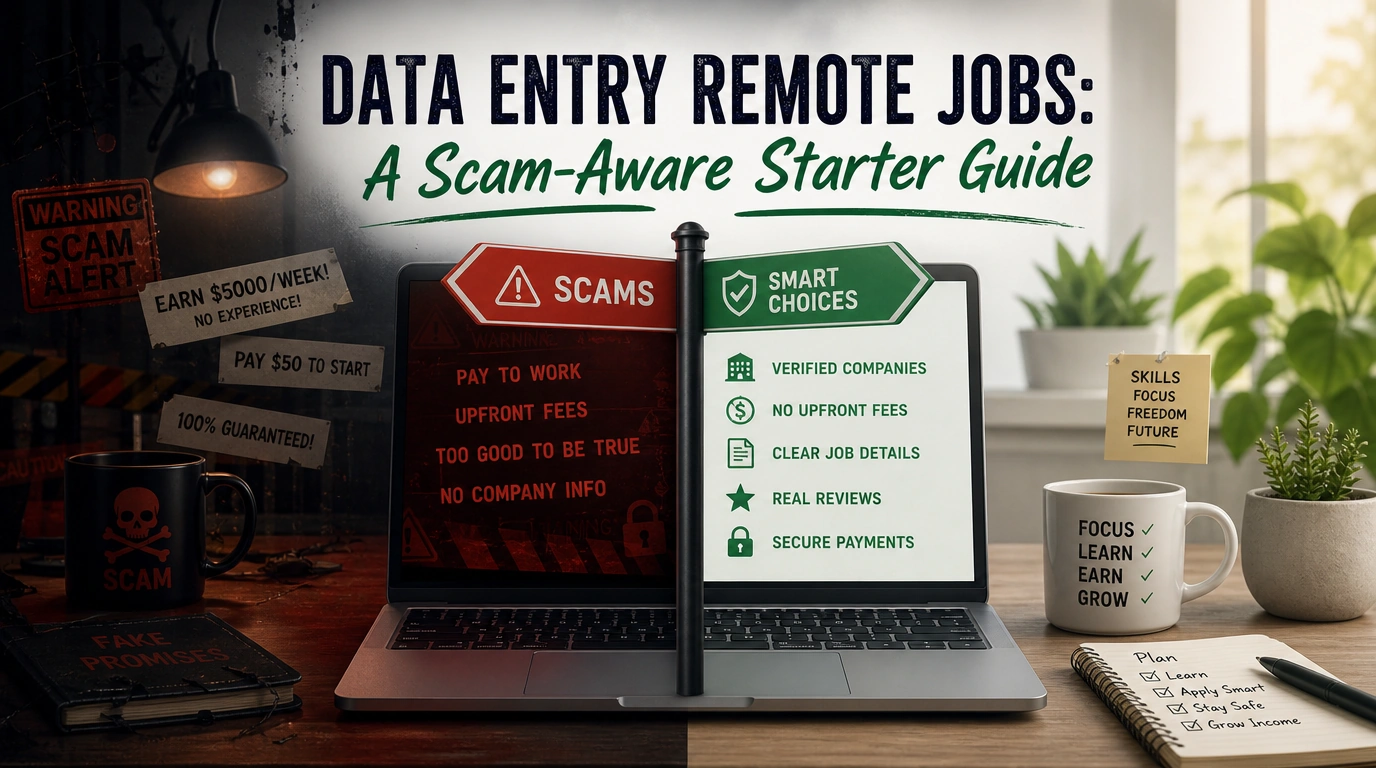
If you've ever typed "work from home with no experience" into a search bar, data entry remote jobs were almost certainly among the first results. Searches like "work from home data entry jobs no experience" or "data entry jobs" return thousands of listings promising flexible hours, quiet tasks, and a paycheck that lands while you sit on your couch. Some of that is true. A lot of it isn't.
At Luck & Fortune Finance, we've spent years sorting legitimate online earning opportunities from the noise. Data entry is one of the most searched entry-level remote categories, and it's also one of the most polluted by misleading ads, fake training programs, and outright scams. This guide explains what real data entry remote jobs work from home actually look like, where to find them, how much they typically pay, and how to protect yourself during the application process.
What Real Remote Data Entry Work Looks Like
Data entry sounds simple: take information from one place and put it into another. In practice, the tasks vary widely. A typical assignment might involve transcribing handwritten forms into a database, updating spreadsheets with pricing changes, copying product details into an e-commerce backend, or categorizing survey responses.
The common thread is accuracy and speed. Employers care less about creativity and more about whether you can process large volumes of information without errors. Many roles are repetitive. That repetition is either relaxing or draining, depending on your temperament, and it's worth being honest about that before you commit.
General Administrative Data Entry
Updating CRM records, invoices, or contact lists for small businesses.
E-Commerce Product Listing
Adding descriptions, SKUs, images, and prices to online stores.
Form Processing
Transcribing paper or PDF forms into digital systems for healthcare, insurance, or government contractors.
Research & Database Cleaning
Verifying outdated records, removing duplicates, and standardizing formats.
The tools you'll see most often are Microsoft Excel or Google Sheets, cloud-based databases like Airtable or Notion, and company-specific portals. Some positions require basic knowledge of data validation rules or formatting standards. Very few expect you to write code, but comfort with keyboard shortcuts and spreadsheet formulas will save you hours.
A useful way to evaluate a posting is to ask what the output looks like. If the job description only says "enter data" without naming the source documents, the destination system, or the expected daily volume, be skeptical. Real employers usually explain the workflow because they need you to be productive quickly.
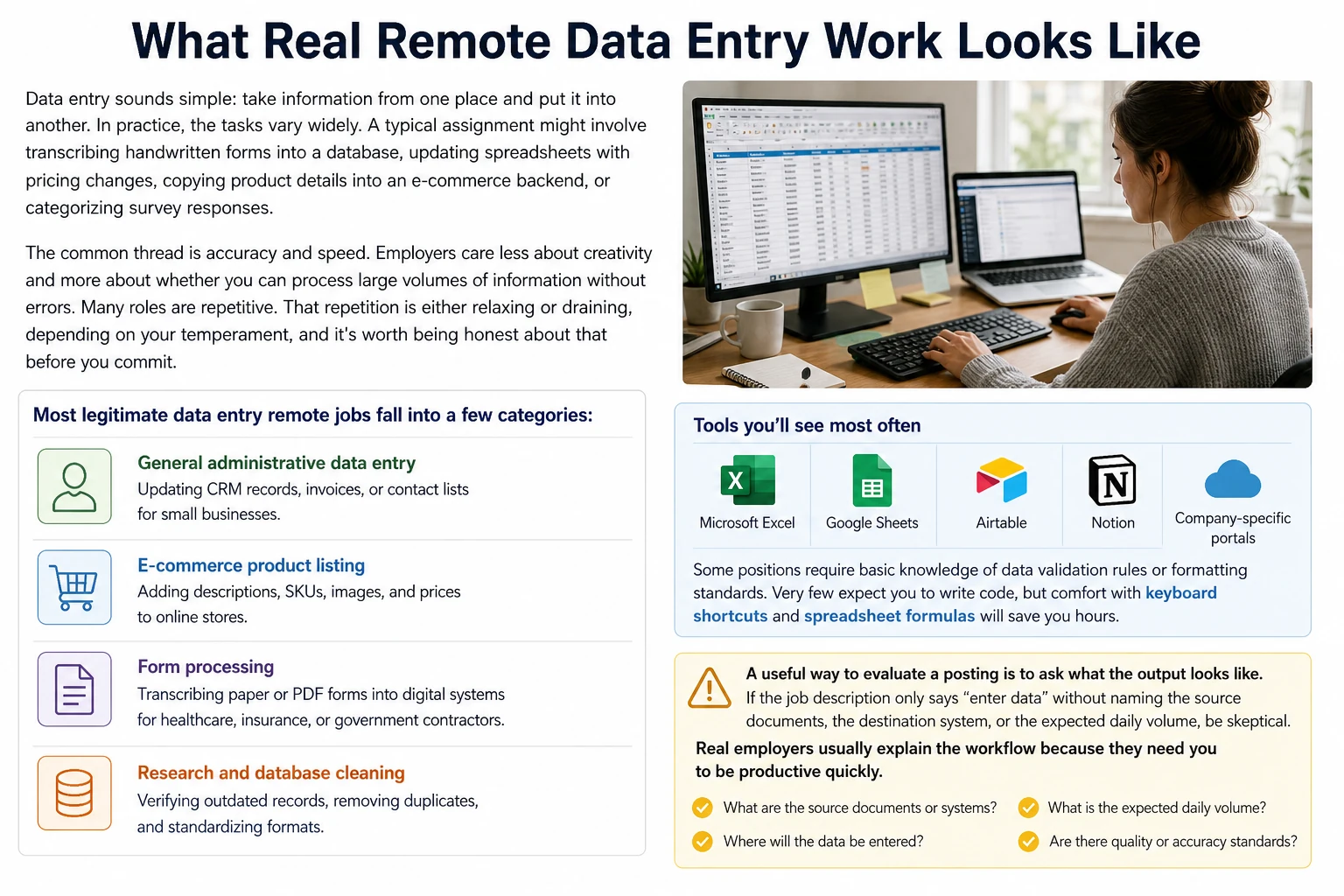 Real data entry work involves specific tasks, source documents, and measurable output -- not just vague "enter data" instructions.
Common Types of Data Entry Jobs
Not every data entry job is the same. The title, duties, and pay depend on whether the role is general, specialized, or customer-facing. Here are the most common types you'll see advertised:
Data Entry Clerk Remote Jobs
The classic remote positions: enter information, update records, and verify accuracy from home. Titles like "remote data entry clerk jobs" describe this bucket.
Order Entry Remote Jobs
Common in retail, logistics, and manufacturing. Workers type customer orders, part numbers, and shipping details into order management systems.
Data Entry Specialist Jobs
A step up from basic clerk roles. Specialists often clean, validate, and quality-check data rather than just type it.
Freelance Data Entry Jobs Remote
Project-based work found on platforms like Upwork and Fiverr. Rarely full-time but can fill income gaps.
You may also see search phrases like "data entry jobs entry level" or "entry-level data entry jobs" -- both point to the same beginner-friendly roles. The keyword spam you sometimes see -- "job data entry job" repeated in a posting -- is itself a warning sign. Real employers use clear titles like "data entry specialist" or "remote data entry clerk," not keyword-stuffed sentences.
Data Entry Jobs from Home with No Experience
The biggest appeal of data entry is that you don't need a degree or years of experience to start. Searches like "data entry jobs from home no experience," "data entry work from home jobs," and "remote data entry jobs no experience" return thousands of results because demand for beginners is real. Some employers even advertise remote data entry level on the job training jobs, which means they'll teach you their system after you're hired.
But "no experience required" doesn't mean "no skills required." To compete for data entry remote jobs work from home no experience, you still need to show employers that you can type accurately, follow instructions, and meet deadlines. The following basics help more than a long resume:
Typing Speed & Accuracy
Aim for at least 50 words per minute with high accuracy. Some employers test for this during the application process.
Spreadsheet Basics
Sorting, filtering, simple formulas, and clean formatting in Excel or Google Sheets.
Attention to Detail
Catching typos, duplicate entries, and inconsistent formatting matters more than flashy credentials.
Time Management
Deadlines are often tied to batch processing, not a 9-to-5 clock.
Equipment requirements are usually minimal: a reliable computer, stable internet, and a quiet workspace. Some medical or financial data entry roles may require a second monitor, a wired connection, or specific security software. Never pay for "required" software or equipment upfront unless the employer is clearly reimbursing you. That's one of the oldest red flags in this space.
If your typing speed is below 50 words per minute, free practice sites like Typing.com, Keybr, or 10FastFingers can help you improve in a few weeks. For spreadsheets, Google's free Sheets training and Excel's built-in tutorials cover the basics you'll actually use. These small investments of time make a bigger difference than paying for a generic "data entry certificate."
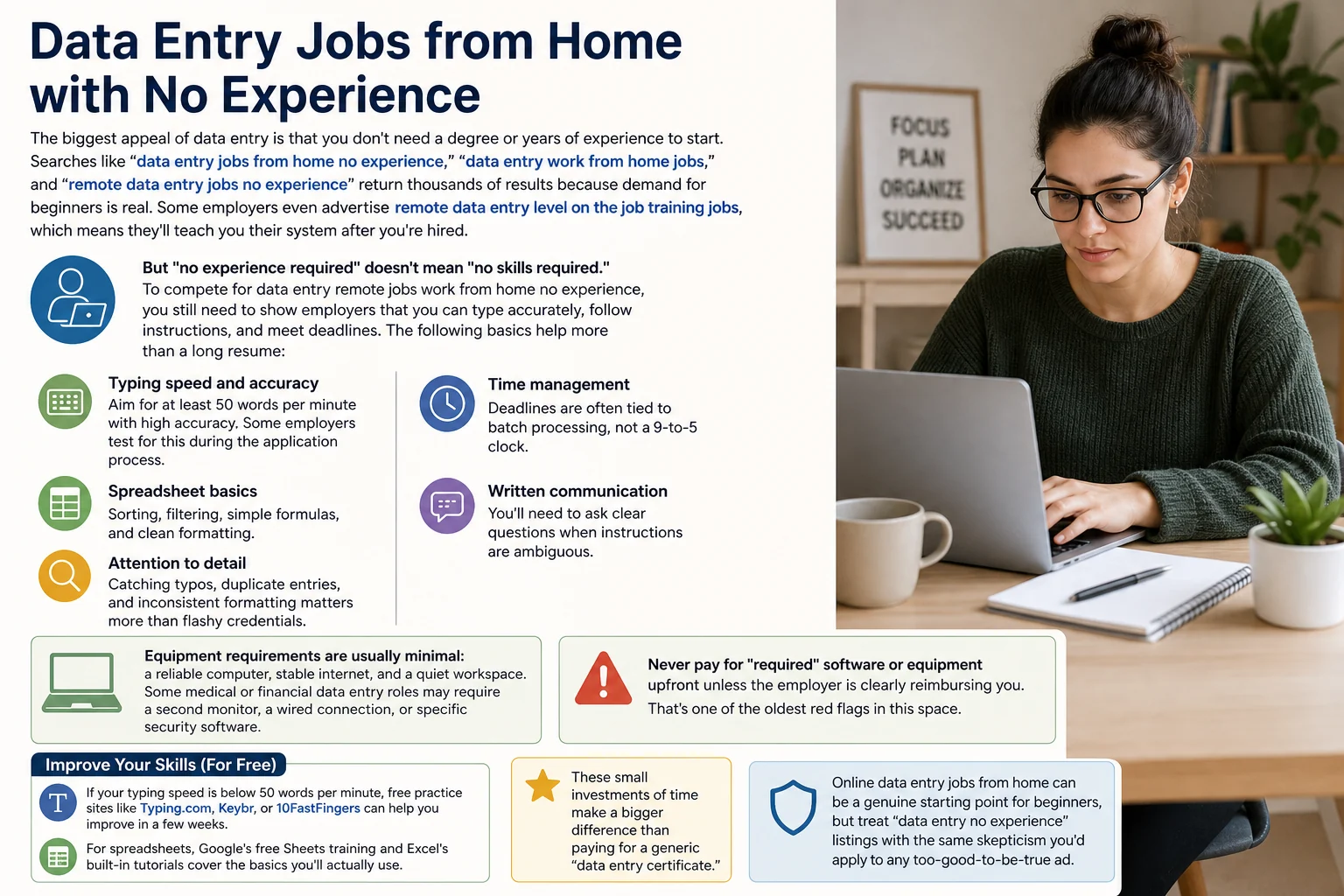 No experience doesn't mean no skills -- typing speed, spreadsheet basics, and attention to detail are what employers actually want.
Part-Time Data Entry Jobs and Flexible Schedules
Many people are not looking for a full 40-hour week. They want part time data entry jobs that fit around school, caregiving, or another job. The good news is that part time data entry clerk jobs and data entry part time contracts are widely available, especially through staffing agencies and freelance platforms.
Flexible arrangements come in several forms:
Part Time Data Entry Jobs
Usually 15 to 25 hours per week with set shifts or weekly hour targets.
Data Entry at Home Positions
Roles specifically home-based rather than office-based, often with flexible start times.
Part Time Evening Data Entry Jobs
Popular with people who need to work after a day job or school.
Data Entry Jobs for College Students
Short-term or seasonal roles that fit around class schedules.
Data Entry Jobs No Phone
Roles that are purely typing-based with no calls, ideal if you need a quiet environment.
Freelance Project Work
One-off batches, such as converting a PDF directory into a spreadsheet or cleaning a mailing list.
The trade-off is usually pay and stability. Part-time and contract roles rarely include benefits, and hours can shrink without warning. One month you have more assignments than you can handle; the next month, crickets. If you need predictable income, combine data entry part time work with another remote side hustle, such as virtual assistant jobs, to add variety and income stability.
Where to Find Legitimate Listings
The best sources for data entry remote jobs are the same places you'd look for other freelance or remote work. The key is to apply directly through verified channels rather than clicking on social media ads or unsolicited messages.
Freelance Platforms
Sites like Upwork, Fiverr, and Freelancer list data entry gigs regularly. Build a simple profile, take any relevant skills tests, and start with small contracts to accumulate ratings. Our freelancing 101 guide walks through the basics.
Company Career Pages
Large employers with steady data processing needs -- insurance companies, healthcare systems, logistics firms, and market research agencies -- sometimes post remote data entry roles directly.
Staffing & Temp Agencies
Agencies like Robert Half, Kelly Services, and Aerotek frequently place contract data entry workers. These roles may be W-2 positions with more predictable hours than freelance gigs.
Remote Job Boards
We Work Remotely, FlexJobs, Remote.co, and Rat Race Rebellion curate remote listings. FlexJobs charges a subscription fee, but the filtering and quality control can save time.
Microtask Platforms
Amazon Mechanical Turk, Clickworker, and Appen offer tiny data tasks rather than traditional jobs. The pay is usually low per task, but they can test whether you enjoy the work.
When you find a promising listing, copy a distinctive sentence from the job description and search it in quotes. If the exact same text appears on dozens of unrelated sites, it's likely a copied or recycled posting, not a real opening.
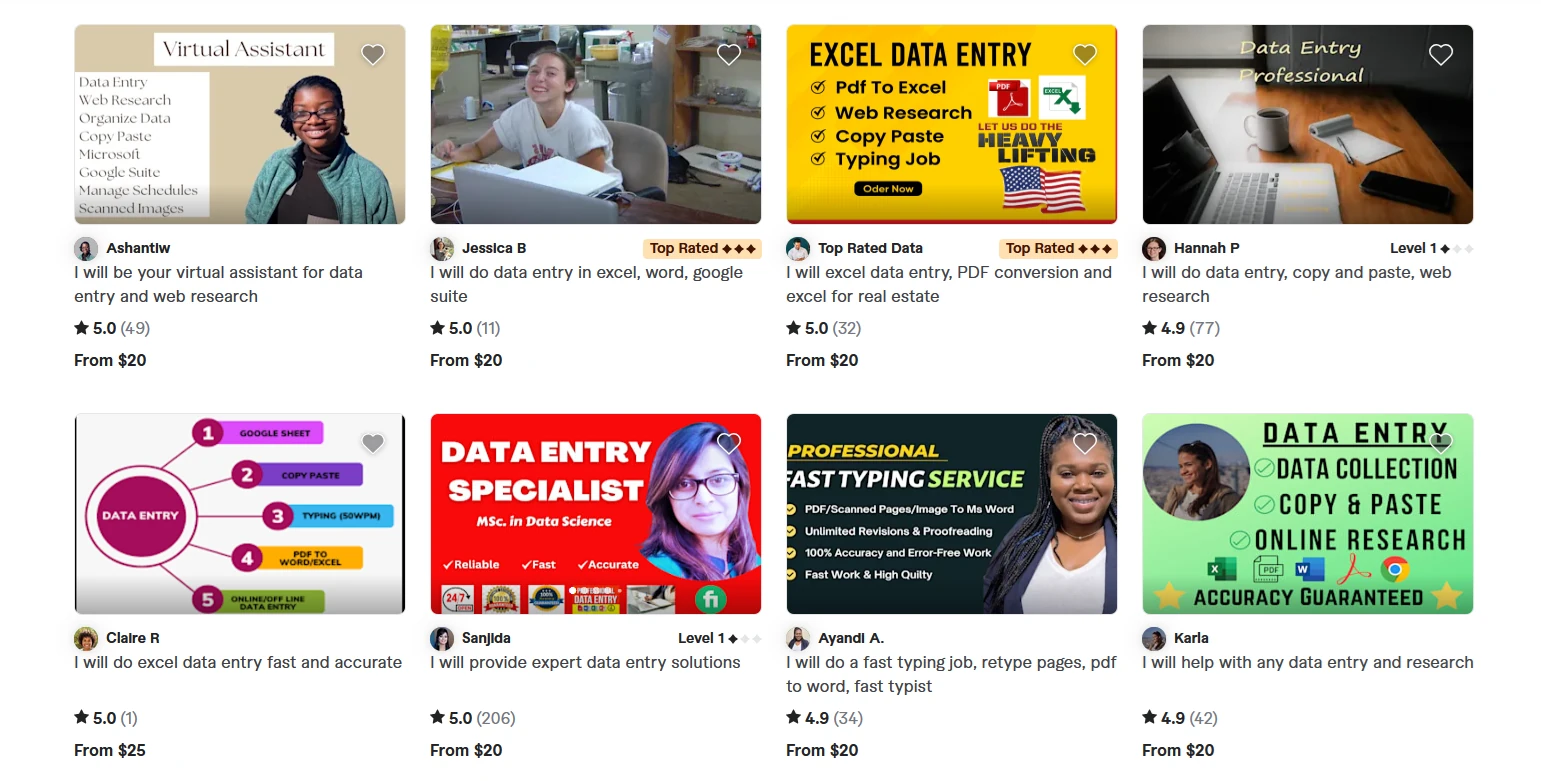 Freelance platforms like Fiverr and Upwork show real, current data entry listings with pay ranges and client reviews.
Medical Data Entry Remote Jobs
Medical data entry remote jobs deserve their own section because they sit at the intersection of higher pay, stricter requirements, and bigger consequences for mistakes.
These roles involve transcribing doctor's notes, entering patient demographics, coding procedures, or updating electronic health records. Accuracy isn't just a preference -- it's a legal and patient-safety requirement. Because of that, employers usually want candidates who understand medical terminology, HIPAA privacy rules, and sometimes specific coding systems like ICD-10 or CPT.
You don't always need a clinical background to get started. Some employers hire entry-level medical data entry clerks and provide training. However, certification can improve your chances. Options include:
CPC Certification
Certified Professional Coder through AAPC, focused on medical coding.
RHIT Credential
Registered Health Information Technician through AHIMA, a broader credential covering health data management.
HIPAA Training
HIPAA training certificates, often available through short online courses.
Pay for medical data entry remote jobs tends to be higher than general data entry, though it varies by employer, region, and whether the role is coding-focused or purely clerical. For people who want to stay in the field long-term, remote data entry careers can progress toward specialist, quality assurance, or data analyst roles. Be cautious of any program that promises certification and a guaranteed job for a high fee. Real credentials come from accredited organizations, not from a Facebook ad.
Before applying, research whether the position requires you to handle protected health information on your own device. Some roles provide a secure workstation or virtual desktop; others expect you to meet strict home-office security standards.
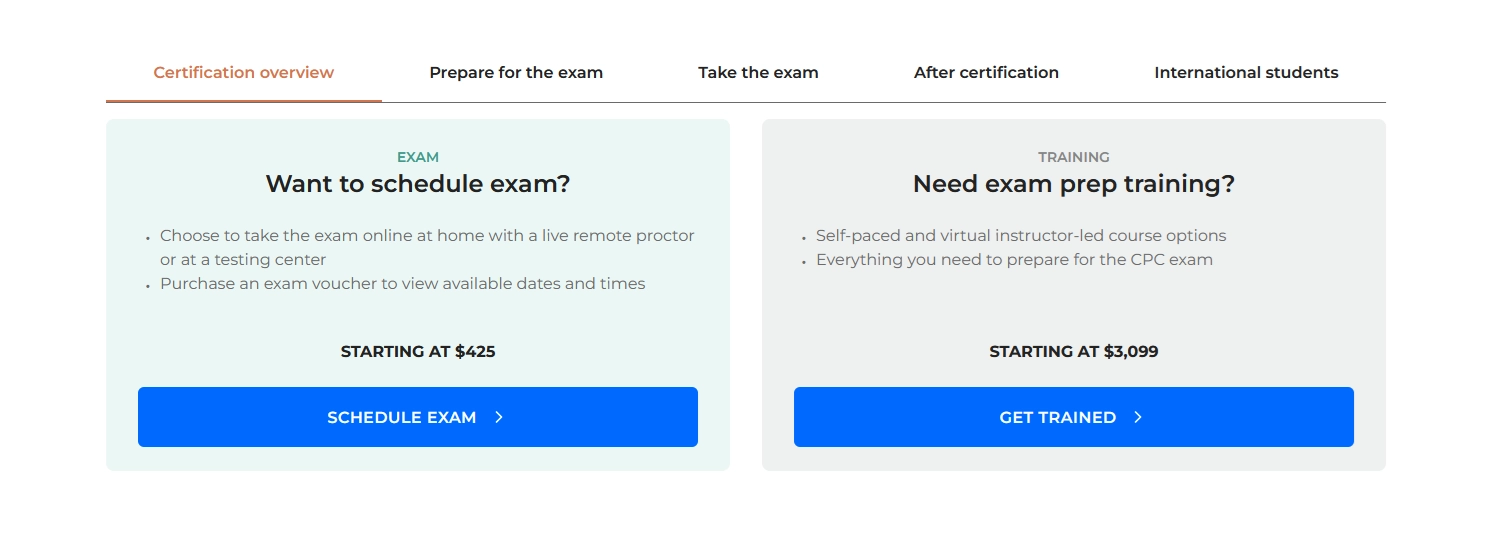 AAPC certification costs are a real investment -- research the options before committing to any medical coding training program.
Data Entry Remote Jobs Hiring Immediately
Listings that advertise "data entry remote jobs hiring immediately" are everywhere. The phrase is effective because it taps into a real desire: start earning this week. But immediate hiring doesn't always mean immediate income.
Sometimes it means the employer needs a large batch of work done quickly and is willing to onboard fast. Retailers, tax preparation firms, healthcare back offices, and logistics companies often surge their data entry staff during busy seasons. Those opportunities can be real.
Other times, "hiring immediately" is a lure for scams that ask for an "application fee," "training deposit," or your banking information before you've even interviewed. If a listing claims urgency, verify the following before applying:
Is the Company Real?
Search the company name plus "reviews" or "scam." Check LinkedIn, the Better Business Bureau, and Glassdoor.
Is There a Real Job Description?
Vague listings with no deliverables, tools, or expectations are a warning sign.
Do They Want Money?
Legitimate employers pay you, not the other way around. Never send money for equipment, training, or software unless you have a signed reimbursement agreement.
Is the Interview Too Easy?
A five-minute chat followed by an immediate job offer is rarely legitimate.
Did They Contact You Out of Nowhere?
Recruiters who message you on WhatsApp or Telegram about an urgent data entry role are usually not recruiters.
Pay Reality Check
Let's be direct about money. Data entry isn't a high-income field, and anyone promising otherwise is selling something.
For general data entry remote jobs in the United States, hourly rates commonly fall in the $12 to $20 per hour range for entry-level work. More experienced contractors or those with specialized skills may earn $20 to $30 per hour, but those rates are not the norm.
The U.S. Bureau of Labor Statistics tracks data entry keyers separately, and its occupational data is a useful reality check if you want to compare regional wages and see how the field is classified.
| Role / Level | Typical Hourly Pay | Notes |
|---|---|---|
| Entry-level general data entry | $12-$20/hour | Most common range for beginners |
| Experienced contractor / specialist | $20-$30/hour | Requires proven accuracy and speed |
| Medical data entry (non-coding) | $18-$25/hour | HIPAA knowledge and medical terminology help |
| Medical coding (CPC/RHIT) | $22-$35/hour | Certification required, higher barrier to entry |
| Piece-rate / project-based | Varies widely | Effective hourly rate depends entirely on your speed |
Some roles pay per piece or per project rather than hourly. In those cases, your effective hourly rate depends entirely on your speed and accuracy. A task that pays $0.50 per form might translate to $15 an hour if you're fast and error-free, or $8 an hour if you're still learning the system. Always do the math before accepting piece-rate work.
International applicants should expect even wider variation. Many global platforms pay rates tied to local markets, which can make data entry less viable in high-cost-of-living areas. If you're outside the U.S., research whether the platform pays in your currency and what the withdrawal fees look like.
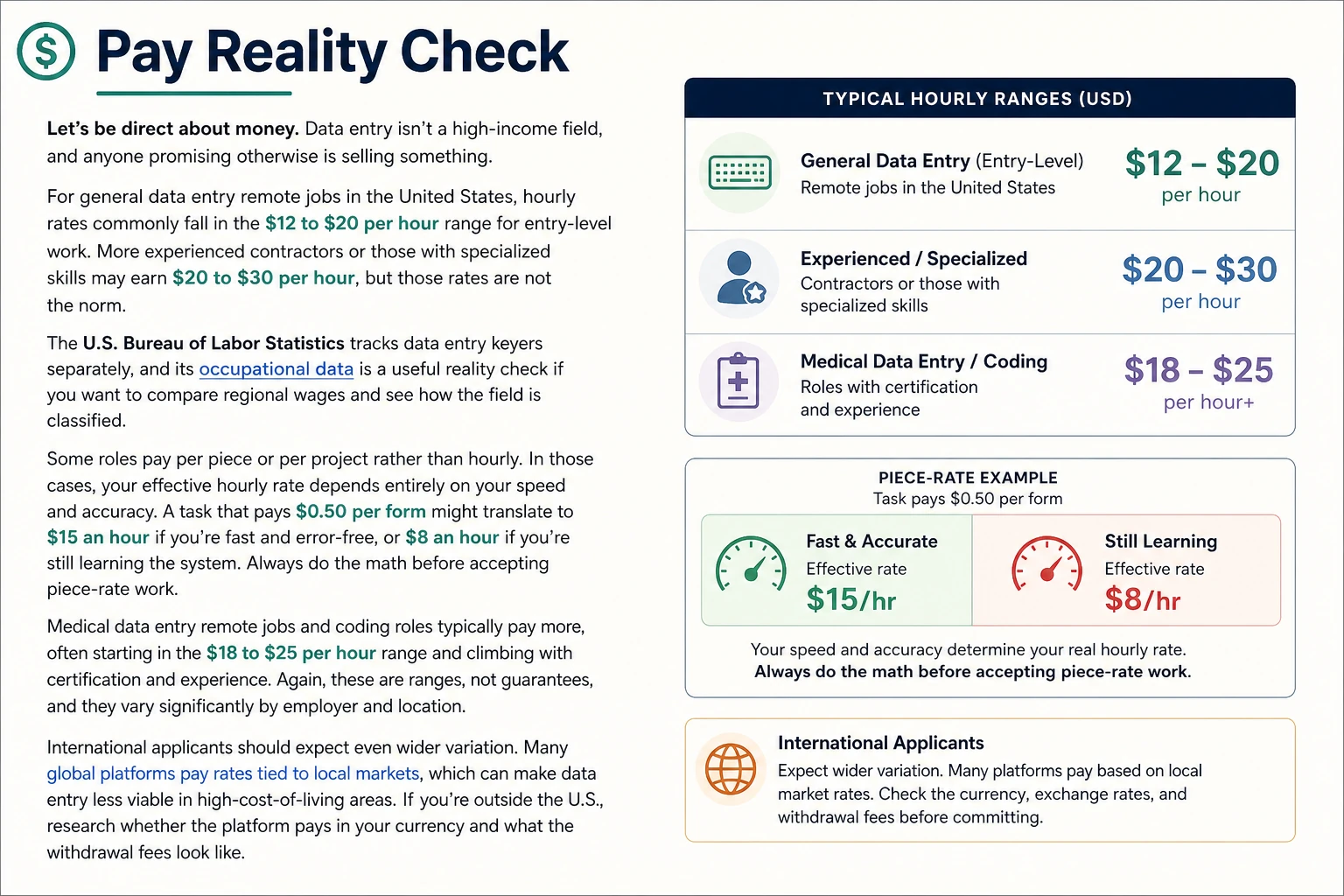 Data entry pay is honest but modest. Realistic expectations prevent wasted time chasing inflated promises.
Scam Red Flags
Data entry remote jobs attract scammers because the barrier to entry is low and the audience is large. Knowing the warning signs will keep you from wasting time or losing money.
Upfront Fees
Any request for payment before you start working is suspect. This includes training fees, certification costs, software licenses, and "priority application" charges.
Vague Job Descriptions
Real employers explain the tasks, tools, hours, and pay structure. Scams often use language like "unlimited earning potential" or "work just 30 minutes a day."
Pressure Tactics
Messages that say "only 3 spots left" or "apply in the next hour" are designed to bypass your critical thinking.
Requests for Personal Info Early
A legitimate employer will not ask for your Social Security number, bank details, or a photo of your ID during the first contact.
Fake Checks
Some scams send a large check, ask you to deposit it and send part of the money elsewhere, and then the check bounces. No real data entry job works this way.
Email Domains That Don't Match
A recruiter from a major company should email from that company's domain, not a Gmail or Yahoo address.
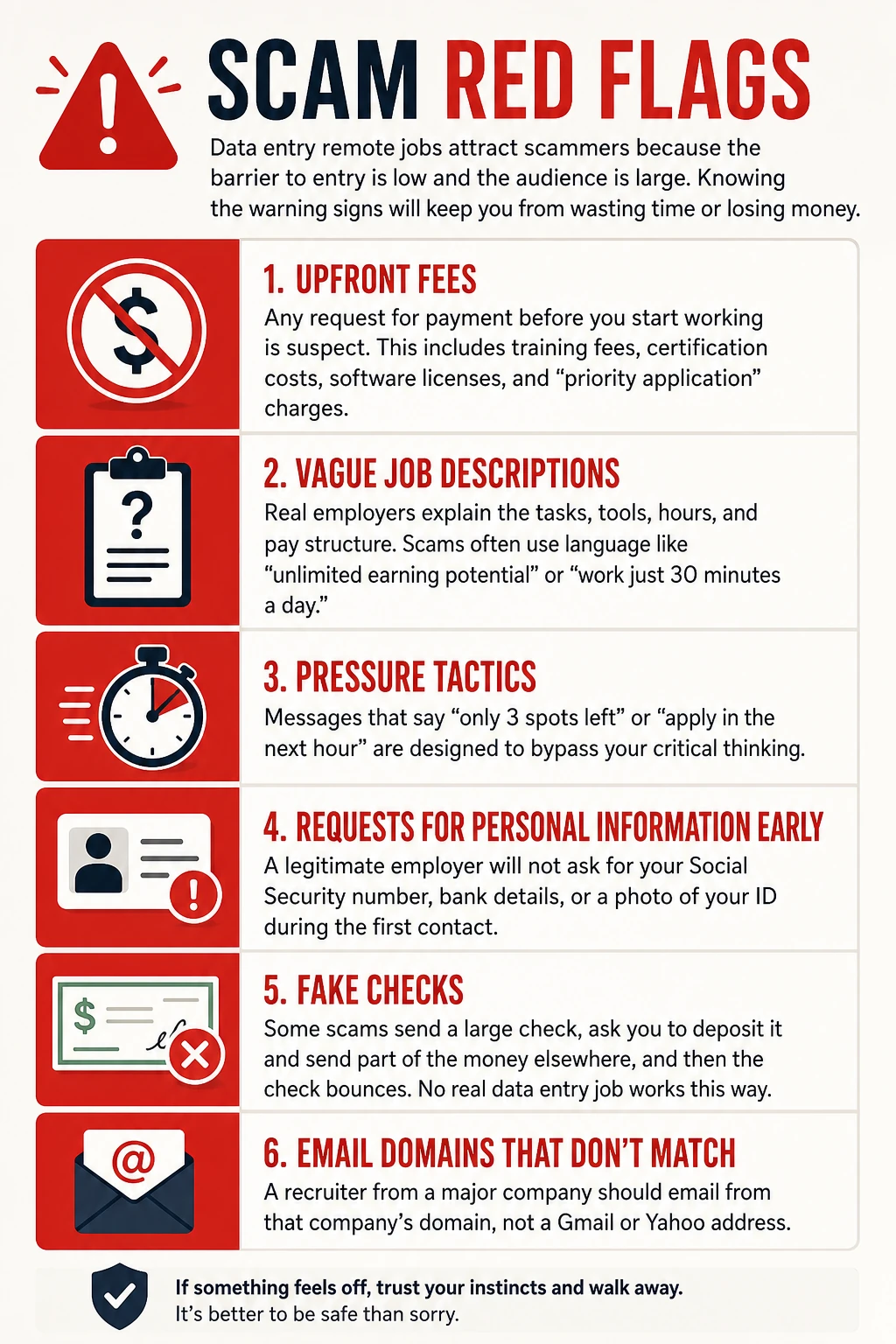 Upfront fees, vague descriptions, and pressure tactics are the most common signs of a data entry scam.
Want to Learn More About Online Scams?
For a deeper look at how online earning scams operate, read our guide on avoiding survey and gig platform scams. Many of the same tactics show up across categories.
Final Take
Data entry remote jobs are a legitimate option for beginners who want to work from home, but they aren't a shortcut to a large income. The best opportunities go to people who are accurate, reliable, and careful about where they apply.
Start by assessing whether the work actually suits you. If repetitive detail-oriented tasks drain you, data entry will feel like a slog. If you find them meditative and predictable, it can be a steady way to earn from home.
Build your skills, choose reputable platforms, and treat every "urgent" listing with skepticism. Consider combining data entry with adjacent remote work to smooth out income gaps. And if you're juggling multiple platforms, applications, or payment schedules, a simple tracking system helps. At Luck & Fortune Finance, our Side Hustle Toolkit includes a profile manager and trial tracker designed for exactly that kind of workflow.
Apply carefully, verify everything, and remember: the goal isn't to find the fastest offer. It's to find a real offer that actually pays.
Data entry remote jobs are real but modestly paid. Build your typing speed, use reputable platforms, never pay upfront, and treat "urgent" listings with healthy skepticism.
FAQ: Data Entry Remote Jobs
Related Resources

Track Your Side Hustle Income
Organize your data entry earnings, freelance gigs, and other side hustle income alongside your budget with our free Side Hustle Toolkit.
Get the Free Toolkit