
"Get paid to write."
Three words that launch a thousand sketchy landing pages. Scroll long enough and you'll find a guru promising $500 per article, a course selling the secret to six-figure freelance income, or a platform that turns out to be a content mill paying pennies.
We've sifted through the noise. At Luck & Fortune Finance, we don't traffic in fantasy. People do get paid to write every day—but what you earn depends entirely on what you write and who hires you. A product review pays differently than a sales page. A poem pays differently than a blog post. The writers who make it aren't luckier; they're just clearer about which door they're walking through.
This guide maps six legitimate paths to get paid to write online. We cover the platforms, the realistic pay ranges, and the scams that prey on people who want this too badly to read the fine print.
The Six Paths at a Glance
Before diving in, here's the full landscape. Each path uses the same tool—your writing—but rewards it differently.
The broadest category. Content mills, direct clients, and Medium pay $0.03–$0.50+ per word depending on platform and specialization.
Amazon Vine, UserTesting, and BetaTesting pay in cash, products, or platform credits for clear, articulate written feedback.
Literary magazines, Amazon KDP, and Medium's Partner Program pay $10–$250 per piece. Volume and quality both matter.
Resume writers charge $100–$400 per document. Sales copy and email sequences command $500–$2,000 per project.
Upwork, Contently, ClearVoice, and Reedsy connect writers to clients. Top-tier rates start at $0.50 per word and climb.
Portfolios, targeted pitches, and three-tier pricing separate writers who get hired from writers who keep applying.
Path 1: Articles and Blog Posts
This is the broadest category—and the one most "get paid to write articles" searches actually want.
Freelance Blogging and Content Mills
If you want to get paid to write blog posts quickly, content mills are the entry ramp. Platforms like Textbroker, WriterAccess, and Stellar (formerly Crowd Content) let you claim assignments without pitching. Rates typically start at $0.03–$0.07 per word. At that pace, a 1,000-word post pays $30–$70.
It's not glamorous, but it builds clips. Better clients want to see published work. A portfolio of ten decent articles beats a blank page every time.
Writers who specialize earn more faster. Technical writing, finance, and healthcare content command premium rates because the barrier to entry is knowledge, not just grammar. If you have expertise in a niche—software, nursing, accounting—lead with that. Generalists compete on price. Specialists compete on value.
Direct Freelance Clients
Once you have samples, you can pitch directly. Small SaaS companies, local businesses, and niche websites need blog posts, case studies, and white papers. Rates jump to $0.10–$0.50 per word for competent writers, and established freelancers in technical or B2B niches command $0.75–$1.50 per word.
The catch: you have to hunt. Cold emails, LinkedIn outreach, and freelance marketplaces all work—but none of them work instantly.
Medium Partner Program
Medium pays based on member reading time. Writers with consistent output report $50–$500 per month, with top performers hitting four figures. It's not a salary, but it's a real way to get paid to write articles on topics you choose. The algorithm favors depth and engagement over keyword stuffing.
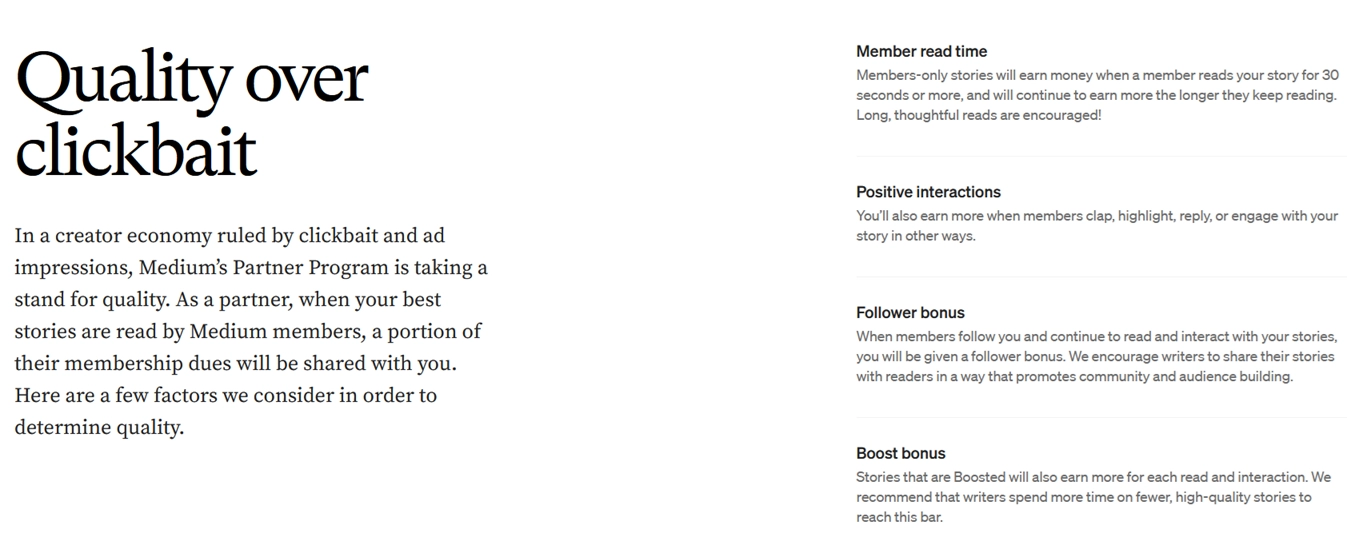 Medium's Partner Program pays writers based on member reading time—depth and engagement beat keyword stuffing.
Apply at Textbroker · WriterAccess · Stellar
Path 2: Reviews and Product Feedback
Companies need written feedback. Some pay for it directly. Others compensate with free products or platform credits. A few run legitimate programs with cash rewards.
Amazon Vine and Similar Programs
Amazon Vine invites trusted reviewers to receive free products in exchange for honest reviews. You don't earn cash, but you do earn inventory. For writers who need gear, books, or household items, the value is real.
Some third-party platforms claim to get paid to write Amazon reviews for cash. Be careful. Amazon's terms prohibit paid reviews that aren't clearly disclosed, and the company sued thousands of fake-review brokers in 2025 alone. If a site offers $5–$15 per Amazon review with no disclosure requirement, it's a policy violation at best and a scam at worst.
User Testing and Feedback Platforms
Platforms like UserTesting, BetaTesting, and PlaytestCloud (yes, we covered those in our recent game tester jobs guide) pay for written feedback. PlaytestCloud focuses on mobile games. UserTesting covers websites and apps. Both require you to articulate your experience clearly.
The writing isn't elaborate. You're explaining what confused you, what broke, and what you expected instead. But clarity matters. Testers who submit vague, typo-filled responses get fewer assignments. Testers who write concise, actionable feedback get priority invitations. It's a microcosm of the entire writing economy: competence gets rewarded, and competence includes clear communication.
If you want to know how to get paid to write Amazon reviews specifically, the legitimate answer is: build a real reviewer profile, join Vine if invited, or create a blog where you review products honestly and monetize through affiliate links. The direct-cash route is mostly closed—and dangerous.
 UserTesting pays for written feedback on apps, websites, and prototypes—clarity beats length.
Apply at UserTesting · PlaytestCloud · BetaTesting
Path 3: Stories, Poetry, and Creative Work
Creative writers face the hardest market. The supply of poetry and fiction far exceeds demand. But demand isn't zero.
Literary Magazines and Journals
Hundreds of literary magazines pay for short stories and poetry. The usual rate is modest: $25–$250 per story, or $10–$50 per poem. Duotrope and The Submission Grinder track active markets, response times, and pay rates.
The real barrier isn't talent—it's volume. Most writers submit to dozens of places before acceptance. If you treat it like a numbers game, it becomes a predictable process.
Follow submission guidelines exactly. Editors reject automatically when writers ignore word counts, formatting rules, or reading periods. A tailored cover letter that references specific poems or stories the editor published shows you've done your homework. This small effort separates professional submissions from the slush pile.
Amazon Kindle Direct Publishing (KDP)
Short fiction sells on Amazon. Erotica, romance, and science fiction novellas built entire cottage industries. A 10,000-word story priced at $2.99 earns roughly $2 per sale. The math is brutal at first—ten sales equals $20—but series and bundles compound over time.
This is one of the few ways to get paid to write stories with genuine passive potential. It requires cover design, formatting, and marketing, but the core product is your writing.
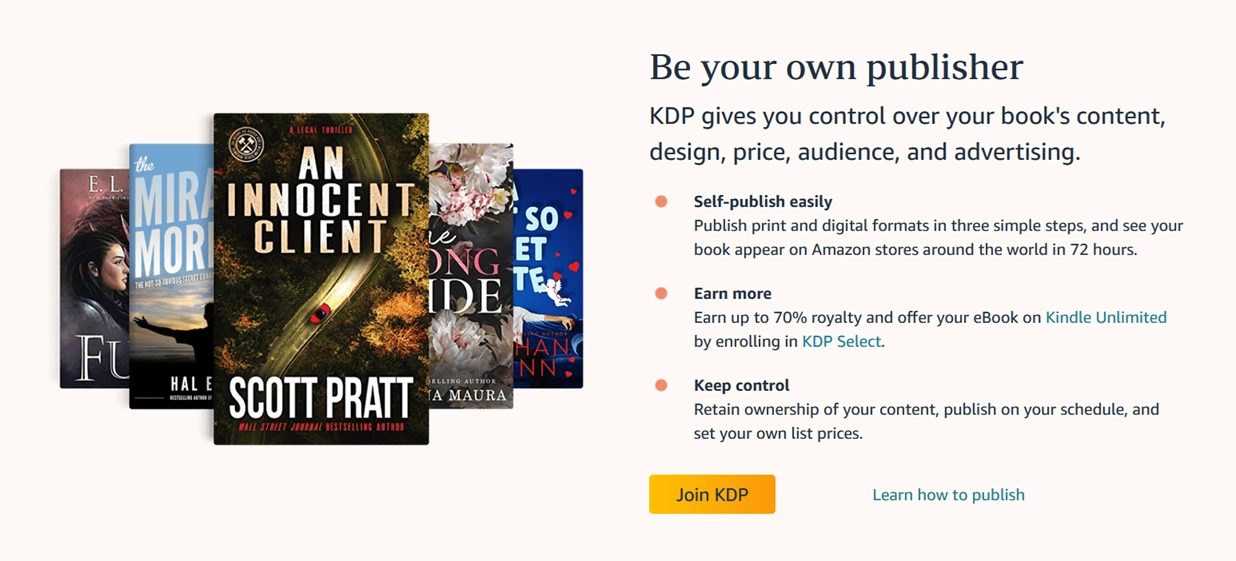 Amazon KDP lets fiction writers publish directly—short novellas in popular genres can build a passive-income backlist.
Medium and Poetry Platforms
Medium hosts poetry, and some poets earn through the Partner Program. Dedicated poetry platforms like Poetry Foundation don't pay for unsolicited submissions, but winning their contests can lead to paid publication elsewhere.
If you want to get paid to write poetry online, your best current bet is a combination approach: publish on Medium for Partner Program revenue, submit to paying journals for credibility, and sell collected works through KDP or Gumroad. No single platform pays enough alone.
Explore Duotrope · The Submission Grinder · Poetry Foundation · Amazon KDP · Gumroad
Path 4: Letters, Resumes, and Correspondence
This category surprises people. "Letters" sounds old-fashioned, but the demand for structured written communication is constant.
Resume and Cover Letter Writing
Professional resume writers charge $100–$400 per document. Entry-level writers on Upwork or Fiverr start lower—$50–$150—but the work is consistent. Job seekers need help translating their experience into ATS-friendly language.
The same applies to cover letters. Many applicants hate writing them. If you can craft a compelling narrative in 250 words, they'll pay you to do it.
Direct Mail and Sales Copy
Copywriting is letter-writing's aggressive cousin. Direct mail campaigns, email sequences, and sales pages all need writers. Beginners can find work on Upwork or through small marketing agencies. Intermediate copywriters charge per project—$500–$2,000 for a sales page—or negotiate revenue share deals.
If you want to get into getting paid to write letters professionally, copywriting is the high-income branch of the tree.
Finding copywriting clients follows the same pattern as other freelance writing: portfolio first, outreach second. Start by rewriting a landing page you think is weak—turn it into a spec piece. Post it on LinkedIn or your personal site. Tag the original company (politely). Even if they don't hire you, other businesses in that niche will see what you can do. One strong spec piece in a specific industry often generates more leads than ten generic blog posts.
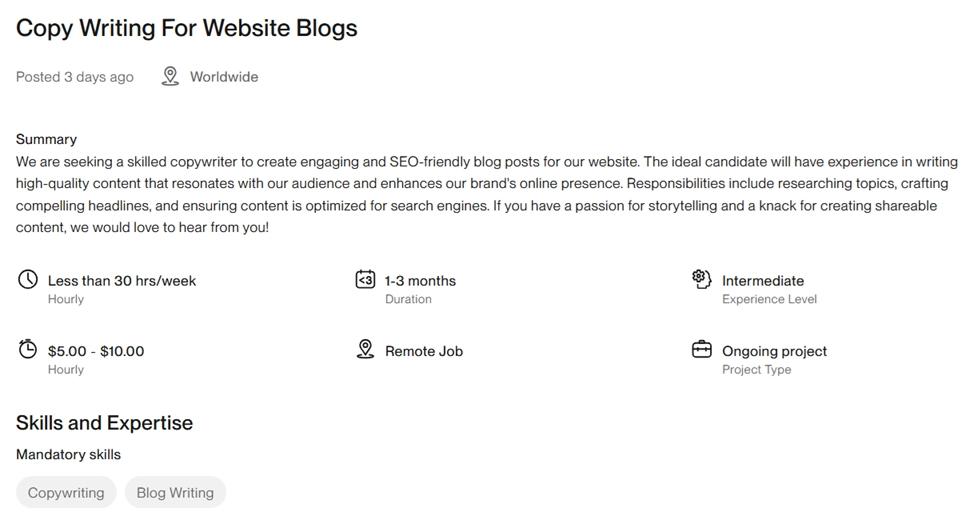 Upwork's blog and copywriting categories list thousands of active jobs—competition is fierce, but the volume is real.
Path 5: General Freelance Platforms
Sometimes you don't need a niche. You need a marketplace.
Upwork and Contently
Upwork lists every writing job imaginable: blog posts, white papers, product descriptions, ghostwriting. Early rates are low because global competition is fierce. But established freelancers with strong profiles and client reviews earn $50–$150 per hour.
Contently operates at a higher tier. It connects writers with enterprise clients—Fortune 500 brands, major publishers, agencies. You need a portfolio to get in, but rates start at $0.50 per word and climb from there.
Reedsy
Reedsy specializes in book-related work: ghostwriting, developmental editing, copyediting, and proofreading. Ghostwriters charge $5,000–$50,000 per book depending on length and client. Even line editors earn $0.02–$0.05 per word.
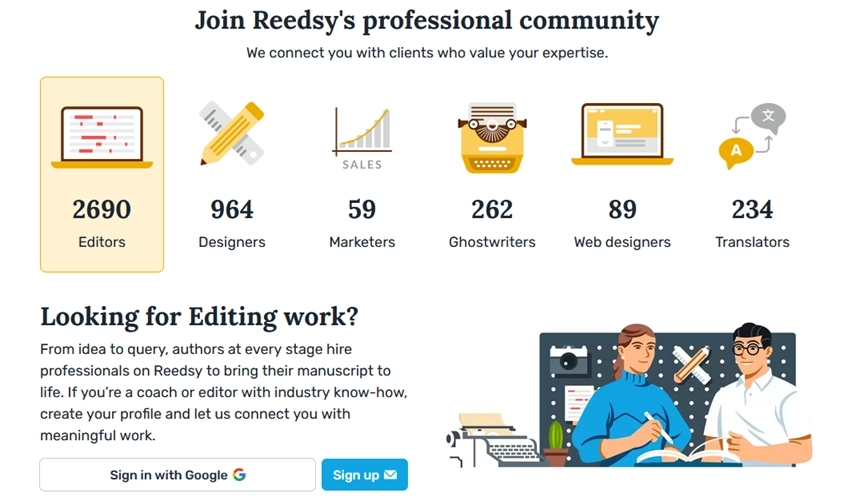 Reedsy's marketplace lists thousands of vetted editors, ghostwriters, and translators—book-related work is the focus.
Niche Job Boards
ProBlogger, BloggingPro, and MediaBistro list writing jobs with better pay than general marketplaces. The competition is higher, but so is the quality of the client. Checking these boards weekly is a habit every serious freelance writer should build.
Set alerts for your niche keywords. "SaaS writer," "healthcare content," "finance blogger"—whatever matches your expertise. Most writers browse job boards casually. The ones who get hired treat them like a lead generation system: apply within 24 hours of posting, customize every pitch, and track responses in a spreadsheet.
Explore Contently · Reedsy · ProBlogger · BloggingPro · MediaBistro
Path 6: How to Actually Land Your First Paid Gig
Knowing where to get paid is half the battle. Getting hired is the other half.
Build a Portfolio Without Experience
You don't need published credits to start. Write three sample pieces in your target niche, publish them on Medium or your own blog, and link to them. A portfolio proves you can write. That's all most entry-level clients need.
Pitch Effectively
A good pitch is short. It identifies the client, proposes a specific article or project, and links to one relevant sample. Generic pitches that open with "I am a highly motivated writer seeking opportunities" get deleted. Pitches that open with "I noticed your blog doesn't cover [specific topic]—I wrote a 1,500-word guide on it" get replies.
Set Your Rates Without Undercutting
The race to the bottom on platforms like Fiverr hurts everyone. Research standard rates for your niche. Start at the low end if you must, but raise your rates after every three successful projects. Clients who pay $0.05 per word rarely become clients who pay $0.50 per word. You have to find new ones.
When you quote a project, always offer three options: a basic package, a standard package, and a premium package. Most clients choose the middle option. This simple pricing structure increased average project value for freelancers we studied by 40%. It also weeds out clients who want premium work at bargain rates—they'll pick the cheapest option, deliver a nightmare revision cycle, and teach you exactly who to avoid next time.
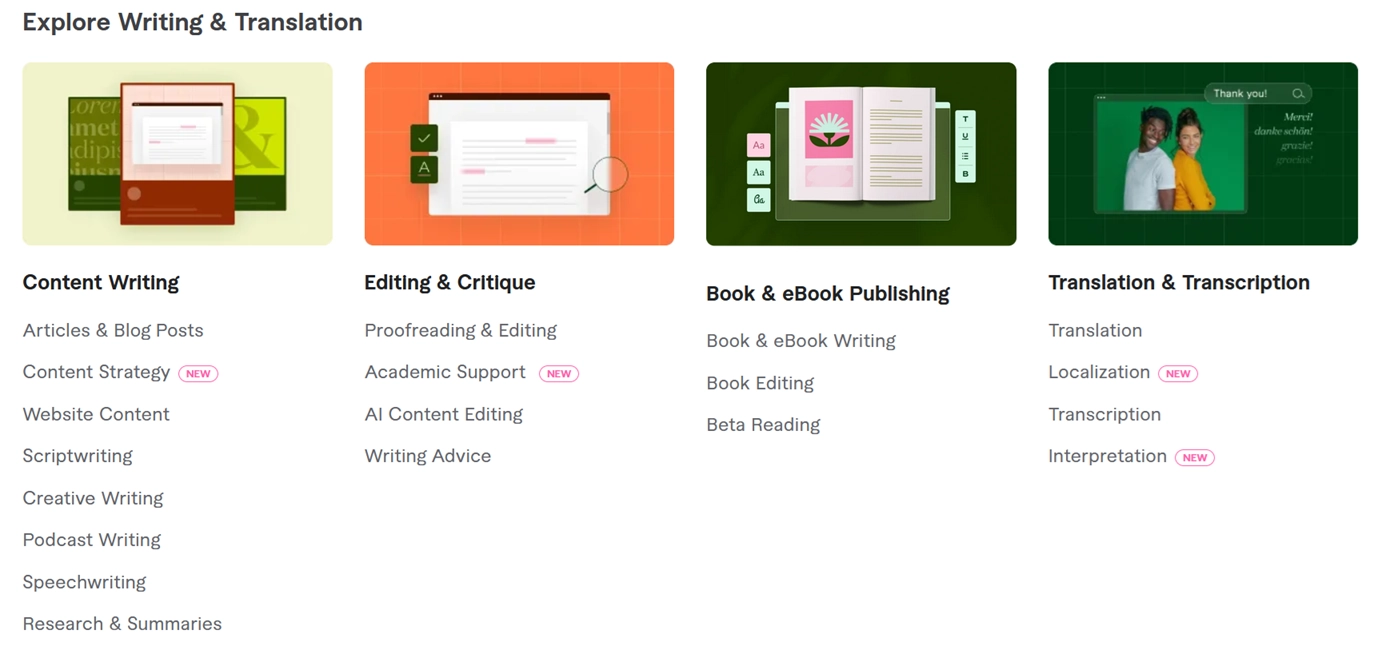 Fiverr's writing and translation marketplace is enormous—rising above the race to the bottom requires packaging and specialization.
Get started on Upwork · Fiverr · Gumroad
Quick Comparison: Six Paths at a Glance
Scam Red Flags to Avoid
Every legitimate path has a scam counterpart. Here's what we watch for at Luck & Fortune Finance.
Warning Signs of a Writing Scam
Other Writing-Adjacent Side Hustles
If none of these six paths quite fit, there are related options worth exploring. We recently published a guide to game tester jobs—a side hustle where clear written feedback is literally part of the job description. And if you'd rather consume content than create it, our investigation into getting paid to read books covers legitimate book reviewer opportunities.
Writing isn't the only creative side hustle, but it is one of the most accessible. You already have the tool—you're using it right now. You don't need a camera, a commute, or a degree. You need a word processor, a niche, and the willingness to write something mediocre today so you can write something better next week.
Is Getting Paid to Write Right for You?
It Works Best If You...
- Can write clearly and meet deadlines without hand-holding
- Have a niche interest—finance, healthcare, SaaS, gaming—worth specializing in
- Tolerate 1–3 months of low rates while building a portfolio
- Are comfortable pitching, negotiating, and chasing clients
It Works Poorly If You...
- Expect to be paid for "exposure" or platform credits only
- Get frustrated by rejections and slow editor response times
- Need predictable, weekly cash flow on day one
- Dislike revising your own work based on feedback
Bottom Line
How to get paid to write online: Pick one path from the six above, build a portfolio of three sample pieces in your niche, and pitch ten specific clients this week. The income is front-loaded with effort—but the barriers to entry are the lowest of any creative side hustle.
You can get paid to write. The paths exist, the platforms are real, and the checks clear. But the income is front-loaded with effort: building samples, sending pitches, surviving rejections, and raising rates gradually.
If you want to get paid to write online, start with one path. Articles and blog posts are the fastest entry point. Creative work is the slowest but most personally rewarding. Copywriting is the most lucrative long-term.
Whichever path you choose, track your submissions, your earnings, and your client contacts. A simple spreadsheet works. So does a notes app. What matters isn't the tool—it's the habit of recording every pitch, every payment, and every deadline.
The writing market isn't a lottery. It's a job board with a very low barrier to entry and a very high ceiling for competence. Start writing, start submitting, and start getting paid.
One last practical note: freelance writing income is typically 1099 income. No employer withholds taxes. Set aside 25–30% of every payment for tax season, and track your expenses—software, internet, research materials, even that grammar checker subscription. The writers who survive their first profitable year aren't necessarily the most talented; they're the ones who treated it like a business from day one.
Frequently Asked Questions
Yes, but earnings depend entirely on what you write and who hires you. Content mills pay $30–$70 per 1,000-word post, direct freelance clients pay $0.10–$0.50 per word, and specialists in technical or B2B niches earn $0.75–$1.50 per word. The platforms are real, the checks clear, and the income is front-loaded with effort.
Content mills like Textbroker, WriterAccess, and Crowd Content. You can claim assignments within a day of signing up at rates of $0.03–$0.07 per word. It isn't glamorous, but it builds clips and a portfolio that unlocks better-paying direct clients within a few months.
Watch for four red flags: upfront fees, unrealistic pay ($500 for a first blog post is almost always fake), no verifiable company, and payment-before-work schemes where someone sends you a check and asks you to forward a portion. Legitimate platforms have transparent payment structures, public reviews, and never charge writers to join.
Yes, though the supply of writers far exceeds demand. Literary magazines pay $25–$250 per story or $10–$50 per poem. Amazon KDP lets you sell short fiction directly—10,000-word novellas priced at $2.99 earn roughly $2 per sale, and series compound. Medium's Partner Program pays poetry and fiction writers based on member reading time.
No published credits are required. Write three sample pieces in your target niche, publish them on Medium or your own blog, and link to them in pitches. A short portfolio proves you can write, which is all most entry-level clients actually need. Specialize in a niche—finance, healthcare, SaaS—and rates rise quickly.
Yes. Freelance writing income is typically 1099 income, meaning no employer withholds taxes. Set aside 25–30% of every payment for tax season, and track deductible expenses like software, internet, research materials, and editing tools. Writers who survive their first profitable year treat the business like a business from day one.

Explore More Side Hustle Guides
Ready to diversify your income? Check out our full library of tested side hustles, platform reviews, and step-by-step guides.
Browse All Articles