
You’re ready to apply, then you hit a paywall: $2.95 for 14 days just to see full job descriptions. If your gut says paying to find work feels backwards, you’re not alone — that’s the exact question we hear about FlexJobs.
Short answer: FlexJobs is a real company with real, hand-screened remote listings, not a fake-job scam. But legit doesn’t automatically mean worth it for you.
We’ve dug through pricing fine print, FlexJobs reviews on Trustpilot, and the refund language so you don’t learn it from your bank statement. Below you’ll get what it costs right now, what the screening actually saves you, the billing traps that drive most complaints, and the free places to look first. At Luck & Fortune Finance, we’ve tested enough job boards to know the difference between curation and markup.
FlexJobs is legitimate — operating since 2007 with an A+ BBB rating and around 4.1–4.2 stars across thousands of Trustpilot reviews — but it is a filter, not a shortcut. The $2.95 trial auto-converts to $23.95 every four weeks, refunds after the 14-day window are discretionary, and most listings also exist free elsewhere. Test it for one cycle only if you’re actively applying in scam-prone categories.
What FlexJobs Is and What It Actually Costs
FlexJobs has run since 2007 as a paid job board for remote, part-time, freelance, and flexible-schedule roles. Job seekers pay a subscription to browse full details and apply through the site, which funds a team that reviews listings to filter out scams.
That flipped model is the whole pitch: no ads, no pay-to-post employers blasting junk, and a team that reviews listings to filter out scams, multi-level marketing pitches, and “business opportunities” dressed up as jobs.
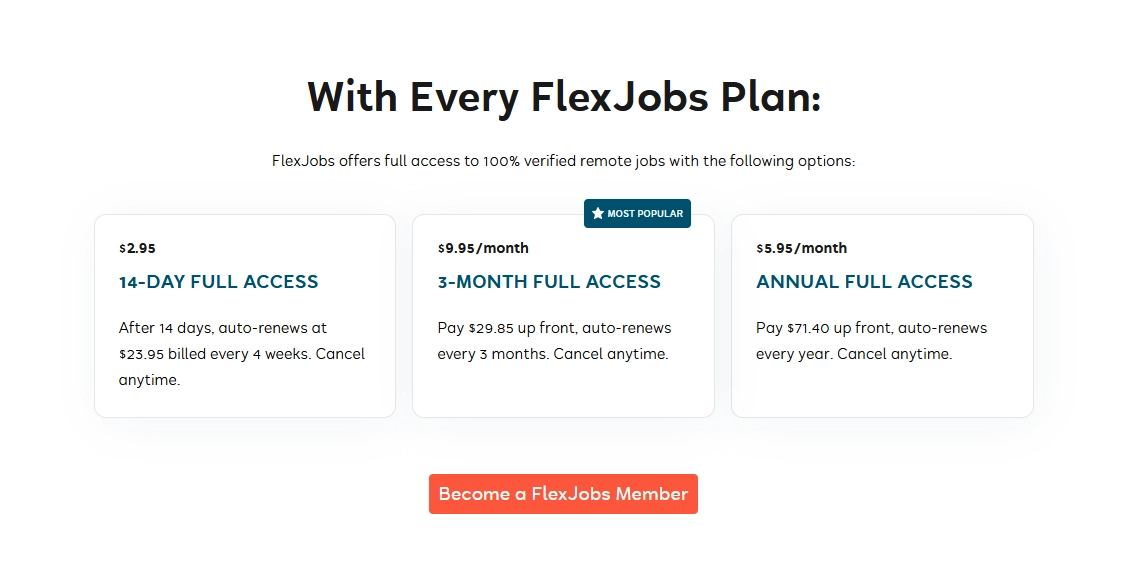
Here’s the current structure from the current pricing page (verified October 2026):
- 14-day trial: $2.95 one-time. Full access for 14 days. Auto-renews if you don’t cancel.
- After trial: $23.95 billed every 4 weeks. This is the rolling plan most trial users land on.
- Quarterly: $29.85 upfront. That works out to $9.95 per month, auto-renews every 3 months.
- Annual: $71.40 upfront. That works out to $5.95 per month, auto-renews each year.
You can cancel auto-renew in account settings at any time, and you keep access until the end of the billing period you’ve paid for.
Two pricing details trip people up.
First, “every 4 weeks” isn’t the same as monthly. There are 13 four-week cycles in a year, not 12. If you stay on the rolling plan all year, you’ll pay 13 × $23.95 = $311.35, not $287.40. That’s about $24 more than a true monthly charge. The page states “every 4 weeks” plainly, but your brain reads it as monthly.
Second, pricing shifts. Reviews from the past couple of years cite $24.95 per month and a $59.95 annual option. The live page now shows $23.95 every 4 weeks and $71.40 annually. Always re-check the pricing page before you pay and screenshot what you agree to.
What does a subscription unlock? Full job descriptions, advanced filters by schedule, job type, and career level, saved searches and alerts, plus career extras like skills tests, resume review tools, webinars, and interview prep content.
There’s also a 14-day satisfaction guarantee. FlexJobs says if you’re not satisfied for any reason, cancel and ask for a refund within 14 days of subscribing or renewing by phone, email, or chat. We’ll break down how that plays out in practice below, because the guarantee isn’t automatic — you have to contact them.
Does FlexJobs Work? What We Found Testing the Value
So does FlexJobs work for actually getting hired? It works as a filter, not as a shortcut to a job offer.
The cleanest win is listing quality. On free boards, a search for “remote data entry” pulls a mix of real admin contracts, vague commission-only gigs, and outright reshipping scams. On FlexJobs, that same category is quieter. You’ll see postings with named companies, defined pay ranges, clear schedule expectations, and an apply path that goes to a real applicant tracking system or company career page.
We’ve seen the same pattern in scam-heavy categories like virtual assistant roles and entry-level support. On open boards, you’ll wade through “no experience, $45/hr from your phone” posts. On FlexJobs, a virtual assistant listing is more likely to read like: “20 hrs/week, $22–$26/hr, HubSpot + Google Workspace, U.S. time zones, 1099 contract.” You still have to compete, but you don’t waste an hour figuring out if the company exists.
That curation matters most if you’ve been burned before. If you’ve sent your resume into a void or gotten a reply asking you to cash checks and buy gift cards, a screened environment saves real time and stress.
What FlexJobs doesn’t do is give you exclusive jobs. Most roles you’ll find there are also posted on the employer’s own site, LinkedIn, or Indeed. You’re paying for someone else to aggregate and vet them, not for secret access. For example, it’s common to find the same customer service lead on FlexJobs with a clean summary and on the company’s careers page. FlexJobs saved the search time. It didn’t create the opening.
Search tools are solid but not magic. Filters for 100% remote vs. hybrid, employee vs. freelance, and career level help narrow 50+ categories fast. Remote chat support jobs are a good test — you can filter out on-site call center roles in seconds. But filters aren’t perfect. Users still report keyword mismatches and stale posts where the employer already filled the role but didn’t pull the listing. That’s normal for any aggregator, paid or not.
The extras add modest value. Skills tests in Excel, typing, or grammar let you display a score on your profile. For admin and operations roles, that can help if your resume is thin. Webinars and resume checkers are useful if you’re pivoting, but they won’t rescue a scattered application strategy.
Bottom line on effectiveness: FlexJobs reduces exposure to junk and saves filtering time. It doesn’t guarantee callbacks, interviews, or higher pay. If you apply to 10 well-matched roles with tailored resumes, you’ll get more traction than blasting 50 generic applications from any board.
FlexJobs Reviews: The Complaint Patterns You Should Know
If you scan FlexJobs reviews on Trustpilot, you’ll see a split that tells the real story.
On one side, FlexJobs holds around a 4.1 to 4.2-star average across 6,500+ reviews (now approaching 8,000), plus an A+ rating from the BBB (Better Business Bureau). Many reviewers praise the scam-free listings, easy search, and responsive support.
On the other side, roughly 7–8% are one-star, and they cluster around the same three themes. You can read the pattern yourself on their Trustpilot profile:
| Platform | Rating | Volume | Dominant Complaint |
|---|---|---|---|
| Trustpilot | 4.1–4.2 / 5 | 6,500–8,000 reviews | Trial auto-renew billing surprises |
| Better Business Bureau | A+ rating | Accredited business | Refund-window and renewal disputes |
| Reddit / forums | Mixed | Ongoing threads | “Same jobs as free boards” value debate |
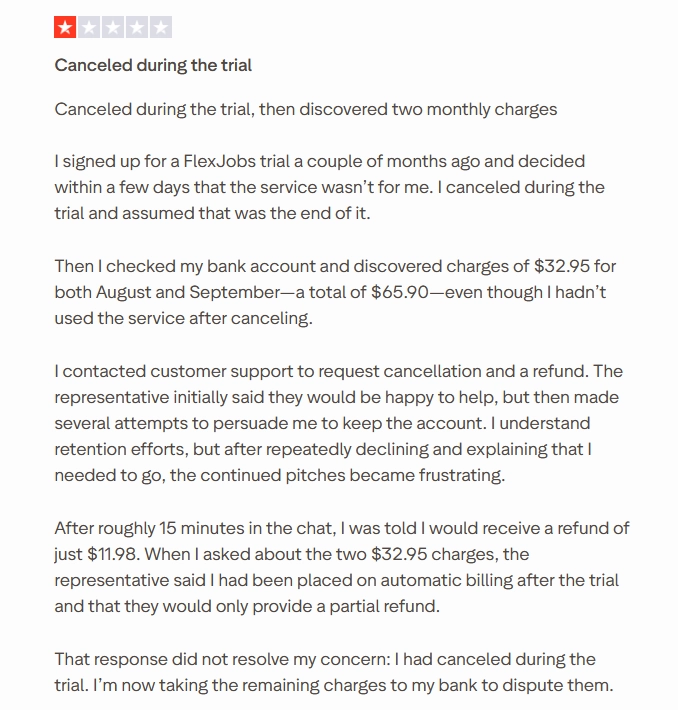
1. Trial auto-renew surprise.
This drives the bulk of anger. Someone signs up for “$2.95” and misses that it converts to $23.95 every 4 weeks on day 15 without a prominent reminder email. They discover it on their bank statement, not in their inbox.
FlexJobs discloses auto-renew on the pricing page, at checkout, and in the confirmation email. But disclosure isn’t the same as obvious. If you’re just testing, set a phone reminder for day 12. Don’t rely on noticing an email.
2. Refund confusion.
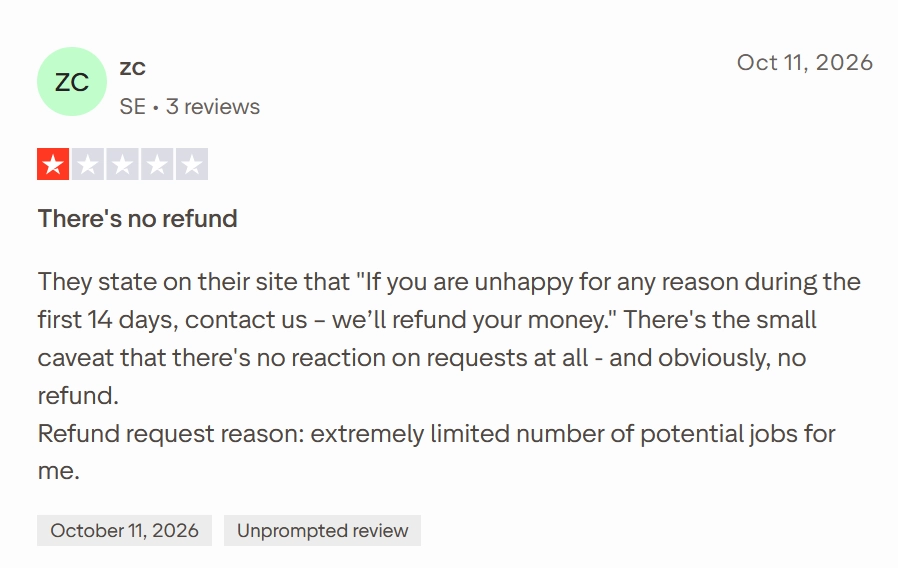
The 14-day satisfaction guarantee sounds unconditional, and the FAQ phrases it that way. The Terms add more wiggle room and state refunds are not guaranteed. In practice, reviewers report the best odds when you cancel and request within the 14-day window; after that, any refund is discretionary.
Practical takeaway: if you want out, don’t just toggle cancel and assume money comes back. Cancel in account settings, then contact support directly by phone, email, or chat within the guarantee window and explicitly ask for a refund. Save the confirmation.
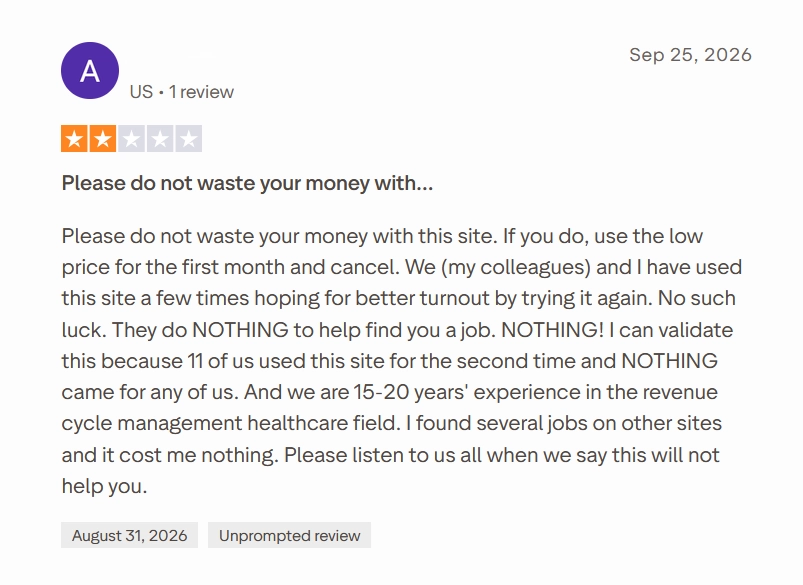
3. “Worth it” disappointment.
The third bucket isn’t about billing. It’s about expectations. People pay expecting hidden jobs or faster hires, then find the same postings they saw free elsewhere, or apply and hear nothing.
For example, a copywriter might send 20 tailored applications, see half the postings go stale, and land one callback. That’s a normal hit rate in remote hiring right now, but it stings when you paid to browse.
Other gripes pop up — search filters that miss, customer service that feels scripted, jobs that require more experience than the filter suggested. None of that makes FlexJobs a scam. It makes it a paid tool with limits, like any other.
How to protect yourself if you try it:
- Use a calendar reminder before day 14, before month 2, and before annual renewal.
- Turn off auto-renew in Account Settings > Subscription if you only want one cycle.
- Screenshot the plan terms and refund window at checkout.
- If you cancel for a refund, contact support the same day and keep the ticket number.
And if you’re evaluating any paid board, it helps to know the red flags FlexJobs actually filters out. Our guide on survey scams and job red flags walks through the check-cashing, equipment-fee, and Telegram-interview tricks you’ll see on free boards.
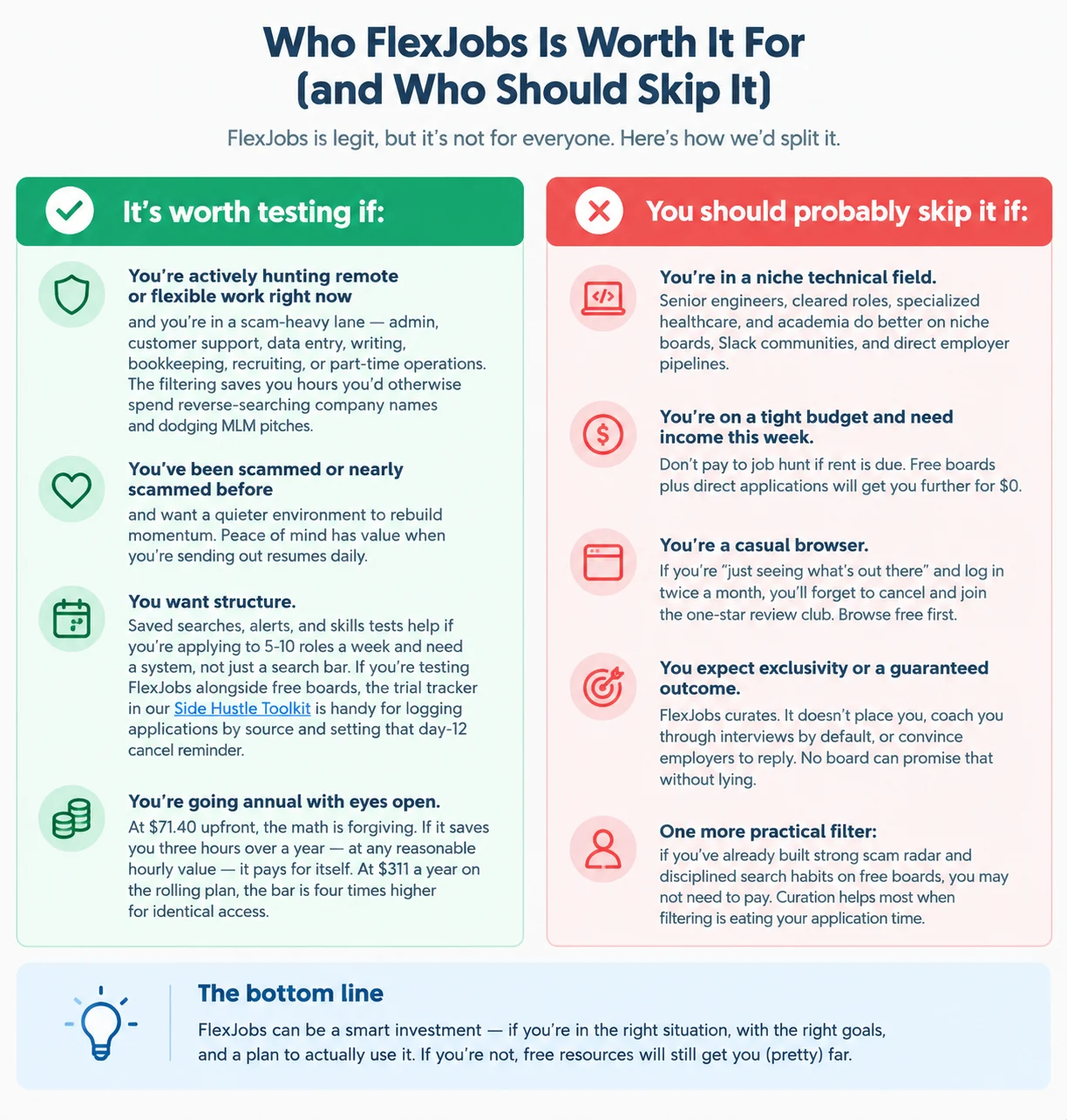
Who FlexJobs Is Worth It For (and Who Should Skip It)
FlexJobs is legit, but it’s not for everyone. Here’s how we’d split it.
It’s worth testing if:
- You’re actively hunting remote or flexible work right now and you’re in a scam-heavy lane — admin, customer support, data entry, writing, bookkeeping, recruiting, or part-time operations. The filtering saves you hours you’d otherwise spend reverse-searching company names and dodging MLM pitches.
- You’ve been scammed or nearly scammed before and want a quieter environment to rebuild momentum. Peace of mind has value when you’re sending out resumes daily.
- You want structure. Saved searches, alerts, and skills tests help if you’re applying to 5–10 roles a week and need a system, not just a search bar. If you’re testing FlexJobs alongside free boards, the trial tracker in our Side Hustle Toolkit is handy for logging applications by source and setting that day-12 cancel reminder.
- You’re going annual with eyes open. At $71.40 upfront, the math is forgiving. If it saves you three hours over a year — at any reasonable hourly value — it pays for itself. At $311 a year on the rolling plan, the bar is four times higher for identical access.
You should probably skip it if:
- You’re in a niche technical field. Senior engineers, cleared roles, specialized healthcare, and academia do better on niche boards, Slack communities, and direct employer pipelines.
- You’re on a tight budget and need income this week. Don’t pay to job hunt if rent is due. Free boards plus direct applications will get you further for $0.
- You’re a casual browser. If you’re “just seeing what’s out there” and log in twice a month, you’ll forget to cancel and join the one-star review club. Browse free first.
- You expect exclusivity or a guaranteed outcome. FlexJobs curates. It doesn’t place you, coach you through interviews by default, or convince employers to reply. No board can promise that without lying.
One more practical filter: if you’ve already built strong scam radar and disciplined search habits on free boards, you may not need to pay. Curation helps most when filtering is eating your application time.
Free Alternatives to Try Before You Pay
We’d run a free week before spending anything. You’ll learn fast whether your target roles are plentiful or rare, and you’ll have a baseline to judge FlexJobs against.
Start here:
- Indeed + LinkedIn with strict filters. Use “remote,” salary floor, date posted, and company verification. Skip anything that pushes you to WhatsApp, Telegram, or personal email for an “interview.”
- Company career pages. Once you spot repeat hirers on any board, go direct. Most FlexJobs summaries link out to the employer’s applicant system anyway.
- Remote-specific boards. We Work Remotely, RemoteOK, and Jobspresso list tech, marketing, support, and operations roles without a paywall. Quality varies, so still vet each company.
- USAJobs for federal remote roles and Idealist for nonprofits. Slow processes, but real listings and clear pay scales.
- Staffing firms with remote divisions. Robert Half, Kelly, and Aston Carter often staff 1099 remote jobs and contract support roles you’d also see on FlexJobs.
If you go free, borrow FlexJobs’ best habit: verify before you apply. Check the company domain, look for a real address and LinkedIn staff footprint, and never pay for equipment, training, or background checks via gift cards or wire. The FTC’s guide to job scams is the clearest checklist we’ve found for spotting fake offers, and it’s worth bookmarking.
Run this test: spend five focused hours on free boards. Track how many viable, in-scope roles you find and how many obvious scams you have to skip. If you’re finding 10+ solid leads, you may not need to pay. If you’re drowning in junk or seeing the same fake posts recycled, a one-cycle FlexJobs trial could save you time.
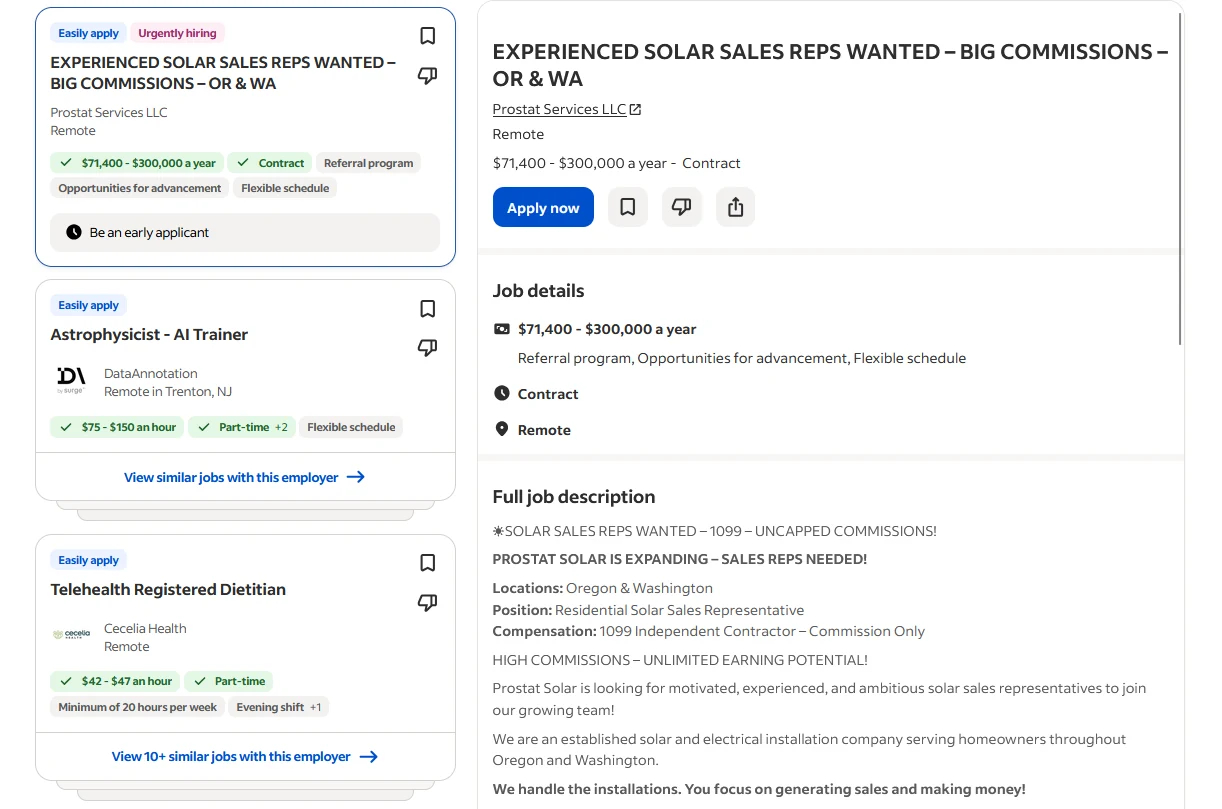
Strict remote, salary-floor, and date-posted filters plus direct company applications. Most volume, most junk — bring your scam radar.
Remote-specific boards for tech, marketing, support, and operations with no paywall. Quality varies, so vet every company.
Federal remote roles and nonprofit listings with real pay scales. Slow hiring, but legitimate and transparent.
Our Verdict: Is FlexJobs Legit?
Yes — is FlexJobs legit? FlexJobs is a legitimate, long-running job board with hand-screened listings and a real refund process. It’s not a fake-job mill; complaints focus on billing and expectations, not fabricated employers.
But legit doesn’t mean frictionless. The $2.95 trial auto-converts to $23.95 every four weeks, refunds after the 14-day window are discretionary rather than guaranteed, and most listings aren’t exclusive. Those three facts explain almost every angry review.
We’d call it a fair deal for one specific person: an active remote job seeker in an admin, support, writing, or operations category who will use it hard for a month or a year, cancel deliberately, and still apply direct on company sites. For that person, especially on the annual plan, the time saved dodging scams can outweigh the fee.
For casual browsers, niche technical hires, or anyone who can’t spare $24 right now, start free. You’ll find many of the same roles with more filtering effort and zero billing risk.
If you try it, do it like a tester: take the trial, run 10+ targeted applications in week one, track callbacks and listing freshness, and decide by day 12. Keep it only if the curation clearly beats your free routine.
Try FlexJobs If…
- You’re actively hunting remote work in admin, support, writing, or operations
- Scam-heavy categories are eating your filtering time
- You’ll apply to 5–10 roles a week and use alerts and skills tests
- You’ll commit to the annual plan and set cancel reminders
Skip FlexJobs If…
- You’re in a niche technical field with better specialty boards
- You need income this week and can’t spare the fee
- You’re casually browsing and likely to forget to cancel
- You expect exclusive listings or guaranteed interviews
The bottom line: Run a free week first. If filtering junk is costing you real application time, take one FlexJobs cycle as a tester — trial it, track results, and decide by day 12. Keep it only if the curation clearly beats your free routine.