Most people trade hours for dollars. They wake up, commute, work, sleep, and repeat. Income generating assets break that cycle. They pay you while you do other things—sleep, hike, work a different job.
But here's the part most TikTok gurus skip: assets need fuel. That fuel is either capital, skills, or time. Sometimes all three. You can't buy a rental property with optimism. You can't publish a course that sells without expertise people will pay for. And you certainly can't build a dividend portfolio that covers your rent overnight.
At Luck & Fortune Finance, we've reviewed hundreds of earning opportunities. We know what actually pays and what's just marketing. This guide cuts through the hype. We'll show you seven assets that make money, what they realistically yield, and how to start with whatever capital you have right now. No guarantees. No get-rich-quick fantasies. Just real numbers and honest tradeoffs.
What Is Considered Passive Income? The IRS Reality
Let's kill a myth first. "Passive income" isn't a free pass. The IRS has strict rules about what counts as passive. Rental real estate, limited partnerships, and businesses you don't materially participate in generally fall under passive activity rules. Dividends and interest? The IRS usually calls that portfolio income, not passive. Even "passive" streams often require hours of setup, monitoring, or maintenance before they run smoothly.
So what are income generating assets, really? They're holdings or systems that produce recurring cash flow without a direct one-to-one time exchange. A speculative asset—like buying Bitcoin hoping it triples—isn't one. It might appreciate, but it doesn't pay you while you hold it. The same goes for growth stocks that reinvest every dollar instead of returning it to shareholders. They're bets, not income engines.
True income generating assets return cash to your pocket on a schedule. Dividends hit quarterly. Rent comes monthly. Bond interest arrives twice a year. Digital product sales drip in daily. The key distinction isn't zero work; it's that the work-to-pay ratio improves over time. You front-load the effort, then collect.
But be careful. The IRS material participation tests are stricter than most people realize. If you spend more than 500 hours a year managing a rental, the IRS may reclassify your "passive" loss as active. Tax advantages like the 20% QBI deduction apply to some businesses but not to all portfolio income. Understanding these boundaries saves you from unpleasant surprises at filing time.
The confusion runs deep. Social media creators use "passive income" to describe everything from stock trading to dropshipping. But the IRS draws sharp lines. Portfolio income—dividends, interest, capital gains—gets reported differently than passive business income. Passive losses often can't offset active wages unless you meet specific exceptions. Knowing the difference matters for tax planning, not just bragging rights.
7 Money Building Assets That Actually Work
We picked these seven because they're accessible to ordinary people, not just accredited investors with six-figure portfolios. Each has real tradeoffs. None are magic.
Dividend-Paying Stocks
Large-cap dividend stocks currently yield roughly 3% to 5% annually. That's not life-changing money, but it's real cash flow. A $10,000 portfolio at 4% throws off $400 a year—about $33 a month. Hardly enough to quit your job. However, dividend aristocrats—companies that have raised payouts for 25+ consecutive years—offer a hedge against inflation and a growing income stream over decades.
The barrier is capital. You need money to make money here. There's also tax complexity. Qualified dividends get better tax treatment than ordinary ones, but you need to hold the stock for specific periods. And dividends can be cut. Companies slash payouts when earnings drop, so chasing the highest yield often leads to value traps rather than windfalls.
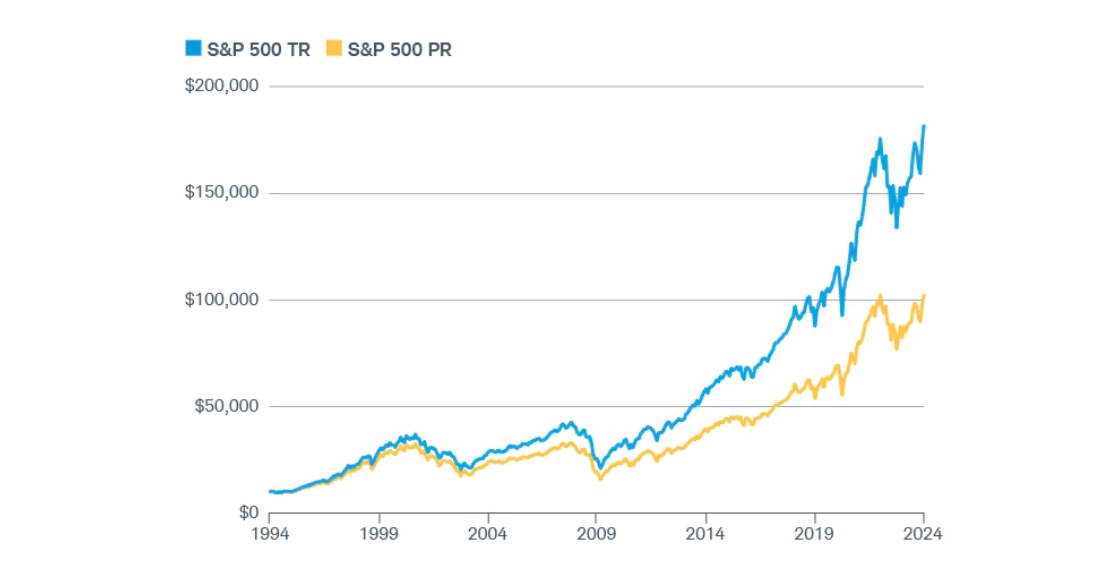 Charles Schwab data showing the power of dividend reinvestment: a hypothetical $10,000 S&P 500 investment in 1993 grew to over $182,000 by 2023 with dividends reinvested, versus $102,000 without.
REITs
Real Estate Investment Trusts own or finance income-producing properties. By law, they must distribute at least 90% of taxable income to shareholders. That means yields often land between 4% and 8%, higher than most broad-market dividend ETFs.
The upside? Liquidity. You buy and sell REIT shares like stocks. No tenant calls at 2 a.m. Some investors prefer private REITs for less volatility, but they're illiquid and often charge high fees.
The downside? Publicly traded REITs swing with the stock market. When rates rise, REIT prices often fall because borrowing costs increase. Plus, those distributions aren't always qualified dividends, so tax drag can sting more than you expect.
Rental Property & Short-Term Rentals
This is the heavyweight of money building assets. A well-located rental can yield 6% to 10% after expenses, and short-term rentals in tourist markets sometimes beat that. But the barrier is steep. You need a down payment, closing costs, reserves for repairs, and the stomach for vacancy months.
It's also not hands-off. Even with a property manager, you'll make decisions about leaks, lease renewals, and neighbor complaints. Short-term rentals add cleaning costs, platform fees, and regulatory risk as cities crack down on Airbnbs. If you finance the purchase, leverage amplifies both gains and losses. One bad tenant or a market downturn can erase years of cash flow in a single season.
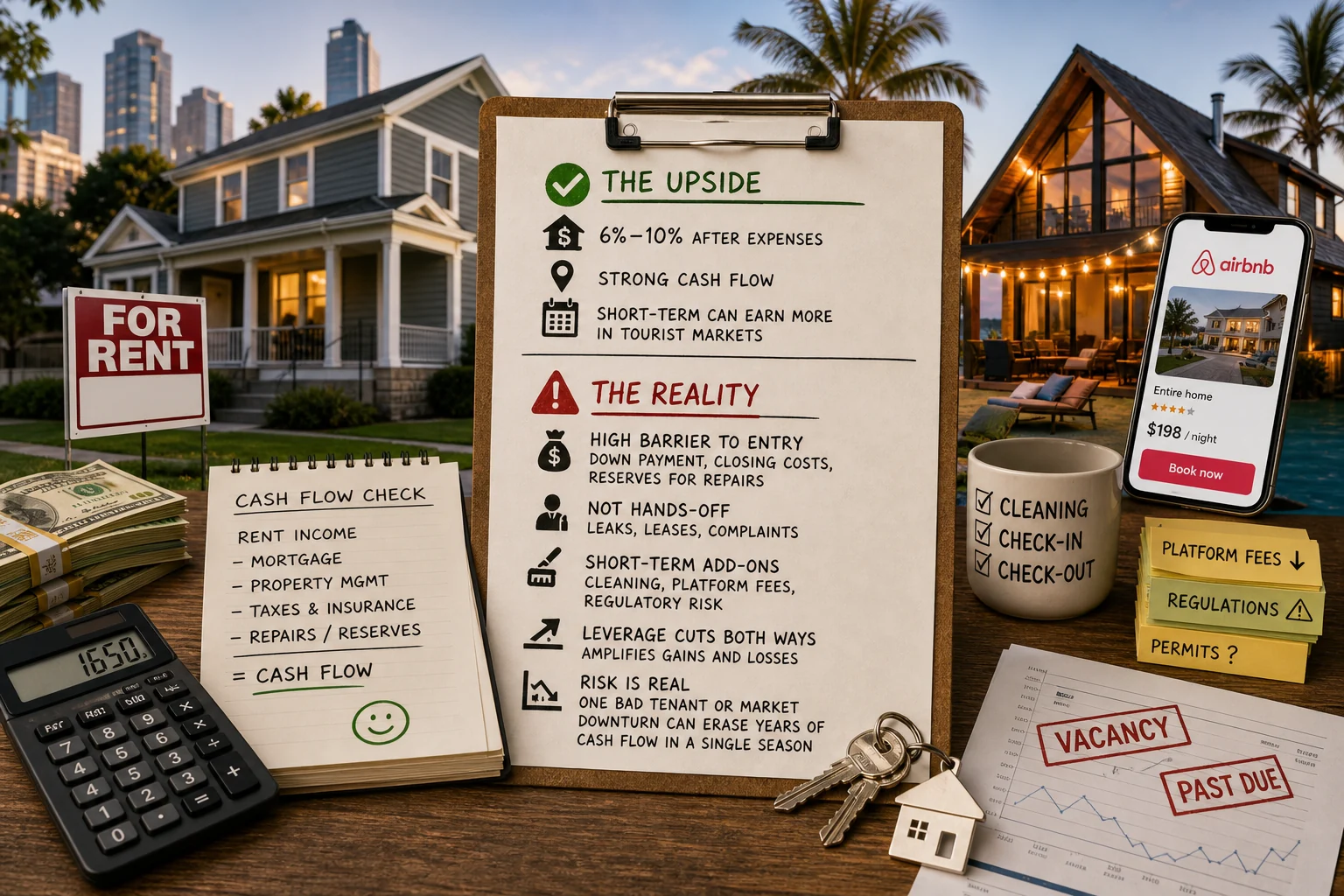 Rental real estate offers strong yields but requires significant capital, ongoing management, and tolerance for vacancy risk.
Digital Products
Courses, templates, ebooks, and Notion dashboards have exploded because the upfront cost is time, not cash. You can build a $20 template with zero dollars and a weekend of focus. If it sells fifty copies a month, that's $1,000 in revenue with no inventory to manage.
The catch? Most digital products earn nothing. The market is crowded. The winners usually solve a specific pain point. A generic "how to be productive" ebook rarely sells. A "Notion CRM for freelance photographers" does. You need distribution—an email list, a social audience, or ads. Creating the product is 20% of the battle. Selling it is 80%. And "passive" here means you don't ship boxes; it doesn't mean you ignore customer questions or stop updating the file when software changes.
Peer-to-Peer Lending
Platforms like Happen Bank (formerly LendingClub) and Prosper let you lend directly to borrowers. Returns historically hover around 5% to 8%. That beats savings accounts and some bonds.
The red flags are real. Default rates climb during recessions. You're unsecured in most cases—no collateral backing your loan. Platform risk matters too; if the marketplace folds, recovering your capital gets messy. We don't recommend putting more than a small slice of your net worth here, and we never recommend it until you have safer bases covered first.
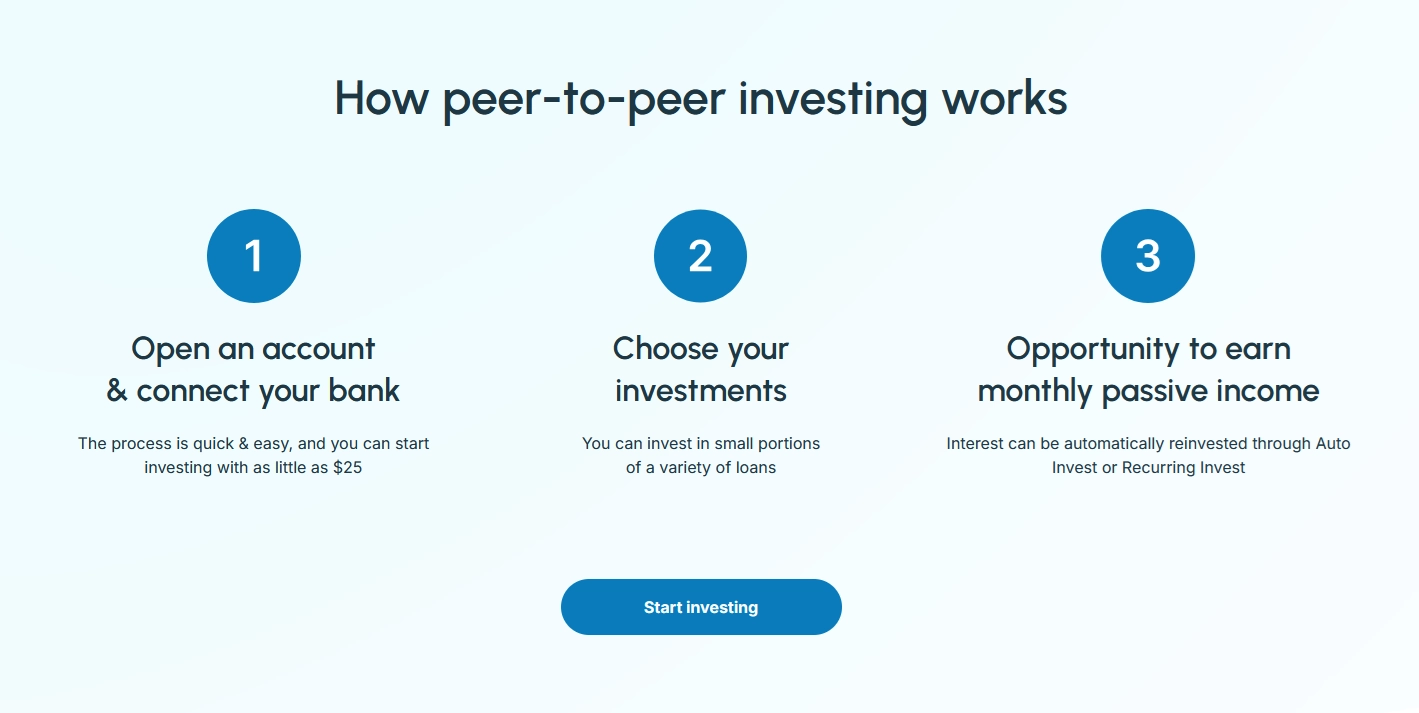 Prosper's peer-to-peer lending platform: borrowers apply, investors choose loans, and monthly returns are deposited directly to your account.
High-Yield Savings & Bonds
The safest assets that make money. High-yield savings accounts currently pay around 4% to 5% APY. Treasury I Bonds adjust for inflation. T-Bills and investment-grade corporate bonds offer slightly more yield for slightly more risk.
The limitation is obvious. You're preserving purchasing power, not building it aggressively. After taxes and inflation, real returns can hover near zero. These belong in your emergency fund and short-term bucket, not your wealth-building engine.
Small Online Businesses
A dropshipping store, a newsletter with sponsors, or a niche content site can shift from active grind to semi-passive income. At first, you'll handle customer service, ad campaigns, and product sourcing. Over time, you can hire virtual assistants, automate fulfillment, and step back.
This is arguably the most scalable path for people without massive capital. It's also the most work. If you want ideas that fit a tight budget, our guides on small business ideas and how to start dropshipping break down realistic startup costs and first-year expectations.
How Do You Have a Steady Income When Starting Small?
You don't need ten grand to begin. You need a plan matched to your actual bank balance. The real question most beginners ask is simple: how do you have a steady income without a trust fund or a six-figure salary? The answer is usually a mix of active work and patient asset building.
Starting at $0
If you have no capital, your first asset is your labor. Freelance writing, virtual assistant work, game testing, and gig platforms can generate seed money within days. The goal isn't to trade time forever; it's to fund your first asset.
For example, picking up part-time jobs or virtual assistant jobs for a few months can build a $1,000 starter fund. Writers can accelerate that by learning how to get paid to write online.
Starting at $1,000
With a thousand dollars, you can open a brokerage account and buy a dividend-focused ETF or a REIT index fund. You could also buy fractional shares through apps like Robinhood or Fidelity, though we prefer platforms with better research tools.
A $1,000 dividend portfolio won't pay your bills. But it teaches you the mechanics: how dividends arrive, how taxes work, how volatility feels. That's education you can't get from a video.
Starting at $10,000
This is where options open up. You can construct a diversified dividend portfolio, experiment with P2P lending, launch a digital product with paid ads, or consider syndicated real estate platforms like Fundrise or YieldStreet.
At this level, the question shifts from "what can I afford?" to "where does this fit in my overall risk picture?" Spread it. Don't bet the entire stack on one asset class.
Common Mistakes That Wreck New Asset Builders
We've watched enough hype cycles to spot the recurring traps.
Chasing Yield Without Understanding Risk
A 12% dividend yield is often a warning sign, not an opportunity. When a yield looks too good, the market is pricing in a cut. Do your homework before you buy.
Taxes Blindside New Investors
Interest, ordinary dividends, rental income, and P2P returns all get taxed differently. A 6% yield can shrink to 4% after federal and state taxes. Factor the real after-tax return into your math before you celebrate.
The "Passive" Illusion
Every asset demands upfront energy. Even a savings account requires you to open it and transfer funds. Rental properties need tenants. Courses need marketing. Dividend portfolios need monitoring. If you expect money to appear without setup, you'll quit before the first payout.
Overconcentration in Similar Assets
Buying five different REITs doesn't mean you're diversified. If they all hold commercial office space, one sector shock hurts everything. Spread across asset types, not just ticker symbols.
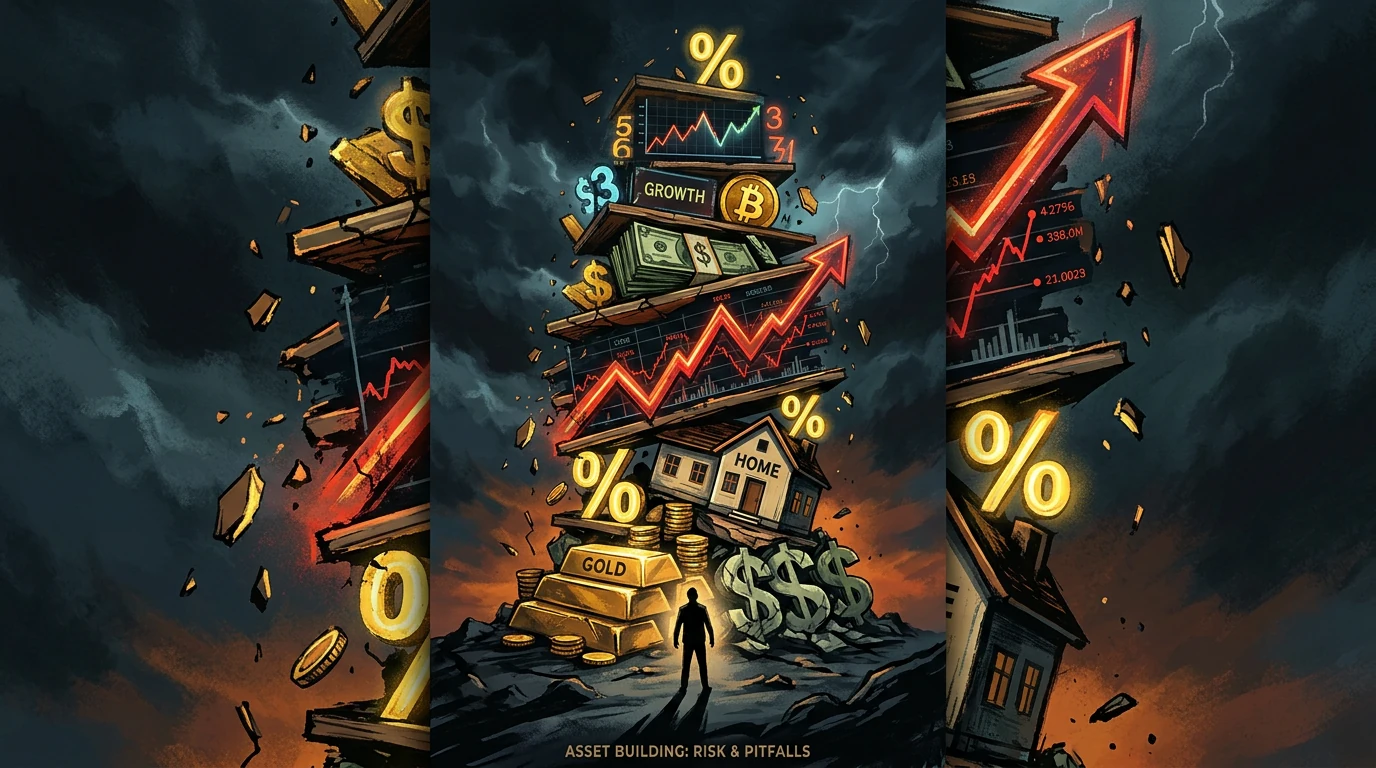 Understanding these common mistakes early can save you years of setbacks and protect your compounding gains.
The Honest First Step
Pick one asset category that matches your current capital and your personality. If you're analytical and patient, start with dividend stocks or REITs. If you're creative and willing to grind, build a digital product. If you have savings and tolerance for complexity, research rental markets in your area.
Open the account. Buy the first share. Publish the first template. Send the first rental inquiry. The gap between thinking about it and doing it is where most people get stuck forever. You don't need a perfect plan. You need a started plan. Momentum beats theory every time. The people who build real asset income aren't smarter; they just opened the account six months earlier than you did.
Income generating assets aren't a fantasy. They're just a different kind of work—front-loaded instead of perpetual. Start small, stay skeptical of guarantees, and let time do the heavy lifting.
FAQ: Income Generating Assets
Related Resources

Track Your Income Streams
Organize your dividend income, rental cash flow, and digital product revenue alongside other side hustles with our free Side Hustle Toolkit.
Get the Free Toolkit