
The job ad promises a laptop, a headset, and a steady paycheck from your kitchen table. What it rarely shows is the back-to-back queue, the strict adherence schedule, and the internet bill that suddenly matters a lot more. Remote customer service jobs are everywhere right now — and they're not all what they seem.
Retailers, insurers, telecoms, banks, and software companies all need people who can answer questions, process returns, troubleshoot accounts, and calm frustrated callers without stepping into a physical call center. The appeal is obvious: no commute, a set hourly wage instead of chasing gig payouts, and the chance to work from a spare room. But not every work from home customer service posting is what it seems. Some are legitimate W-2 roles with benefits and paid training. Others are independent contractor gigs where you only get paid for productive minutes. A smaller slice are outright scams designed to extract money or personal information from hopeful applicants.
At Luck & Fortune Finance, we investigate earning opportunities with a skeptical eye. This guide explains what remote customer service jobs actually involve, what you'll need to get started, where to find real openings, and how to sidestep the common traps.
What Remote Customer Service Jobs Actually Look Like
"Customer service" covers more ground than most people expect. In a typical remote role, you might handle one or more of these channels:
Phone Support
Incoming or outgoing calls for billing questions, order status, account changes, or technical troubleshooting.
Chat Support
Real-time text conversations with customers on a company website or app. These roles often require fast, accurate typing and the ability to juggle multiple chats at once.
Email & Ticketing
Slower-paced written responses through helpdesk platforms like Zendesk, Freshdesk, or Salesforce Service Cloud.
Social Media & Review Moderation
Public responses to complaints or questions on platforms like X, Facebook, or Trustpilot.
Some roles are generalists; others are highly specialized. A billing specialist at a telecom company does very different work than a Tier 1 technical support agent at a software firm. If you prefer text over voice, remote chat support jobs are worth exploring as a narrower path with similar entry requirements.
Most remote customer service jobs from home come with performance metrics. You'll likely be measured on average handle time, customer satisfaction scores, first-contact resolution rate, and schedule adherence. That last one matters more than people realize: even though you're at home, you're expected to be logged in and available during assigned shifts.
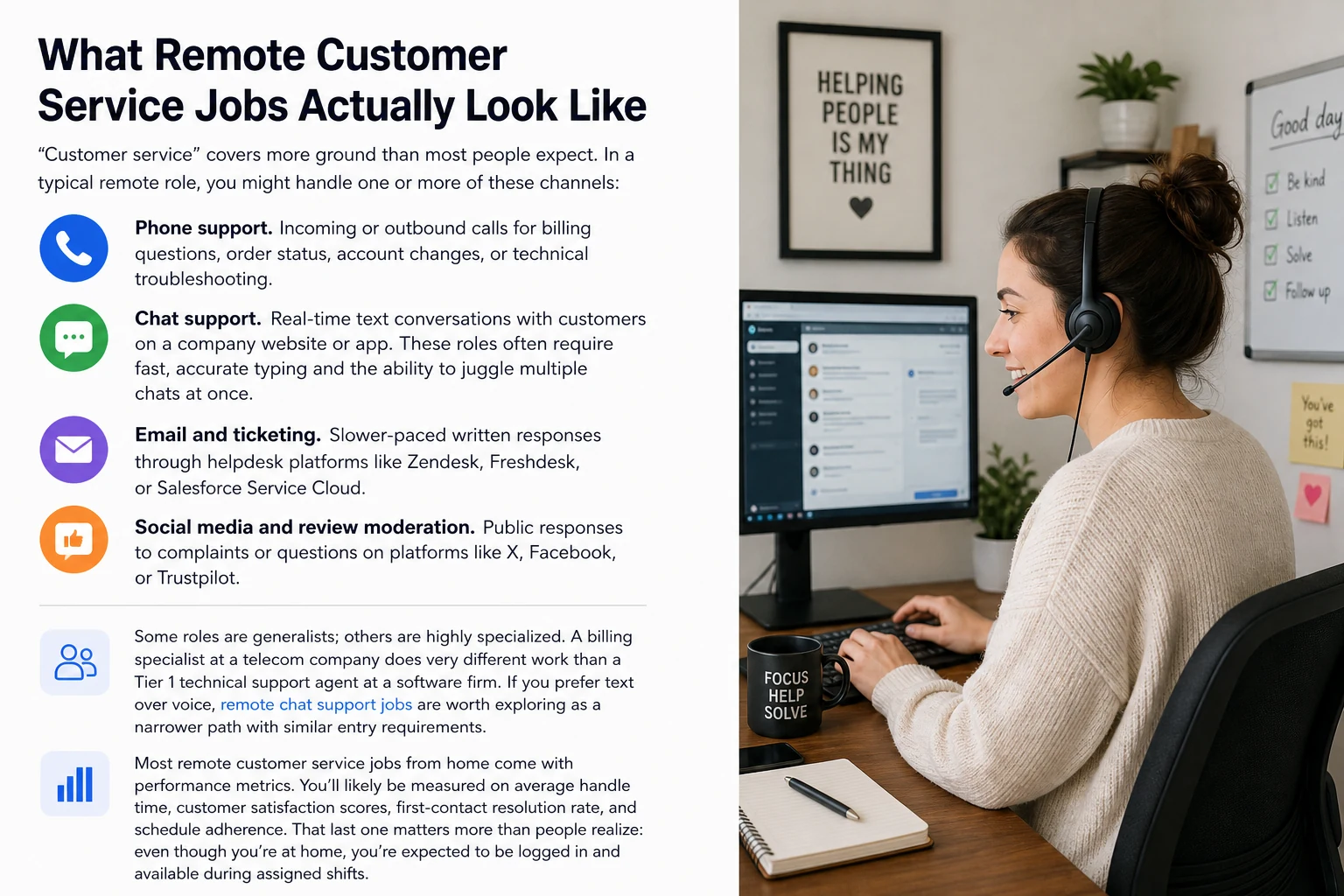 Remote customer service roles span phone, chat, email, and social media — each with different skills and performance expectations.
Common Remote Customer Service Titles
Employers don't always use the phrase "remote customer service jobs" in their postings. If you're searching job boards, you'll get better results by mixing in the exact titles companies use. Common ones include:
Customer Service Representative
The most common title. Search for "customer service representative remote" or "customer service representative jobs from home" for the broadest results.
Customer Care Specialist / Agent
Often used interchangeably with customer service. Titles like "customer care job" and "customer care specialist" describe the same work under a different name.
Call Center Representative
Phone-focused roles. Search "call center customer service jobs," "call center representative hiring," or "call center specialist."
Client / Consumer Services
Less common titles like "client services jobs" or "consumer services jobs" often describe the same responsibilities as standard customer service.
Night Shift & Part-Time Roles
Search "night shift customer service jobs" or "part time customer service jobs from home" for non-standard schedules.
Insurance Customer Service
Specialized roles at insurance companies. Search "insurance call center jobs" or "insurance customer service representative" for industry-specific openings.
Home Office Setup and Tech Requirements
Employers are specific about the home office setup for remote customer service jobs, and a "good enough" internet plan often isn't good enough. Here's what you'll typically need:
Reliable High-Speed Internet
Many companies ask for minimum download speeds of 10 to 25 Mbps and upload speeds of 3 to 5 Mbps, often with a hardwired Ethernet connection rather than Wi-Fi.
A Quiet, Private Workspace
Background noise from children, pets, or roommates can be a real problem during live calls. A dedicated room with a door is ideal.
A Wired Headset
Most employers require a USB headset with a noise-canceling microphone. Bluetooth is sometimes allowed for chat roles but frequently banned for phone work.
A Compatible Computer
Windows is more commonly supported than macOS, and some employers provide the equipment while others require you to supply your own.
Backup Power or Internet
A phone hotspot can save you if your home internet drops mid-shift. Some employers require a backup plan as a condition of remote work.
Some large employers ship you a thin client, monitor, keyboard, and headset after you're hired. Others give you a monthly technology stipend or expect you to already own the basics. Read the job posting carefully. If a company asks you to pay for equipment upfront before you have an official offer, that's a warning sign we'll cover later.
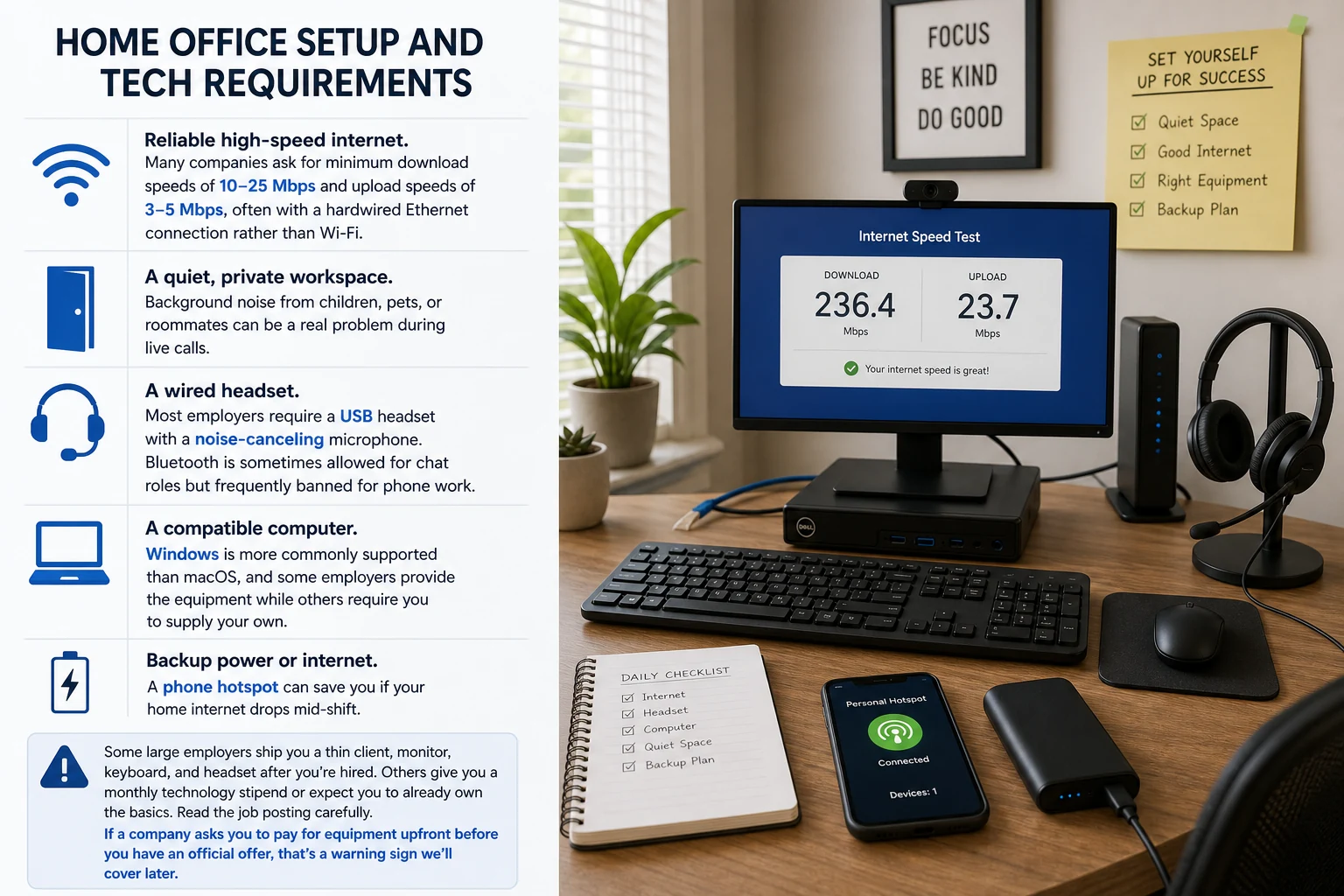 A reliable internet connection, USB headset, and quiet workspace are the baseline requirements most employers expect.
Where to Find Legitimate Remote Customer Service Jobs
The best listings are usually on company career sites first and general job boards second. Here's where we look:
Direct Employer Career Sites
Companies like Amazon, Concentrix, TTEC, Liveops, Working Solutions, Williams Sonoma, and UnitedHealth Group frequently post remote customer service jobs. Applying directly cuts out staffing fees.
Specialized Remote Job Boards
FlexJobs, We Work Remotely, and Remote.co filter for legitimate remote and hybrid roles. FlexJobs charges a subscription, but the signal-to-noise ratio is usually better than free boards.
General Job Boards
Indeed, LinkedIn, and ZipRecruiter list thousands of roles. Use the date filter to catch remote customer service jobs in the last 3 days before older listings bury them.
Staffing & BPO Firms
Companies like Robert Half, Aston Carter, and Randstad place contractors into remote support roles. These can be a fast path to roles hiring immediately, though benefits vary.
Location-Specific Searches
"Remote" doesn't always mean "anywhere." Many employers restrict roles to specific states. Search variants like "remote customer service jobs dallas" or "remote customer service jobs ohio."
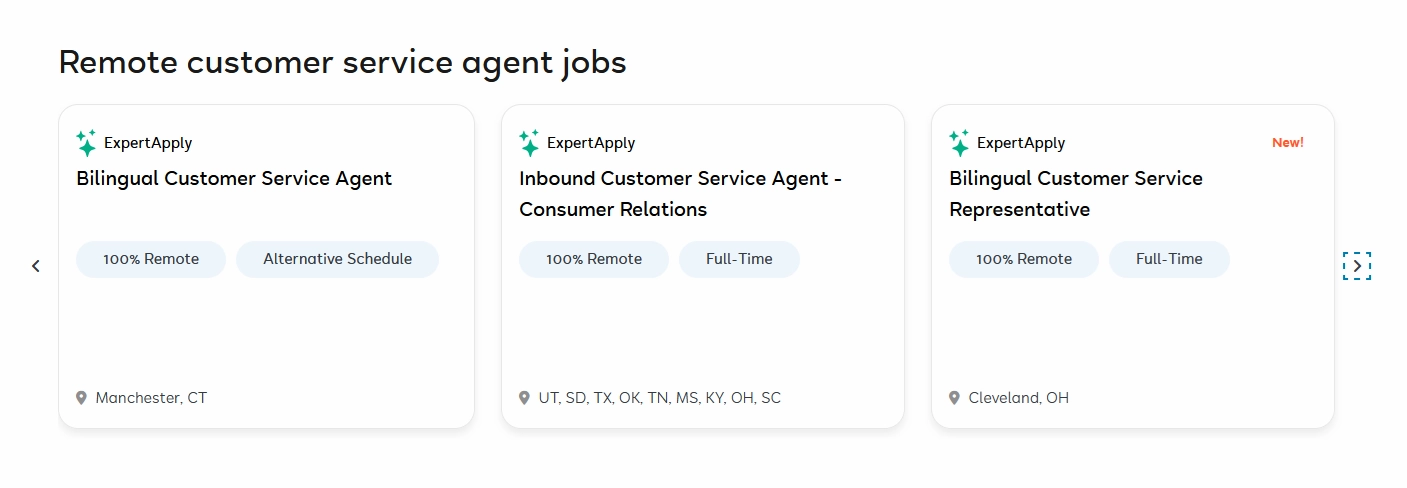 Specialized remote job boards like FlexJobs filter for legitimate openings and reduce time spent sorting through scams.
If you're not sure whether you want a traditional employee role or a contractor setup, our overview of 1099 remote jobs breaks down the tax, schedule, and benefit trade-offs. And if administrative work appeals to you more than answering calls, virtual assistant jobs are a closely related remote path.
Pay, Schedules, and Benefits
Pay for remote customer service jobs varies widely by industry, location, and whether the role is employee or contractor. Here's a realistic breakdown:
| Role / Level | Typical Hourly Pay | Notes |
|---|---|---|
| Entry-level remote | $13-$18/hour | Most common range for general customer service |
| Median (BLS, May 2024) | ~$20.59/hour | National median for customer service representatives |
| Specialized / healthcare support | $18-$22+/hour | Higher pay for technical or healthcare accounts |
| Contractor (Working Solutions) | $0.25-$0.31/min | Paid per productive minute only; idle time is unpaid |
| Higher-cost markets | $20-$25/hour | Pay often adjusts for regional cost of living |
These figures are realistic ranges based on publicly posted listings, not guarantees. Your actual offer depends on the employer, your state, your experience, and the complexity of the account.
Schedules are another variable. Full-time roles usually require set shifts, including evenings, weekends, and holidays. Part time remote customer service jobs exist, but the most desirable hours tend to go to senior agents first. Overnight call center jobs are common in healthcare, travel, and technical support, and they sometimes pay a shift differential. Retail and travel companies often hire heavily before peak seasons like Black Friday, summer vacation periods, or tax season, then reduce hours afterward.
Benefits also differ. W-2 employees at larger companies may receive health insurance, paid time off, and 401(k) matching. Contractors and staffing-firm placements usually don't. Always confirm the employment classification before accepting an offer.
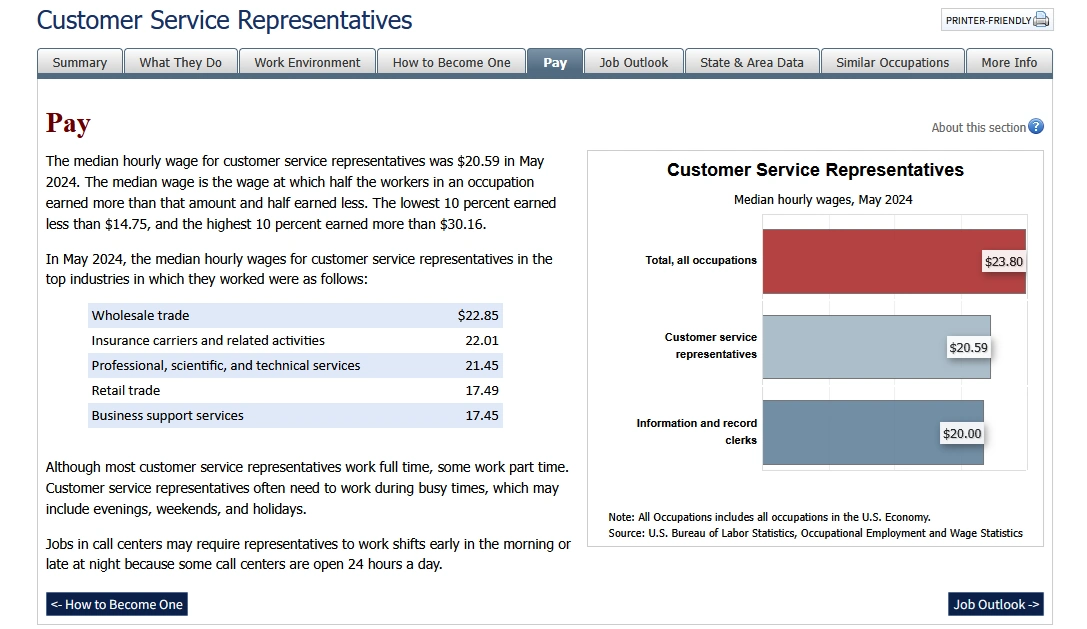 Pay ranges from $13 to $22+ per hour depending on the role. W-2 employees usually get benefits; contractors typically don't.
Remote Customer Service Jobs Hiring Immediately
Some roles move faster than others. If you need income quickly, look for these patterns:
Seasonal Surges
Retailers, tax-prep services, and health insurance companies hire large classes before busy periods. These can onboard within one to two weeks.
Contract Staffing Placements
BPO and staffing firms frequently have open requisitions that need to be filled fast. The work may be temporary, but it can start quickly.
High-Turnover Accounts
Industries like cable or telecom support have higher attrition and therefore faster recurring hiring cycles.
Is the Company Real?
Search the company name plus "reviews" or "scam." Check LinkedIn, the Better Business Bureau, and Glassdoor before applying.
Do They Want Money?
Legitimate employers pay you, not the other way around. Never send money for equipment, training, or software unless you have a signed reimbursement agreement.
Is the Interview Too Easy?
A five-minute chat followed by an immediate job offer is rarely legitimate. Real employers ask questions and verify qualifications.
Did They Contact You Out of Nowhere?
Recruiters who message you on WhatsApp or Telegram about an urgent role are usually not recruiters.
Scam Red Flags to Watch For
The remote customer service space attracts scammers because the work sounds accessible and the applicants are often eager. We've investigated enough questionable listings to recognize a few recurring patterns.
Upfront Fees for Equipment or Training
A real employer may ask you to use your own headset or internet, but they won't ask you to send money for a "starter kit," "training certification," or "background check deposit."
Fake Check Schemes
A scammer sends you a check to buy equipment, asks you to send part of the money to a "vendor," and then the check bounces after you've already transferred funds.
Unrealistic Pay
If a general customer service role advertises $40 to $50 per hour with no experience required, be skeptical. Those rates are far above market for entry-level support.
Interviews Only Through Messaging Apps
Legitimate employers use video calls, phone screens, or formal applicant tracking systems. Be wary of employers who only want to talk through WhatsApp or Telegram.
Requests for Personal Info Too Early
No real employer needs your Social Security number, bank details, or copies of your ID before you've received and accepted a formal offer.
Vague Job Descriptions
If the posting doesn't name the company, explain the channel (phone, chat, email), or describe the product, it may be a lead-generation trap rather than a real job.
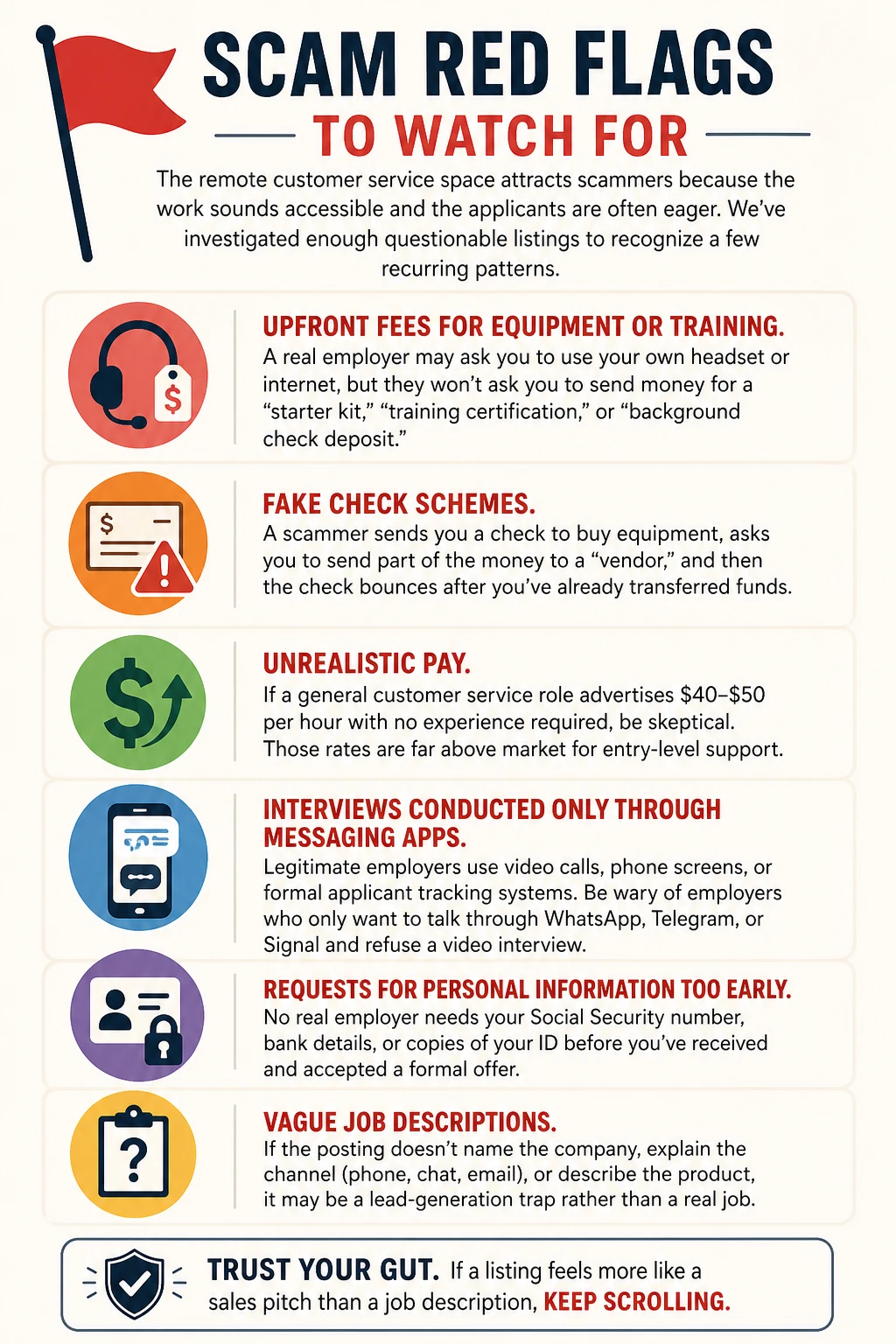 Upfront fees, vague descriptions, and messaging-only interviews are the most common signs of a customer service scam.
Want to Learn More About Online Scams?
For a deeper look at how online earning scams operate, read our guide on avoiding survey and gig platform scams. Many of the same tactics show up across categories.
How to Stand Out in the Application Process
Remote customer service jobs are competitive because the barrier to entry is low. A strong application can separate you from hundreds of other candidates.
Tailor Your Resume to the Channel
If the job is phone-based, emphasize clear communication, de-escalation, and any call-center experience. If it's chat-based, highlight your typing speed and written communication.
Quantify When You Can
"Resolved 40+ customer tickets per day" or "Maintained a 95% customer satisfaction score" is more convincing than "provided great customer service."
Prepare for Assessment Tests
Many employers use online assessments for typing speed, grammar, situational judgment, and basic computer skills. Practice before you start the application.
Show You Can Work Independently
Employers want evidence that you can stay focused without a supervisor walking the floor. Mention any remote work experience, even if it was freelance or volunteer.
Practice Interview Scenarios
Be ready to answer behavioral questions like "Tell me about a time you dealt with an angry customer." Use the STAR method: situation, task, action, result.
Soft Skills Matter More Than Perfect Experience
Patience, empathy, clear communication, and the ability to follow a process often beat a long resume in customer service hiring.
Final Take
Remote customer service jobs can be a solid, legitimate way to earn from home, but they're not a passive side hustle or a shortcut to a high income. The work is real, the schedules are structured, and the best positions go to applicants who treat the application process seriously.
If you need flexibility above all else, look for part time remote customer service jobs or contractor platforms. If you want benefits and stability, target W-2 roles at established employers and be prepared to work set shifts.
The key is to go in with realistic expectations. Remote customer service isn't a vacation at home. It's a job that happens to take place there. With the right setup, a sharp eye for scams, and a tailored application, you can land a role that actually fits your life.
Remote customer service jobs are real and widely available, but pay varies from $13 to $22+ per hour depending on the role. Use reputable job boards, verify every listing, never pay upfront, and tailor your application to the specific channel you're applying for.
FAQ: Remote Customer Service Jobs
Related Resources

Track Your Side Hustle Income
Organize your customer service earnings, freelance gigs, and other side hustle income alongside your budget with our free Side Hustle Toolkit.
Get the Free Toolkit